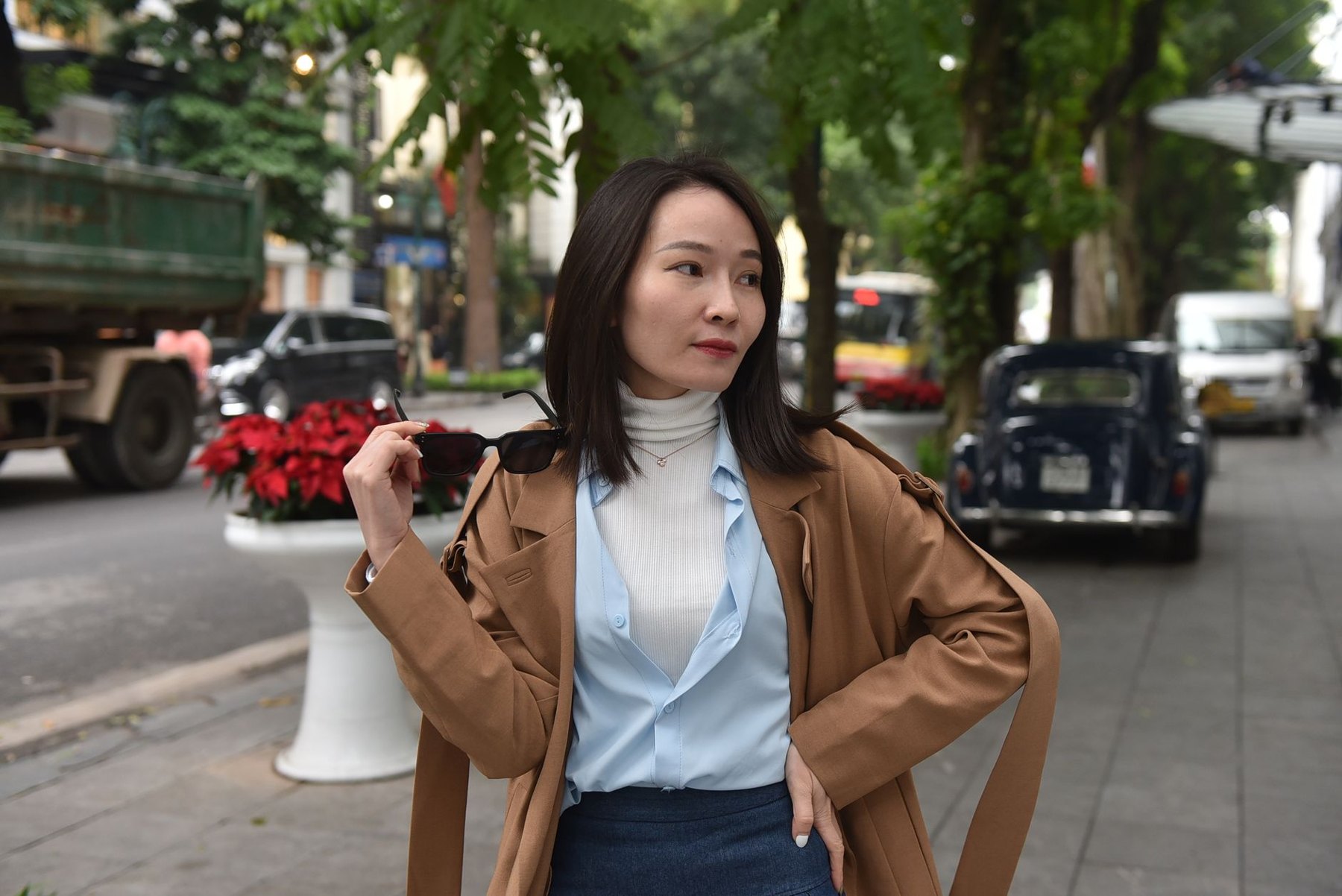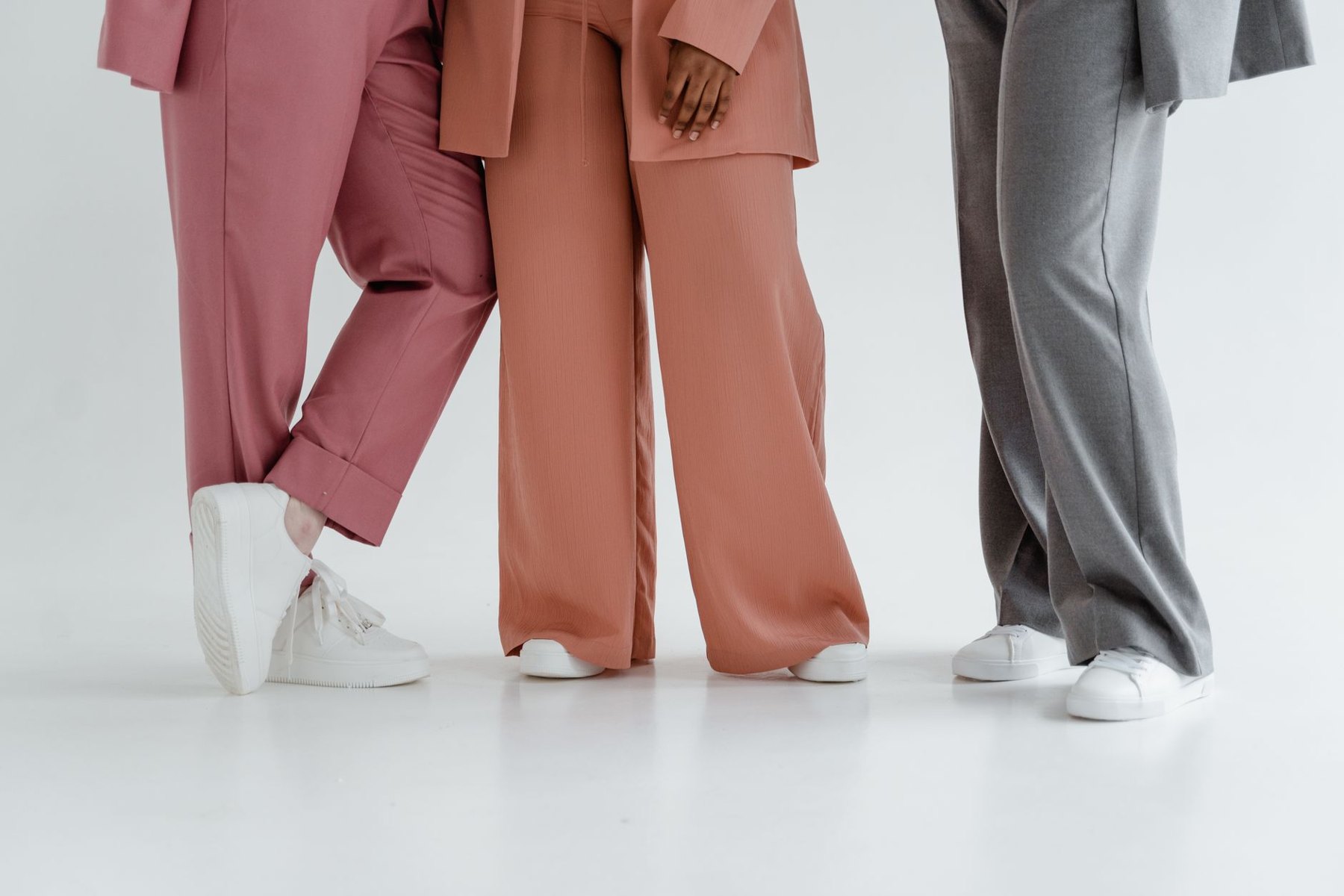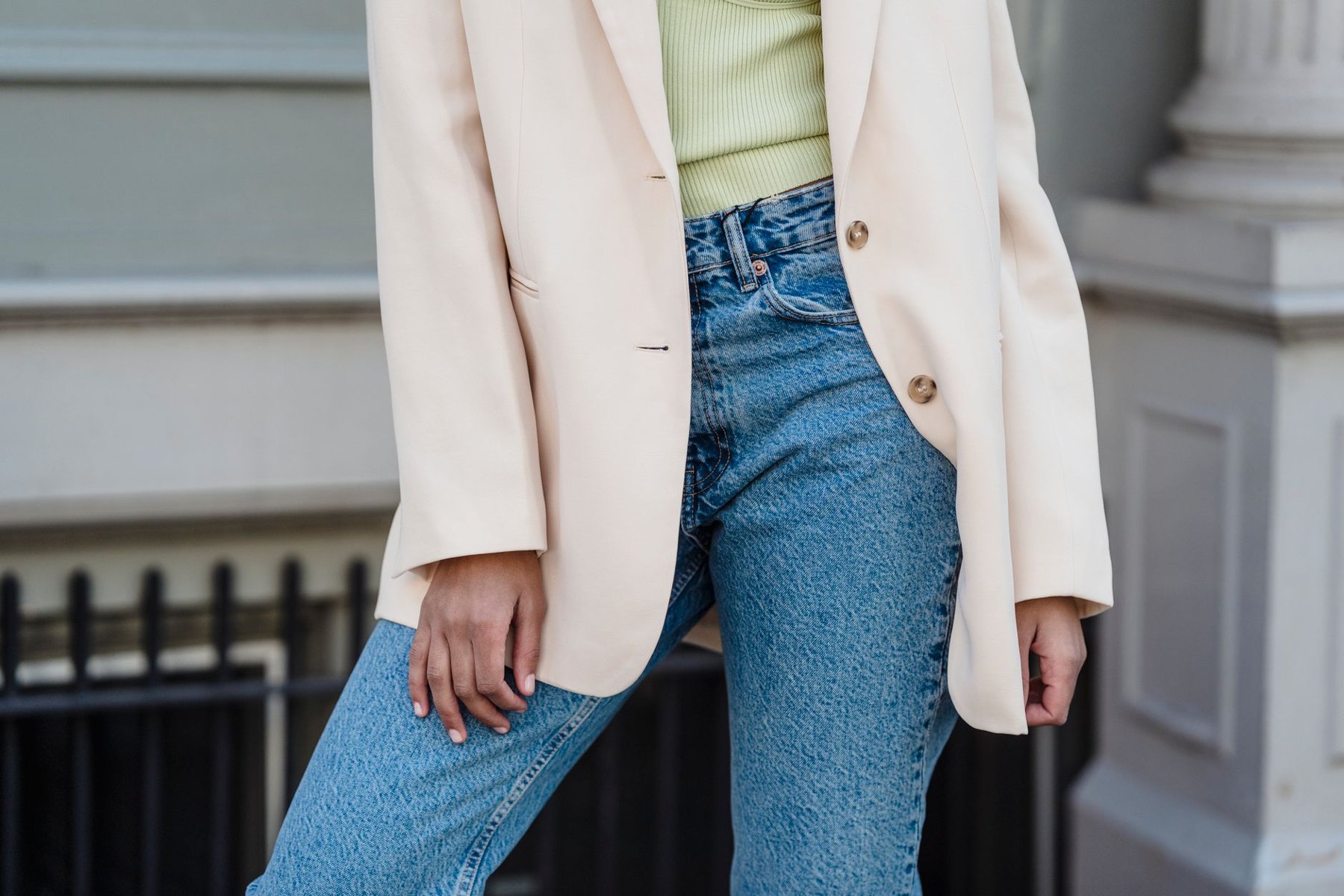
The same white tee can look crisp with straight jeans, understated with wide-leg jeans, and easygoing with relaxed jeans. If one combination feels right and another feels unfinished, check where the waistband sits, where the hem ends, and how much of the shoe shows before replacing the top.
Start with three formulas: straight jeans with a relaxed shirt, wide-leg jeans with a fitted tee, and relaxed jeans with a structured jacket. Each gives the denim a different role. Once those combinations feel comfortable, swap pieces between them and adjust one proportion at a time.
Identify the shape before building the outfit
Denim labels overlap, so look at the jeans themselves. Straight jeans generally keep a relatively consistent width from the knee to the hem. Wide-leg jeans have more width through the leg, though some fit closely around the hips. Relaxed jeans offer extra room through the seat and thighs and may narrow toward the ankle or continue into a loose hem.
A pair labeled relaxed can also have a straight leg. For styling purposes, decide what you notice first: a clean vertical line, a broad hem, or a roomy upper leg. That feature is the starting point for the outfit.
- Straight jeans: use shirt length and shoe shape to change their relatively simple outline.
- Wide-leg jeans: decide how much definition you want at the waist and how the hem meets the shoe.
- Relaxed jeans: use a deliberate top length or jacket shape to give the extra room some structure.
None of these cuts requires a particular body type. The useful question is whether the waistband, seat, and leg give you the fit and movement you want.
Formula one: straight jeans and a relaxed shirt
Pair straight jeans with a loose button-down shirt, then choose loafers, sneakers, or ankle boots according to the hem. The jeans provide a simple foundation, leaving room to play with an open collar, rolled sleeves, or a partial tuck.
Step 1: choose where the shirt ends
Try the shirt untucked first. If its hem lands around the upper hip and you like the clean line, leave it there. If a longer shirt hides more of the jeans than you want, tuck in the front or tuck the whole shirt loosely, then pull out a little fabric so you can move comfortably.
A partial tuck creates an uneven hem and reveals some waistband without making the outfit feel fully dressed up. A full tuck makes the division between shirt and jeans clearer. Neither is necessary: an untucked shirt can work well when its length feels intentional.
Step 2: adjust for the rise
High-rise straight jeans leave less visible space between the waistband and chest, so a long, fully tucked shirt may create more fabric than you want. A lighter shirt or shallower tuck can help. Mid-rise jeans offer another option if you prefer the waistband to sit farther below your rib cage.
With a lower rise, check what happens when you reach forward or sit down. A longer shirt provides coverage; wearing it open over a fitted tee lets you keep the loose outer layer while showing the jeans' shape underneath.
Step 3: match the hem to the shoe
An ankle-length straight leg leaves loafers and low-top sneakers visible. A full-length pair can sit neatly over a boot or touch the top of a sneaker. If the fabric stacks heavily, try a single cuff or a shorter inseam. Keep a cuff shallow when you want a subtle finish; a deeper turn-up becomes a noticeable detail.
Try this outfit: medium-blue straight jeans, a pale blue relaxed shirt with a loose front tuck, a dark belt, and burgundy loafers. For a more casual version, leave the shirt open over a white fitted tee and switch to simple sneakers.
The tradeoff is coverage versus definition. A long untucked shirt gives an easy, covered silhouette. A tuck reveals more of the rise and creates a clearer waist. Choose according to the outline you like, rather than treating a visible waistband as compulsory.
Formula two: wide-leg jeans and a fitted tee
A fitted tee makes it easy to see the shape of wide-leg jeans. Here, fitted means that the tee follows your outline; it does not need to cling. Choose enough room through the shoulders and chest to move without constant adjustment.
Step 1: settle the waistband fit
Check the waistband while standing and sitting. It should stay where you want it without requiring a belt to pull in a large amount of excess fabric. Look at the pockets and front fastening, too. If they pull or spread open, trying another size or a different cut may be more useful than changing the top.
A high rise creates a higher starting point for the wide leg. A mid rise lowers that division and may suit you better if you prefer more space between the waistband and ribs. Neither automatically produces a better proportion; compare both with the tee you plan to wear.
Step 2: choose the tee length
A tee that ends near the waistband creates a clear outline without much tucking. A longer tee can be tucked in fully, provided the fabric does not bunch uncomfortably. For more coverage, leave it untucked and check whether you like the uninterrupted line over the hips.
If you want a looser top, try a relaxed shirt with the sleeves pushed up and a small front tuck. This keeps the wide-leg silhouette while changing the mood. The fitted tee is a useful starting point, not a requirement.
Step 3: choose the shoe before the inseam
Full-length wide-leg jeans can cover most of a shoe, so try them with the footwear you will actually use. A hem that works with platform sneakers may drag with thin-soled flats. If you regularly switch between those heights, you may need to accept a different hem effect or choose one main pairing.
Look at the jeans from the front and side, then walk a few steps. The hem should clear the floor. Some fabric resting on the shoe can look relaxed, but folds that catch beneath your heel make the length impractical.
Try this outfit: dark wide-leg jeans, an ivory fitted tee, a cropped navy jacket, and sneakers with enough sole height to keep the hem clear. The short jacket lets the jeans' width remain visible. Swap it for a longer blazer if you prefer more coverage, and wear the blazer open to show the tee underneath.
For an ankle-length version, try wide-leg jeans with loafers or slim ankle boots. The shorter hem reveals more footwear and changes the broad, continuous line of the full-length version. Choose it because you like that shape, rather than simply to avoid deciding on a hem length.
Formula three: relaxed jeans and a structured jacket
Relaxed jeans leave room through the seat and thighs. A jacket with a defined shoulder, a firm collar, or a clear hem gives that softness a useful counterpart. Start with a fitted tee underneath so you can assess the jacket and jeans without several loose layers competing for space.
Step 1: find the right jacket length
A jacket ending around the waistband or upper hip leaves more of the jeans visible. A longer blazer creates a more covered outline and can work well worn open. If the outfit feels bulky, check whether the jacket hem lands at the same point as the fullest part of the jeans.
Try a shorter jacket, or one that falls clearly below that point, and compare. Small length changes can matter more than a dramatic change in size. You do not need a sharply tailored blazer: a chore jacket in firm fabric can provide enough shape.
Step 2: decide how the jeans should sit
A higher rise makes the waistband more visible beneath a short jacket. A lower rise allows a longer section of tee to show. Both can work, but check the complete outfit while seated as well as standing, especially if the jacket and tee are short.
A belt can finish the waistband and help with a small fit adjustment. If tightening it creates uncomfortable folds, consider another size or a cut with different waist-to-hip proportions. The roomy leg should not depend on an awkward waistband.
Step 3: use footwear to change the mood
Low-profile sneakers keep relaxed jeans casual. Loafers add a firmer outline at the foot, while lace-up boots give a heavier finish. If the jeans taper, a shallow cuff can reveal the shoe. If they have a broad hem, let it fall naturally and check for dragging.
Try this outfit: washed-black relaxed jeans, a charcoal fitted tee, an olive chore jacket, and black loafers. For a softer version, replace the tee with a relaxed white shirt and keep the jacket open. Check that the shirt hem sits clearly above or below the jacket hem if you want the layers to read distinctly.
The tradeoff here is ease versus bulk. Several roomy pieces can make a satisfying outfit, but each added layer changes the outline. If the combination feels crowded, simplify one element: shorten the tee, choose a less bulky shoe, or remove a layer.
Use rise, inseam, and footwear as a connected system
These three details affect one another. Changing the rise alters how much top is visible above the waistband. Changing the inseam alters how much shoe is visible below the jeans. Changing the shoe can make a previously useful hem length awkward.
| Detail | What to check | Possible adjustment |
|---|---|---|
| Rise | Does the waistband sit comfortably when seated? | Try another rise or change the top length. |
| Inseam | Does the hem clear the floor while walking? | Try a cuff, another length, or hemming. |
| Footwear | Does the hem fall cleanly over the shoe? | Compare a different toe shape or sole height. |
| Top length | Do you like where the top divides the outfit? | Try it tucked, untucked, or folded under temporarily. |
Before committing to alterations, fold the hem under and check it with your usual shoes. Test a few steps and sit down. If you plan to cuff the jeans regularly, look at how the folded denim feels around the ankle as well as how it looks.
Keep color and accessories simple while testing proportions
Use a small color palette when you are comparing cuts. Blue denim, a white tee, and the same jacket make it easier to notice what changes between straight, wide-leg, and relaxed jeans. Once you like the proportions, add color through a shirt, shoe, or bag.
You can also change the outfit's finish without changing its formula. A leather belt and loafers make a tee-and-jeans combination feel more deliberate. Canvas sneakers and a soft tote keep it casual. Jewelry can be minimal or expressive; it does not need to compensate for a fit issue.
A five-minute fitting routine
- Start with the jeans and shoes. Check the waistband, movement, and floor clearance.
- Add the top. Compare tucked and untucked versions before deciding.
- Try the jacket open and closed. Notice pulling, excess fabric, and where its hem lands.
- Move around. Sit, reach, and walk to catch problems a standing mirror check misses.
- Change one detail. Adjust the cuff, tuck, or footwear, then look again.
Keep a photo of the combinations you want to repeat. A note such as “straight jeans, blue shirt, loafers, shallow cuff” is enough to make getting dressed easier. Build from the version that feels comfortable in motion, then use the other formulas when you want a different shape.