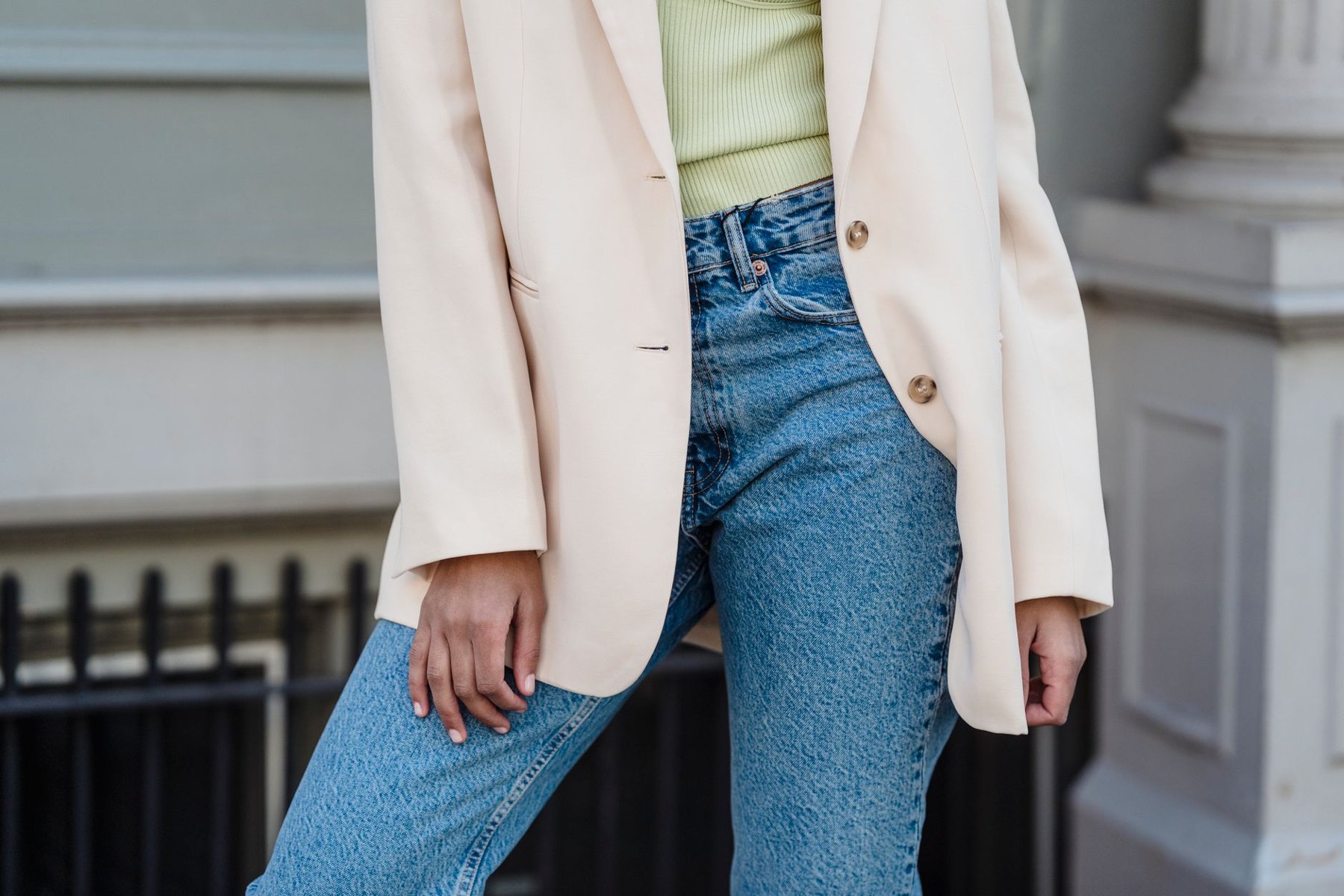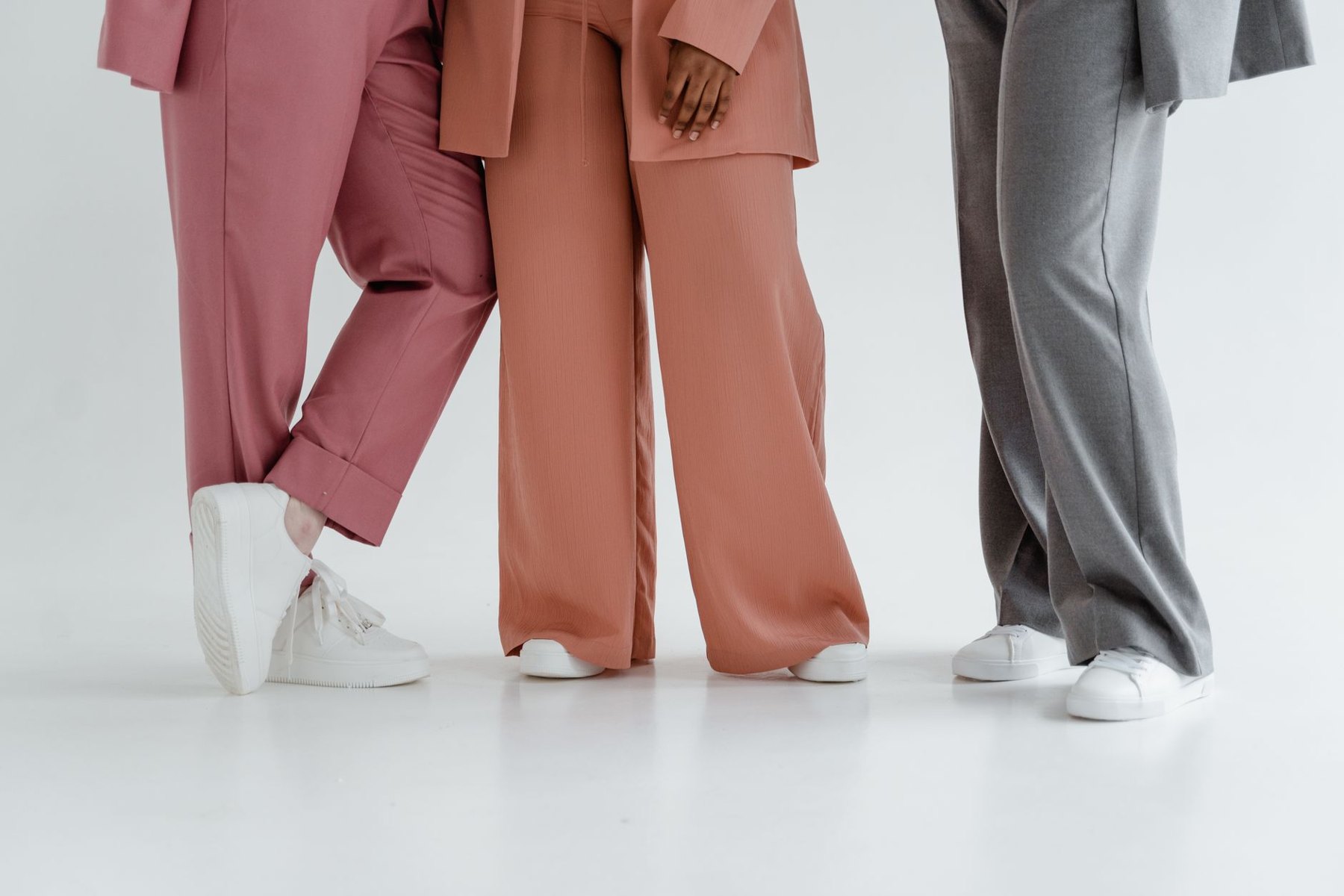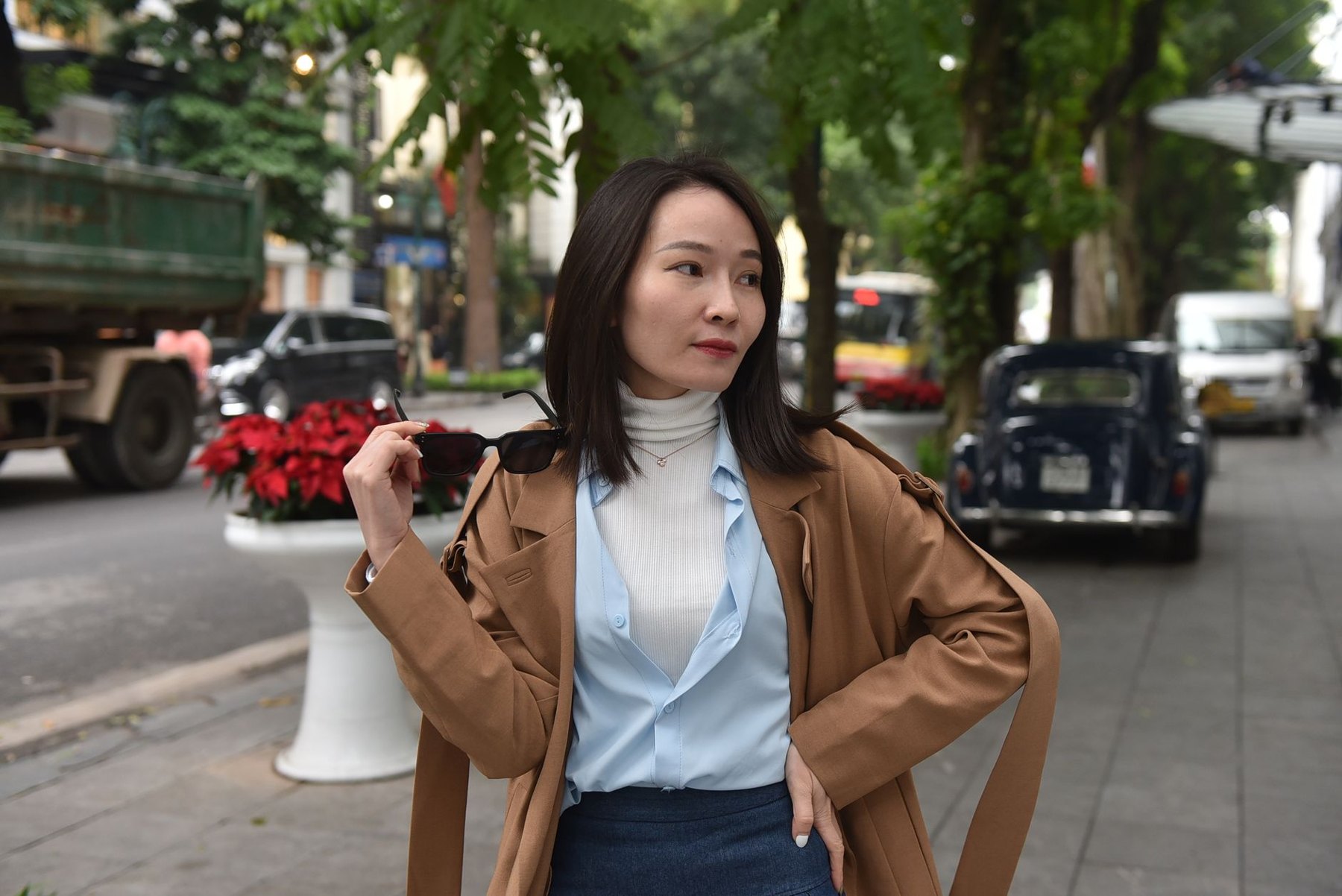
You save a street-style photo because the outfit looks exciting, then open your wardrobe and find nothing that seems remotely connected to it. The photo has a sweeping coat, exaggerated trousers, a tiny bag, and shoes that would struggle with your commute. Your day involves a desk, groceries, and a forecast that cannot make up its mind.
The useful question is smaller than “How do I recreate this?” Ask which detail made you stop scrolling. It might be a pale blue shirt against chocolate brown, a collar showing above knitwear, or a delicate shoe beneath loose denim. That detail can travel into an ordinary outfit even when the rest of the look stays in the photograph.
Use the following method to turn one saved image into something you can comfortably wear. A single photo and a few familiar clothes are enough.
1. Describe the outfit before you try to copy it
Look at your reference and describe what you see without naming designers or particular products. This helps separate the styling idea from the shopping list. “Oversized jacket, narrow skirt, bright shoe” gives you something to work with; a list of labels does not.
Break the look into five parts:
- Color: Is there one bright accent, a soft tonal combination, or a sharp light-and-dark contrast?
- Proportion: Where is the volume? Where does the outfit become narrower or shorter?
- Layering: Which collars, cuffs, hems, or socks are visible?
- Texture: Does something smooth sit beside something fuzzy, crisp, faded, or glossy?
- Finishing detail: Does the shoe, bag, belt, or jewelry change the mood?
For example, a photograph might show a roomy gray suit, a red knit, and pointed shoes. Your useful description could be “a quiet gray base with a concentrated red accent.” You can apply that to gray jeans and a red cardigan without owning a suit.
2. Pick the one detail you actually want to wear
A striking outfit may contain several ideas competing for attention. Bringing all of them into your first attempt makes it harder to judge what works. Choose one main detail and keep the rest of your outfit familiar.
Be specific about the attraction. If you love a layered collar, do not get distracted by the model’s coat. If the shoes caught your eye, consider whether it was their color, shape, or contrast with the clothes. Those are different ideas and may lead to different choices from your wardrobe.
Finish this sentence: “I want to try the way this outfit uses…” Your answer might be “brown with blue,” “a long shirt under a short sweater,” or “dressy shoes with relaxed trousers.” If the answer includes four separate elements, narrow it down.
3. Translate the detail into clothes you own
Lay out a familiar base outfit before adding your chosen detail. Start with clothes you already know work together: jeans and a sweater, trousers and a shirt, or a simple dress. This gives the experiment a reliable foundation.
Then look for an equivalent rather than an exact match. A red scarf can carry the color idea of a red coat. A fine cardigan can create a visible neckline layer when a chunky sweater feels too warm. A flat shoe with a defined toe can introduce a different shape beneath wide trousers without requiring heels.
| Detail in the reference | Everyday translation | Practical adjustment |
|---|---|---|
| Bright coat over neutral clothes | A bright knit, scarf, or bag with a neutral base | Choose the item you can comfortably use throughout the day |
| Shirt collar under substantial knitwear | A lightweight shirt under a cardigan or sweater | Check that the neckline and shoulders do not bunch |
| Very wide trousers with a compact top | Your roomiest trousers with a neat tee or shorter knit | Keep the hem clear of the ground in your chosen shoes |
| Dressy shoes with casual denim | Dark jeans with loafers, flats, or an ankle boot | Use a pair suitable for your walking distance |
| Several contrasting textures | One textured piece beside a simple cotton or denim item | Keep the number of layers comfortable for the weather |
The connection only needs to be clear to you. An adapted outfit can look quite different from the original while preserving the idea you liked.
4. Adjust the intensity to your setting
Think of the borrowed detail as having a volume control. A full orange outfit, an orange sweater, and orange socks all explore the same color at different levels. Choose the level that feels useful for the place you are going.
For work
Keep the shapes and coverage appropriate to your workplace, then introduce the detail through a color pairing, collar, belt, or shoe. If your office is conservative, a pale blue shirt with brown trousers may feel easier than an exaggerated silhouette. In a more relaxed setting, you might try a longer shirt hem below a neat knit.
For errands and commuting
Build around the shoes, outerwear, and bag you need. If a reference relies on an impractical small bag, retain its color idea in a tote you already carry. If your coat will cover the outfit most of the day, put the interesting detail near the neckline or choose a visible scarf.
For dinner or a social plan
You may have more room for an unusual proportion or a decorative accessory. Keep enough of your regular outfit that you can relax in it. A familiar dress with contrasting shoes is a manageable experiment; changing the dress, shoes, bag, and jewelry at once makes every decision feel bigger.
5. Check proportion with your actual shoes and layers
Styling ideas change when garment lengths change. A wide trouser and short jacket combination may feel balanced in a photograph, yet behave differently with your particular rise, jacket hem, and footwear. Try the complete outfit before deciding it needs another item.
Start by locating the edges: where the top ends, where the outer layer ends, and where the trousers meet the shoes. If several hems cluster together, simplify one layer. If everything feels loose and undefined, try a partial tuck, an open jacket over a neater top, or a shorter layer you already own.
You do not need a particular body type to explore proportion. Choose what you want the clothes to do: leave room for movement, show a waistline, create a continuous color column, or emphasize a sleeve. Use that intention to guide adjustments instead of trying to match the person in the reference.
Three outfit translations to try
A strong color pairing, made smaller
The reference idea: Chocolate brown with pale blue, shown through an oversized coat and a flowing dress.
The everyday outfit: Brown trousers, a pale blue shirt, and shoes in a neutral color you already wear. If you own brown knitwear instead of trousers, pair the knit with blue denim and let a blue shirt collar show at the neck.
The tradeoff: You lose the movement and drama of the original shapes, while keeping the color relationship. Avoid adding several new accent colors on the first attempt so you can decide whether you enjoy the pairing itself.
A layered collar without the bulk
The reference idea: A crisp shirt beneath a sweater and an oversized jacket, with collar and cuffs visible.
The everyday outfit: A comfortable shirt under a roomy cardigan, worn with straight jeans or trousers. Begin with the collar visible and leave the cuffs alone. Add the jacket only if the weather calls for it.
The tradeoff: More visible layers create more opportunities for bunching and overheating. If the shirt pulls at the shoulders or the cardigan feels tight over the sleeves, change one layer. A styling detail should not require constant rearranging.
A contrasting shoe beneath familiar clothes
The reference idea: Relaxed denim with a polished, delicate shoe.
The everyday outfit: Your usual jeans and a plain knit with loafers, ballet flats, or another comfortable shoe that feels more dressed up than your usual choice. Alternatively, try a bright sneaker beneath simple tailored trousers if that contrast suits your routine better.
The tradeoff: A different shoe can alter how the trouser hem falls and how much walking feels comfortable. Check both before leaving. If the jeans drag with flats, use a shorter pair or a cuff that stays in place.
6. Test the outfit in motion
A mirror check is useful, but it cannot tell you everything about wearing an outfit for several hours. Sit down, reach forward, walk across the room, and put on your coat and bag. Notice whether a collar collapses, a waistband becomes uncomfortable, or a strap pulls the layers out of place.
Use this short check before heading out:
- Can I walk and sit comfortably in these clothes?
- Does the outfit work with the outerwear I actually need?
- Are the hems safe from dragging or catching?
- Can my bag hold what the day requires?
- Does the borrowed detail stay in place without repeated adjustment?
If something fails, change the smallest relevant part. Swap a heavy shirt for a lighter one, reduce the number of layers, or wear a more comfortable shoe in a similar color. Keep the idea long enough to give it a fair test, but let comfort influence its final form.
7. Edit when the outfit feels too busy
Sometimes each piece looks good separately, yet the combination feels unsettled. Return to the detail you originally chose. Is it still easy to see, or is it competing with a patterned bag, several necklaces, a contrasting belt, and an elaborate cuff?
Remove one competing element and look again. If the collar is the feature, try simpler jewelry around it. If the color pairing is the point, use quieter accessories. If the shoe supplies the contrast, let the trouser hem give it enough space to be visible.
The opposite problem is an adaptation that feels too cautious. Before adding another statement item, make the original detail clearer: show a little more collar, open the cardigan so the color underneath is visible, or switch to the brighter scarf you already own.
8. Save the outfit formula that earns a repeat
After wearing the outfit, make a short note about what worked. “Blue shirt + brown trousers + dark loafers” is easier to reuse than a folder of images with no explanation. Include any practical adjustment, such as leaving the shirt untucked or choosing the lighter cardigan.
Once a formula feels comfortable, change one element for another setting. The same color pairing might work with denim on a weekend. The layered collar might move from trousers to a skirt. The contrasting shoe might give a familiar dress a different mood.
When you next save a street-style photograph, give it a useful caption: “try this collar,” “use these two colors,” or “wear these proportions with my boots.” That turns a compelling image into a small, specific idea you can test the next time you get dressed.