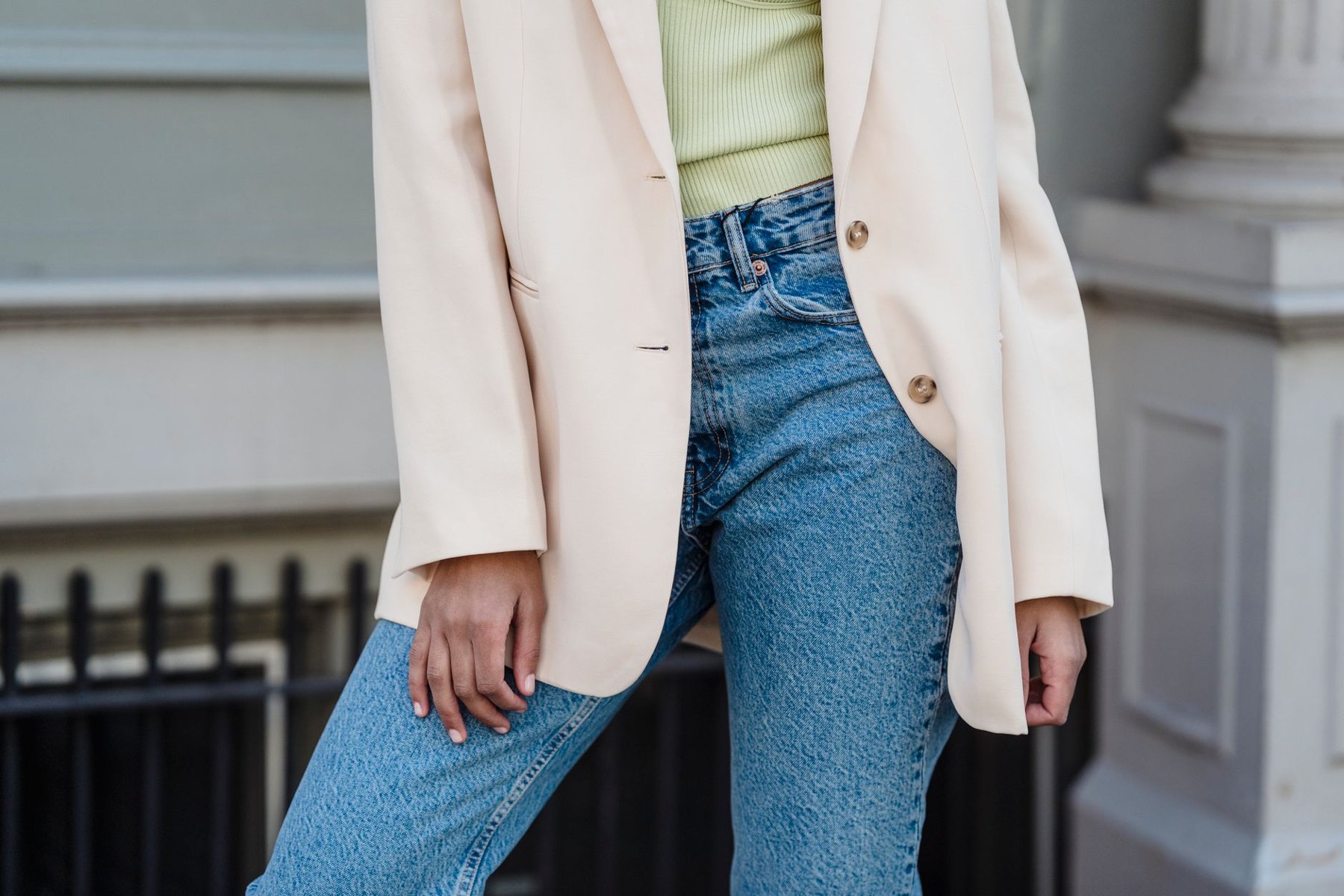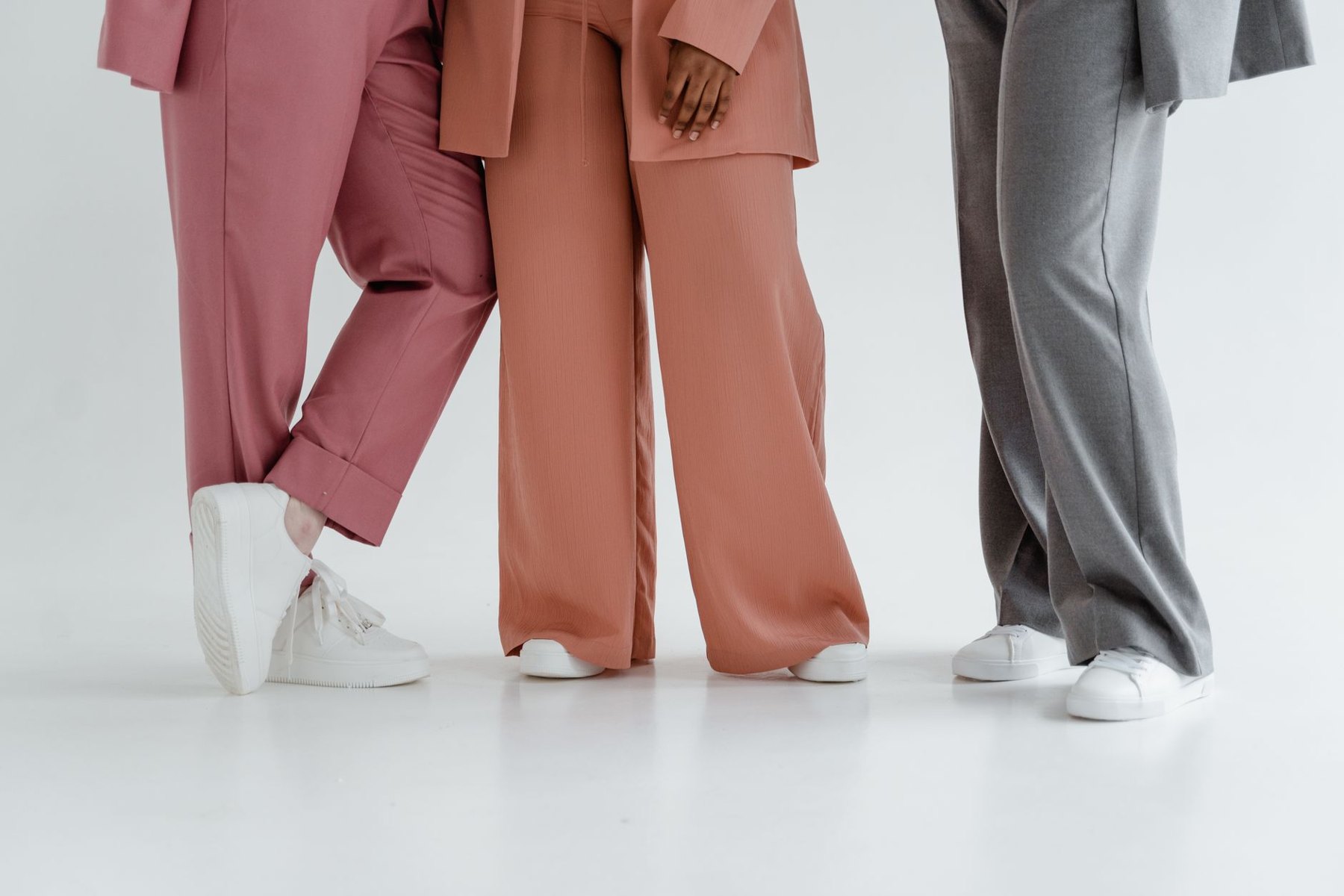
The shoes look appealing on their own, but you cannot quite picture them with your trousers. Would a slim sneaker disappear beneath the hem? Would a substantial loafer make your usual jeans feel awkward? Would a square-toe flat work with anything beyond the outfit in the product photo?
Start with the clothes you actually wear. Choose three complete outfits from your wardrobe, identify what a different shoe shape would change, and decide which adjustments you would willingly make. The aim is to find a pair that adds something useful without requiring several other purchases.
Slim sneakers, substantial loafers, and square-toe flats offer three different ways to experiment: less volume, more volume, and a more defined toe shape. You do not need to try all three. Choose the silhouette that interests you, then give it a practical wardrobe test.
Build three outfits before browsing shoes
Pull together three outfits that represent your real week. Include the tops, layers, socks, and bags you normally use. A pair of trousers laid on the bed gives you less information than a complete outfit worn in front of a mirror.
- Your dependable everyday outfit: perhaps straight jeans, a T-shirt, and a cardigan.
- Your more polished outfit: tailored trousers with a shirt, or a dress with a jacket.
- Your difficult outfit: something you like but struggle to finish, such as wide-leg trousers or a midi skirt.
Keep the first two familiar. If every outfit is experimental, it becomes difficult to tell whether the shoes are useful or you simply enjoy trying something different.
Put on each outfit with your usual footwear first. Notice where the trouser hem falls, how much shoe is visible, and whether the outfit feels balanced to you. A quick photo from a consistent distance can make later comparisons easier. Keep the camera around waist height if possible, rather than angling it down toward your feet.
Identify what you want the new silhouette to do
“I want different shoes” is a starting point, but a more specific purpose helps you choose. Perhaps your trainers feel too bulky with tailored trousers. Perhaps your jeans need a shoe with more presence. Or perhaps you want a flat that gives simple outfits a sharper finish.
Describe the change in one sentence. For example: “I want a low-profile shoe for my straight trousers,” or “I want a closed-toe flat that works with both my work clothes and weekend denim.” This gives you something concrete to assess when an appealing pair catches your attention.
Then consider the practical boundaries: your walking distances, workplace expectations, weather, and willingness to maintain the material. A silhouette can suit your wardrobe visually while still being wrong for the way you spend your day.
Try slim sneakers when you want less bulk
For this exercise, a slim sneaker means a relatively low-profile shape with less visual volume around the sole and upper. Compare the actual shoe rather than relying on the label: some styles look narrow from above but have a broad sole underneath.
Start with straight jeans and a familiar top
Wear straight jeans with a T-shirt, knit, or shirt you already like. Look at where the jeans meet the sneaker. A hem that previously rested on a chunky trainer may gather more heavily over a lower shoe. If the fabric hides most of the sneaker and folds around the heel, trouser length may be the issue.
Try a small, temporary cuff if the fabric allows it. You are checking whether revealing more of the shoe improves the outfit. If you dislike cuffed jeans and would not alter them, count that as useful information rather than inventing a solution you will never use.
Check wide trousers from the side and back
A slim sneaker can sit quietly beneath wide trousers, which may be exactly the effect you want. The tradeoff is that a longer hem can get close to the ground when there is less sole beneath your foot. Check the back edge, then walk and turn. Fabric that catches beneath your heel will not become less annoying outside.
With a dress or skirt, notice the change in mood rather than searching for a perfect proportion. Try the sneaker with a simple dress and your usual jacket. If the result feels unfinished, test socks or a layer you already own before deciding the shoe needs an entirely new outfit.
Try substantial loafers when you want more presence
A substantial loafer might have a thicker sole, a broad toe, a fuller upper, or some combination of these features. That extra volume can create a noticeable contrast with familiar clothes, but it also changes how trouser hems sit and how the shoe feels in motion.
Use tailored trousers as your first comparison
Put on your usual work trousers and shirt. Check whether the hem meets the loafer cleanly or catches on the upper. A length that works over one shoe can hang awkwardly over another, particularly when the new pair is broader or taller across the foot.
Try the outfit with its usual jacket or knit. Before swapping several pieces, ask whether you like the contrast between the substantial shoe and the rest of the outfit. You may enjoy it immediately, or prefer a quieter shape. Neither response needs correcting.
Make socks part of the test
If you expect to wear loafers with socks, try them that way. Sock thickness can affect fit, while color changes the visual connection between trousers and shoes. Start with a color close to either one, then try contrast if that appeals to you.
For a second outfit, use jeans and a relaxed sweater. For a third, try a skirt or dress you already wear. You do not need to like the loafer with every hemline. You do need enough combinations that feel natural, without repeatedly borrowing clothes from an imagined future wardrobe.
Pay attention to weight and heel movement. A shoe can look reassuringly solid while feeling cumbersome on your foot. Walk at your normal pace and notice whether you shorten your stride or grip with your toes to keep it on.
Try square-toe flats when you want a different outline
Square-toe flats let you explore a more angular shape without choosing a substantial sole. The category still includes plenty of variation: softly squared toes, wider geometric shapes, shallow openings, and more enclosed uppers. Those details affect both appearance and fit.
Begin with an ankle-length trouser
If you own trousers that finish around the ankle, use them to see the shoe clearly. Pair them with a familiar shirt or knit. Look at the whole outfit, then check how the opening sits across your foot. The toe shape may appeal while the cut of the upper does not.
Next, try full-length trousers. Decide whether you like seeing just the squared front beneath the hem. There is no requirement to expose the entire shoe, but check that the fabric does not bunch or drag.
Compare with a flat you already wear
Use the same dress or skirt with your existing flats and the square-toe pair. Keep everything else unchanged. This helps you judge whether the different outline adds something you enjoy, rather than responding to a completely restyled outfit.
Check toe room carefully. A squared exterior does not guarantee that the interior suits your foot. Stand, walk, and notice any pressure at the toes or across the front of the foot. If you would wear the flats with tights or thin socks, include those in the fitting.
Check every trouser hem in motion
Hem advice is most useful when it relates to the exact combination in front of you. Trouser width, fabric, length, shoe height, and your preferred appearance all matter. Use a short sequence instead of chasing a universal rule:
- Stand naturally. Let the trousers settle without pulling them into place.
- Look from the front, side, and back. Check for dragging, catching, and folds you dislike.
- Walk and turn. Notice whether the hem slips beneath the heel or sticks on the shoe.
- Sit and stand again. See how far the hem rises and whether it falls back comfortably.
- Try one reversible adjustment. Fold the hem inward or make a cuff to compare lengths.
Wear the trousers at their usual waist position throughout. Holding them higher may improve the photograph, but it does not tell you how the outfit will behave during the day.
If a small length adjustment makes the combination work, decide whether you actually want that alteration. Consider the other shoes you wear with those trousers before committing. A hem shortened for flats may sit differently over footwear with a higher sole.
Give comfort its own assessment
Visual appeal and walking comfort deserve separate attention. You can love the look and still reject the fit. During a fitting, use the socks or hosiery you intend to wear and check both feet.
- Toes: Is there room without pressure, crowding, or contact that bothers you?
- Forefoot: Does the shoe press or pinch when you stand and step?
- Heel: Does it rub, or move enough that you work to keep the shoe on?
- Upper: Do edges or straps press into your foot as it bends?
- Movement: Can you walk, turn, and stop at your ordinary pace?
A brief indoor try-on cannot prove all-day comfort, but it can reveal reasons to stop. Do not treat pain, numbness, or persistent rubbing as something you must tolerate to enjoy a particular shape.
If you order a pair to compare at home, check the seller’s return conditions before purchase and follow them during the fitting. Keep your test realistic within those conditions: wearing the intended outfit and walking normally tells you more than standing still for a mirror photo.
Use a three-outfit decision sheet
Once you have tried the shoes, record a few plain observations. Avoid giving a pair extra credit because it looked good in someone else’s styling.
| Outfit | What to check | Useful result |
|---|---|---|
| Dependable everyday outfit | Does the shoe work with the clothes as you normally wear them? | You would happily choose this combination again. |
| More polished outfit | Do the hem, socks, and overall feel suit the occasion? | The outfit feels appropriate and comfortable to you. |
| Difficult outfit | Does the shoe solve the finishing problem? | The combination becomes easier to wear. |
For each outfit, write “works now,” “one adjustment,” or “unlikely.” Name the adjustment precisely: a cuff, different socks you already own, or an alteration you are prepared to arrange. If the solution involves buying several garments, the shoe has not passed this particular test.
Three successful outfits are a useful target, not a law. Two frequently worn combinations may justify a pair better than three outfits reserved for rare occasions. Consider how often those clothes leave the wardrobe and whether another shoe already serves the same purpose.
Choose the pair that makes getting dressed easier
Before committing, picture an ordinary morning. You have limited time, your favorite trousers are clean, and you need to leave. Would these shoes be an easy choice, or would you start changing clothes to accommodate them?
Keep the pair in consideration if you enjoy its shape, can walk comfortably during the fitting, and have repeatable outfits ready. Leave it if the fit distracts you or the styling requires more effort than you want to give. You can enjoy a footwear idea without owning it.
If you buy, save photos of the combinations that worked, including the socks and hem adjustments. The next time you reach for those clothes, you will already know where to start.