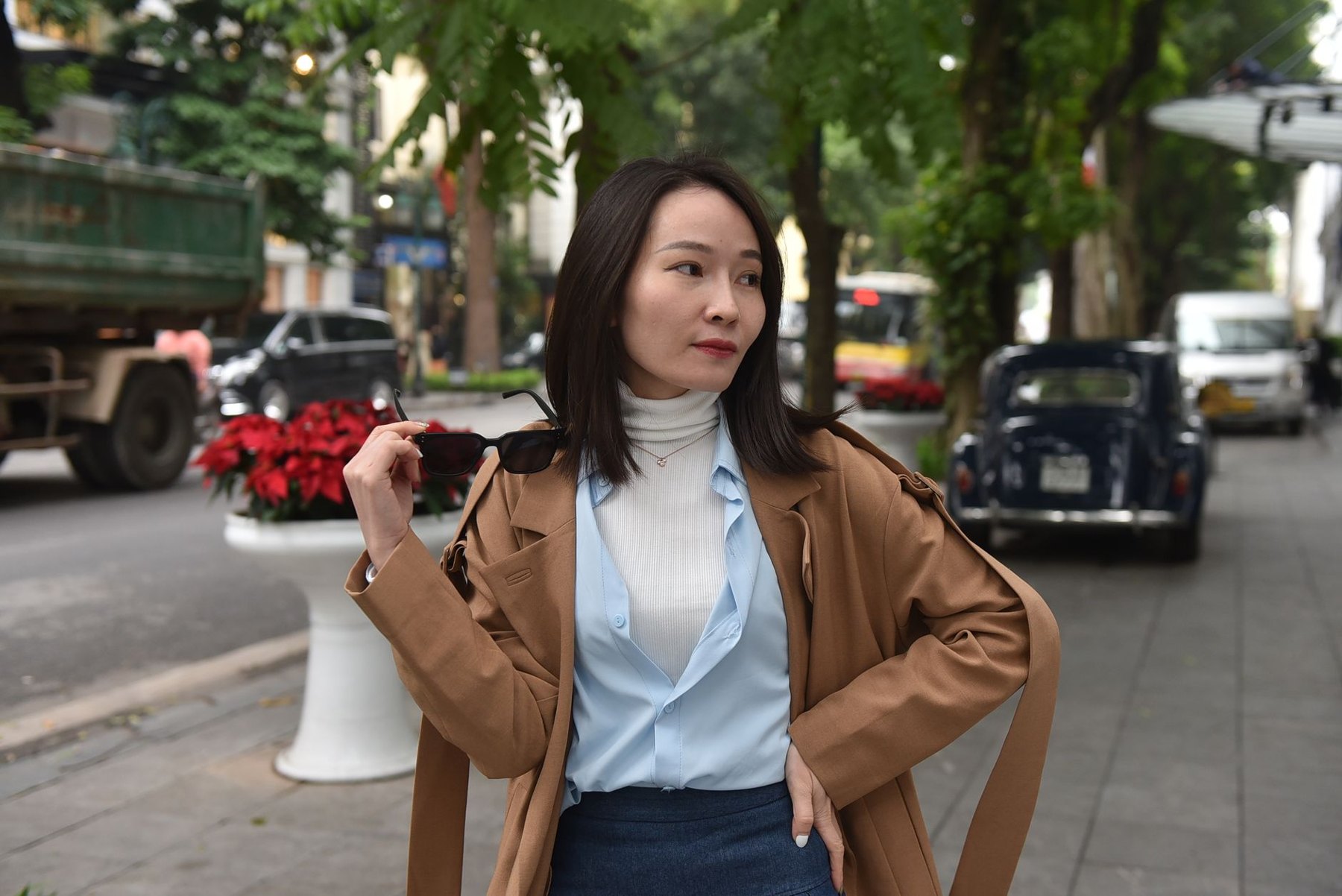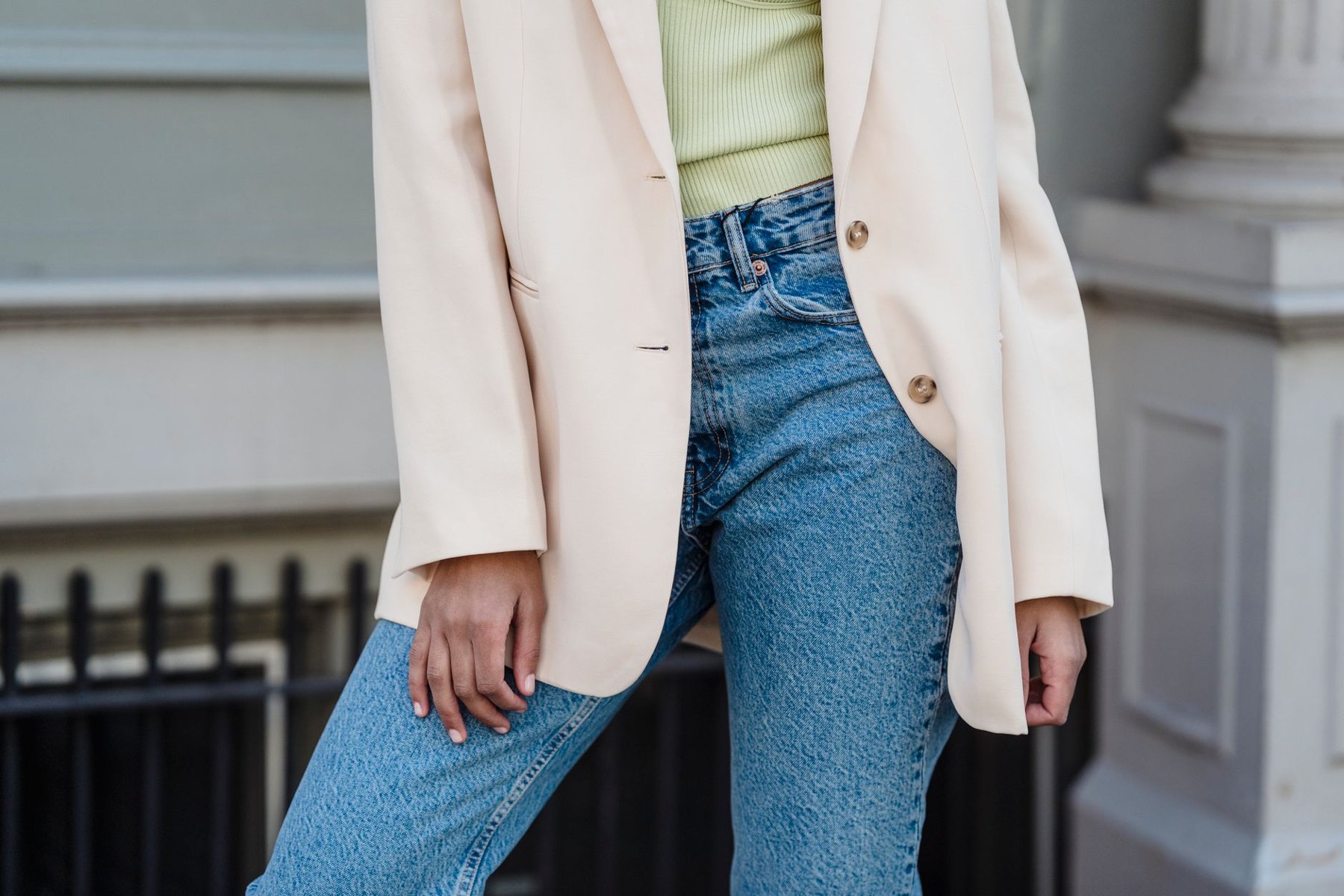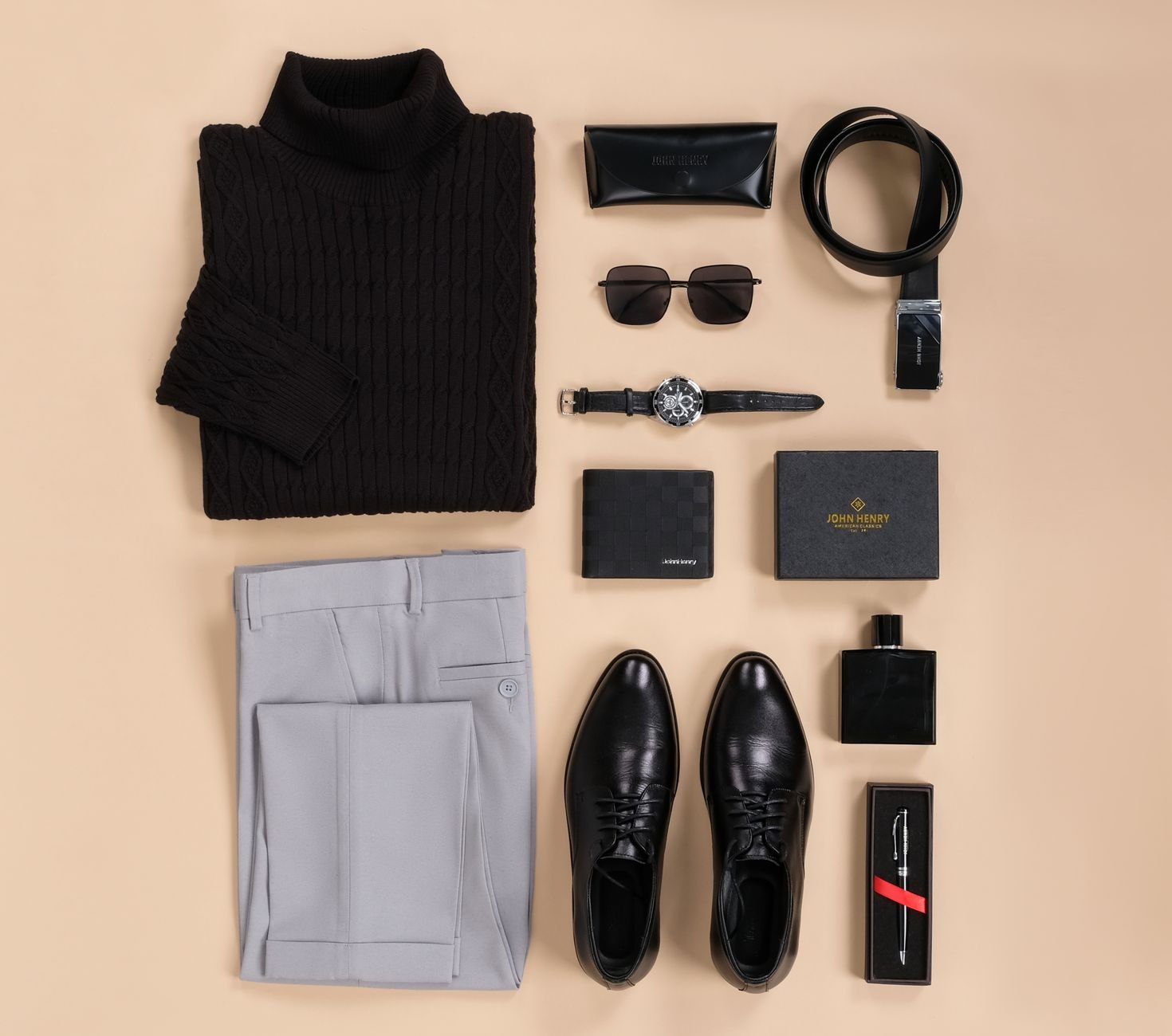
Two pairs of trousers can cover a working week, but changing only the top can leave every outfit feeling much the same. The useful changes happen elsewhere too: a tucked shirt versus a loose knit, a structured jacket versus a cardigan, a contrasting shoe versus one that blends into the trouser hem.
Start with one dark pair and one light pair. For this five-day plan, that means charcoal tailored trousers and a stone pair, both with a straight or gently wide leg. The outfits move between shirts, knitwear, and light layers, with adjustments for walking, public transport, warm afternoons, and cool offices. Use the closest pieces you already own; the point is to make two reliable trousers work harder.
Choose the two pairs around your actual day
The dark trousers should be the pair you can reach for on a rushed morning. Charcoal works with the cream, blue, and burgundy used here. Navy, dark brown, or black can take its place, although you may want to adjust the shoe and jacket colors to suit your wardrobe.
For the light pair, consider stone, oatmeal, taupe, or a muted gray. Choose a shade you feel comfortable wearing on your commute. If pale cream would make you worry about train seats or rainy pavements, a medium taupe still creates a useful contrast with dark trousers.
Check both pairs while sitting down as well as standing. The waistband should allow you to sit comfortably, the pockets should lie reasonably flat, and the fabric should not pull sharply across your lap. With light trousers, check opacity in daylight and look for visible pocket linings before building outfits around them.
Hem length matters because this plan repeats shoes too. Try both pairs with the footwear you actually use for work. If a wide hem drags in flat shoes but clears the floor in heels, it is less flexible for a walking commute. A hem that works with your usual flats or low shoes makes the week easier.
The supporting pieces
- A pale blue shirt, with enough room to move comfortably.
- A cream fine-gauge sweater that fits under a jacket.
- A navy cardigan that can be worn open or buttoned.
- A burgundy knit top, or another muted accent color.
- A white or ivory shirt for the most formal outfit.
- A dark blazer with room for a light knit underneath.
- Comfortable loafers and a second office-appropriate shoe.
- A practical work bag and a few familiar accessories.
These are styling roles, rather than a shopping list. A soft jacket can replace the blazer in a relaxed office. A long-sleeved jersey top can replace fine knitwear if that is more comfortable against your skin. Keep enough variety in neckline, texture, and structure to make the repeated trousers feel intentional.
Monday: dark trousers, a blue shirt, and loafers
The outfit: Charcoal trousers, a pale blue shirt, black loafers, and a dark belt if the waistband needs one. Carry the blazer or wear it for the morning commute.
This is the clearest, simplest outfit of the week. Let the shirt do most of the work: smooth the collar, decide how far to button it, and tuck it neatly enough that the waistband remains visible. A full tuck gives a more contained finish; leaving the shirt untucked can work in a casual office if its length and hem shape suit that.
If a tucked shirt bunches, pull a little fabric back out evenly rather than tightening the waistband around it. Check the back in a mirror. The aim is enough ease to reach forward and sit down without having to rearrange everything afterward.
For a cool commute, add the blazer and an outer layer appropriate to the weather. In a warm office, remove the blazer and keep the shirt sleeves unrolled for a more formal appearance, or turn the cuffs back neatly if your workplace allows it.
The tradeoff: A crisp shirt brings definition, but it may crease through a long seated day. If that bothers you, choose a shirt whose softer texture still looks appealing with a few wrinkles. Save the shirt that needs constant attention for a shorter day.
Tuesday: light trousers and a cream sweater
The outfit: Stone trousers, a cream fine-gauge sweater, brown loafers or flats, and small earrings or a watch. Add the dark blazer when you need another layer.
The lighter base gives Tuesday a different mood without changing the basic silhouette. Cream and stone do not need to match exactly. A visible difference between the two shades, together with the sweater's texture, can make the pairing look more considered.
Try the sweater untucked first. If its hem covers too much of the trousers and the outfit feels shapeless, fold the hem inward or make a small front tuck, provided the knit is thin enough to sit comfortably. A shorter sweater is another option; there is no need to force a bulky knit into a fitted waistband.
Brown shoes add a gentle contrast, while black shoes create a stronger outline. Either can work. Repeat the shoe color in a belt or bag if you like the connection, but avoid adding accessories simply to make every color appear twice.
For an office with strong air conditioning, the blazer can stay on your chair until needed. If your journey is warm, carry the sweater and commute in a simple base top that also looks appropriate on its own.
The tradeoff: A pale outfit may require more attention around coffee, lunch, and wet weather. Plan this look for a day when it feels practical. Moving it to Thursday is easier than spending Tuesday protecting your trousers.
Wednesday: dark trousers with a navy cardigan
The outfit: Charcoal trousers, a navy cardigan over a light top, and the same loafers worn on Monday. Use a necklace or a different neckline to change the area around the face.
Wednesday returns to the dark trousers but replaces the shirt's crispness with softer knitwear. Choose a cardigan that sits comfortably at the shoulders and does not pull between the buttons. Wear it mostly buttoned as a top layer, or leave it open so the light base creates a vertical line down the front.
The base layer should be something you are happy to wear visibly. Check its neckline, sleeve edges, and opacity before relying on it during a warm commute. A layer that only works when completely hidden makes temperature changes harder to manage.
With wider trousers, a cardigan ending near the waistband can give the outfit a clear shape. A longer cardigan can work too, especially worn open, but check that its hem does not gather awkwardly around the hips when you sit.
This is a useful day for more walking because the outfit can stay comfortable without looking unfinished. In a relaxed workplace, clean, understated trainers may be an option. In a more formal office, keep the loafers and add the blazer for meetings.
The tradeoff: Several soft layers can feel bulky under a fitted jacket. Try the combination in advance, including reaching forward as though typing. If the sleeves bind, use the cardigan as your indoor layer and choose a roomier coat outside.
Thursday: light trousers with a burgundy knit
The outfit: Stone trousers, a burgundy knit top, dark shoes, and the navy cardigan carried as an extra layer. Keep the bag and jewelry familiar.
The second outing for the light trousers introduces a stronger color near the face. Burgundy provides an alternative to the week's pale shirts and cream knitwear. If it is not a color you enjoy wearing, try forest green, muted teal, chocolate, or another shade already present in your wardrobe.
Keep the styling straightforward so the color feels easy to wear. With a fitted or straight-cut knit, leave the hem out if it finishes neatly near the waistband. With a longer, lightweight top, try a full tuck and check that the fabric does not show through the light trousers.
Shoe choice changes the emphasis. Dark loafers give the pale trousers a defined finish. Shoes closer to the trouser color make the lower half feel more continuous. Choose whichever effect you prefer, then check the full outfit while standing naturally rather than judging it only from above.
For a chilly office, wear the cardigan open over the knit if the sleeves fit comfortably together. If two knits feel too warm or bulky, use the blazer instead. A sleeveless knit can also make layering easier, provided you are comfortable wearing it alone when the temperature rises.
The tradeoff: An accent color adds variety, but it should still connect with the layers you need. Test the top with your jacket and coat, not just the trousers, before giving it a place in the weekly rotation.
Friday: dark trousers, an ivory shirt, and the blazer
The outfit: Charcoal trousers, an ivory or white shirt, the dark blazer, and loafers or low block-heeled shoes. Add one small accessory that feels personal.
This is the week's most structured combination, useful for a presentation, a client meeting, or an office where Friday is as formal as Monday. The dark trousers return for a third wear, but the light shirt and jacket change the overall balance.
The blazer and trousers do not have to form a matching suit. If their colors or fabrics differ, make that difference look deliberate: a navy jacket with charcoal trousers, for example. Compare them in daylight if two dark shades seem almost, but not quite, identical.
Check the shirt cuffs and collar once the blazer is on. They should sit comfortably without bunching at the neck or wrists. Try sitting with the jacket open, and make sure you can reach for your bag without the shoulders feeling restricted.
If your workplace has a casual Friday, replace the shirt with Tuesday's cream sweater, assuming it is fresh enough to wear again. Push the formality down another step with your usual office-approved casual shoes. The trousers still give the outfit a clear foundation.
The tradeoff: A shoe change can refresh the look, but comfort should decide whether it belongs in your day. If you carry a second pair, check the trouser hem with both pairs so it clears the ground during the commute.
Make the layers work outside and inside
Plan for two temperatures: the journey and the desk. A warm train followed by a cool office calls for layers you can remove easily. A cold walk followed by a warm building may require a substantial coat over a relatively light indoor outfit.
Before leaving, identify the version of the outfit you will wear after removing your outer layers. The shirt or base top should feel complete enough for the office. Then check whether the extra layer fits in your bag, can be carried comfortably, or has somewhere to stay at work.
Wet weather deserves its own adjustment. Choose the trouser-and-shoe combination least likely to drag or become uncomfortable, and move the pale outfit to another day if necessary. The schedule should serve your week, including the forecast and the amount of walking involved.
Keep the rotation realistic
Two pairs only work if their condition supports repeat wear. At the end of each day, check for marks, odors, stretched knees, and wrinkles. Follow the care label for cleaning and pressing, and hang the trousers properly between wears. Do not keep them in rotation simply to complete the plan.
Give the more comfortable pair to your longest day. Put the sharper outfit on the day with the important meeting. After the week, notice which combinations needed frequent adjusting and which let you get on with work. Those observations are more useful than adding another top that solves none of the practical problems.
Keep a short note or a few outfit photos for the next busy Monday. With the proportions, shoes, and layers already settled, getting dressed becomes a matter of choosing the combination that fits the day.