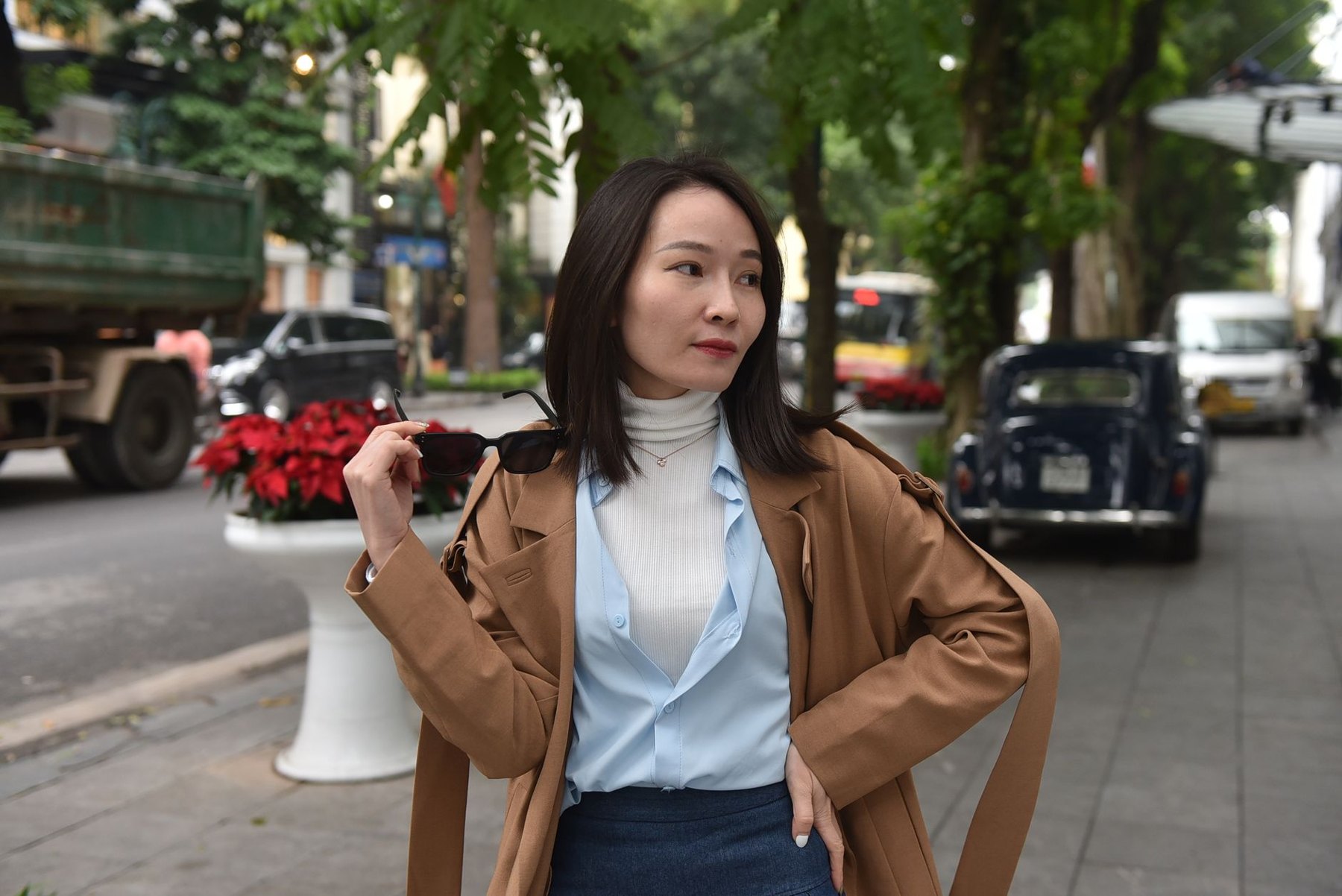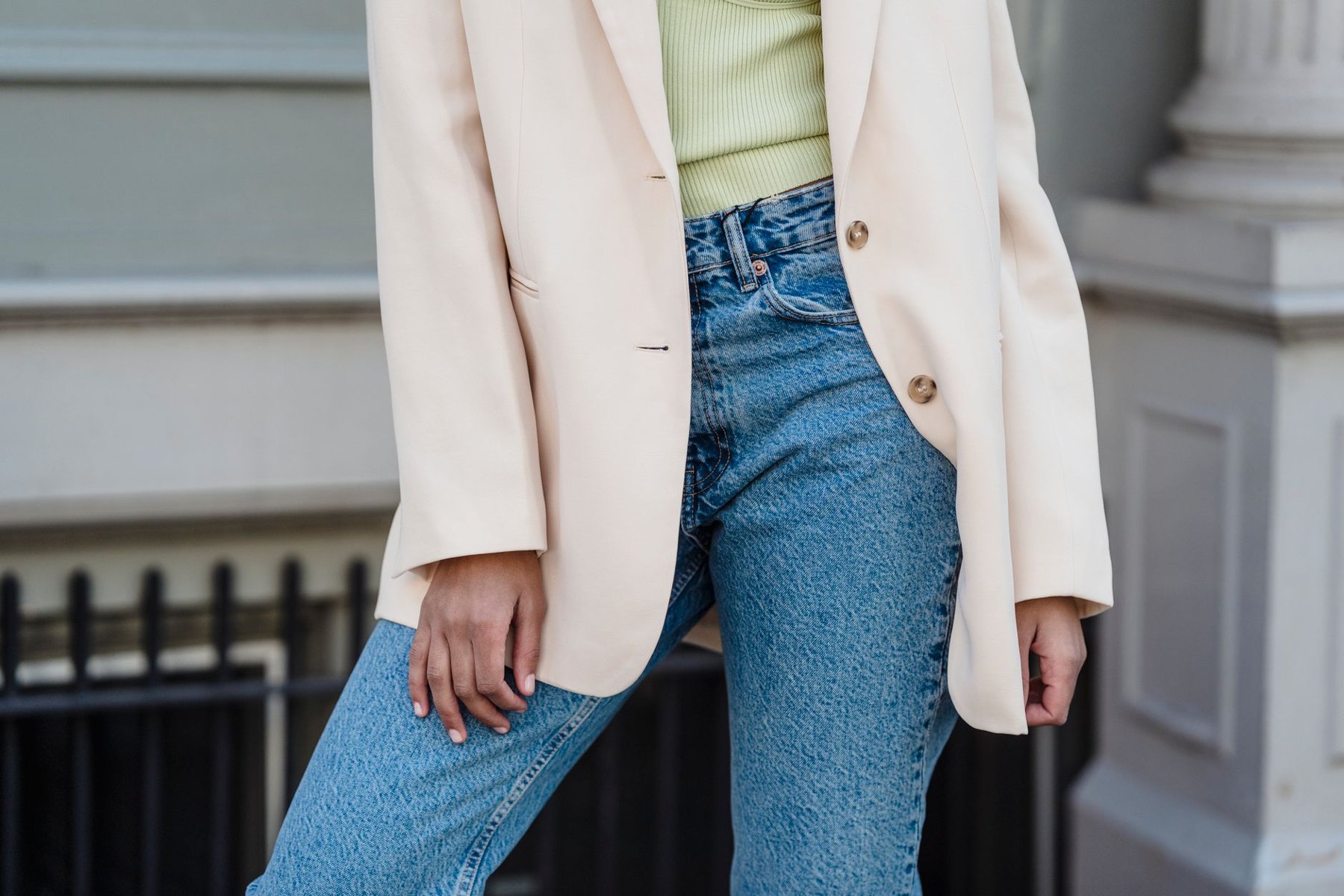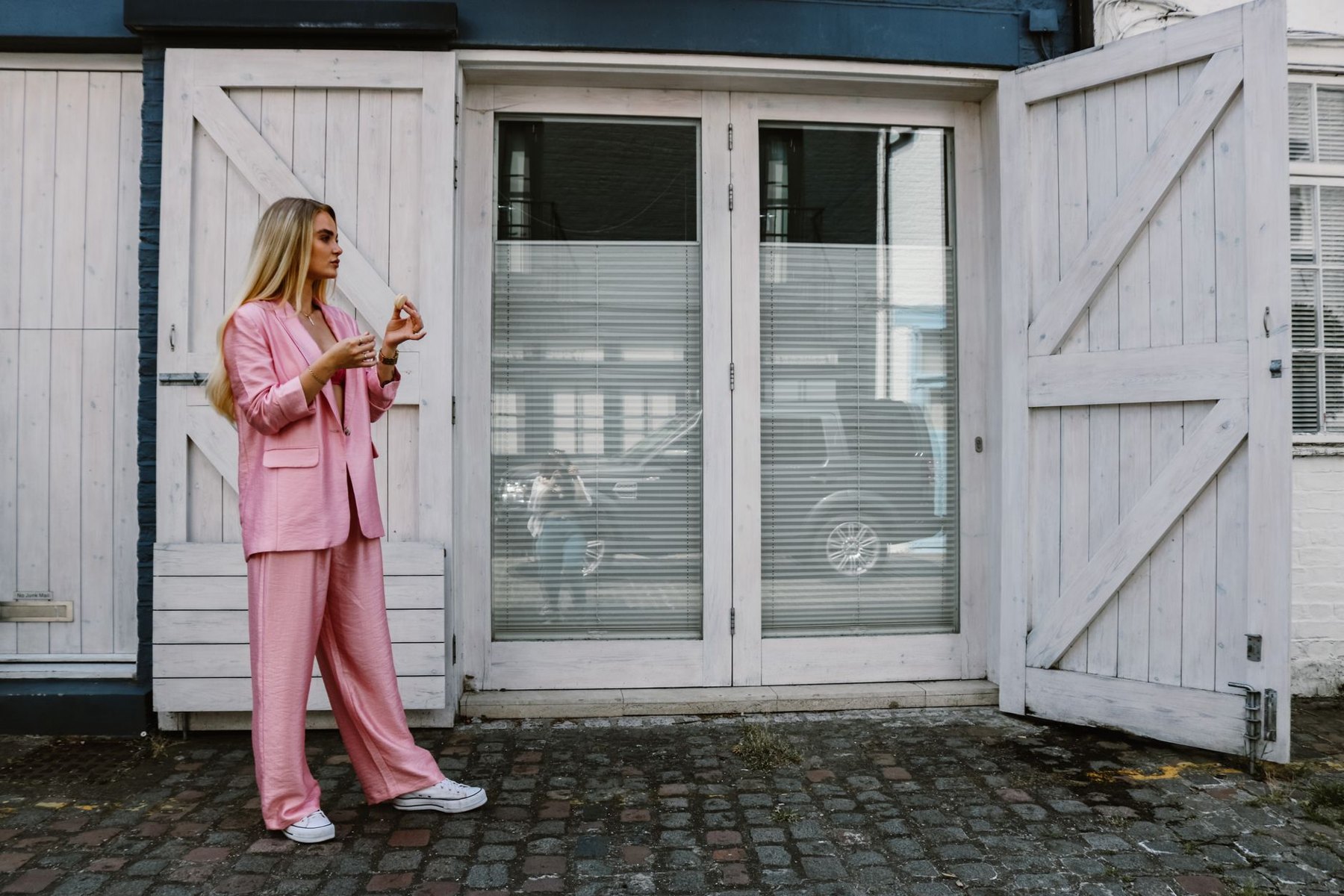
A roomy jacket and wide-leg trousers can look exactly right separately, then feel awkward together. Before changing either piece, check where the jacket ends, how much of the top is visible, and whether the shoes provide a clear finish beneath the trousers. Often, one small adjustment makes the outfit feel more deliberate.
Pairing oversized and fitted clothing is less about following a fixed ratio than deciding where you want space and where you want definition. A fitted top can give a loose jacket a clear outline. A straight skirt can continue the length of a roomy upper half. Wide trousers can sit comfortably beneath a generous jacket when the hems leave enough visual separation.
The three combinations below offer different ways to make those relationships work. Use them as starting points, then adjust for your clothes, comfort, and preferred silhouette.
First, check three points in the mirror
Put on the whole outfit, including shoes, and look from the front and side. Standing naturally is more useful than holding a pose: the outfit needs to work while you walk, sit, and carry a bag.
- Shoulder line: Does the jacket hold a distinct shape, or fall softly around you? Either can work, but each creates a different amount of apparent volume.
- Hem placement: Where do the jacket, top, and lower garment end? Notice whether several edges gather in the same area.
- Shoe volume: Is the shoe mostly hidden, clearly visible, or substantial enough to become a feature?
Change one detail at a time. Open the jacket before trying a different top. Adjust a tuck before changing trousers. This makes it easier to identify which relationship feels off, rather than replacing an outfit that only needs a clearer hemline.
Combination 1: A roomy jacket, fitted top, and wide-leg trousers
This combination keeps most of the outfit spacious while using the top as a close-fitting layer. Think of a loose blazer over a ribbed tank with wide trousers, or a generous denim jacket over a fitted long-sleeve tee with fluid pants.
The fitted top does not need to be tight, short, or revealing. It simply needs to sit closer to the body than the jacket. A smooth cotton tee, fine knit, or stretch top can provide that distinction without restricting movement.
Build the outfit from the inside out
- Choose wide-leg trousers that sit comfortably at your preferred rise.
- Add a fitted top and decide whether to tuck it fully, tuck only the front, or leave it out.
- Put on the jacket and wear it open initially, so the top remains visible.
- Add shoes, then check whether the trouser hems fall cleanly over them.
A full tuck creates a clear meeting point between the top and trousers. Leaving the top untucked gives a softer result, especially when its hem sits fairly close to the waistband. A longer fitted top can work too, though it creates an additional horizontal line beneath the jacket.
Let the jacket hem set the mood
A jacket ending near the waistband makes the trousers a prominent part of the silhouette. A hip-length jacket adds coverage and creates a longer upper section. A jacket extending below the seat produces a more continuous, enveloping shape.
None of these lengths is automatically better. The useful question is whether the hem feels intentional alongside the trousers. If a long jacket and very wide pants feel too expansive together, try opening the jacket wider, choosing a less bulky top, or switching to trousers with a slightly narrower leg.
For example, pair charcoal wide-leg trousers with a fitted ivory tee and a roomy navy blazer. The visible tee gives the eye a clear central shape. If the blazer feels heavy, turn back the sleeves once if their construction allows it, or choose a lighter jacket with a similar cut.
Match the shoes to the trouser opening
Wide hems can conceal a low-profile shoe almost entirely. That can create a flowing line, but it may also leave the outfit without a distinct finish. A visible toe, a thicker sole, or a slightly shorter trouser hem offers alternatives.
Try substantial sneakers for a relaxed look, loafers for a firmer outline, or boots with a visible toe beneath the fabric. A slim flat also works if you prefer a quieter finish; check that the hem clears the ground and does not catch beneath your heel.
The tradeoff: This is the roomiest of the three combinations. It offers ease and movement, but the fitted layer may disappear when the jacket closes. If you expect to wear the jacket fastened all day, assess that version too.
Combination 2: A roomy jacket, fitted top, and straight skirt
A straight skirt gives an oversized jacket a relatively narrow shape to sit above. Unlike a full skirt, it adds little sideways volume, allowing the jacket’s shoulders and sleeves to remain the main source of width.
Start with a straight denim midi, a simple woven skirt, or a column-shaped knit skirt. Straight does not have to mean body-hugging. Choose enough ease to sit and walk comfortably, and check how any slit behaves in motion.
Separate the jacket and skirt hems
A short, roomy jacket with a longer straight skirt creates a clear change in width near the waist. A longer jacket over the same skirt gives a more continuous column, with the skirt extending below it.
If the jacket and skirt finish close together, the skirt can become difficult to distinguish beneath the outer layer. You may enjoy that compact silhouette, but if it feels accidental, increase the distance between the hems. Try a shorter jacket or a longer skirt before changing the entire combination.
For an everyday example, combine a fitted black crewneck with a straight indigo midi skirt and a boxy olive jacket. Leave the jacket open enough to show the top and waistband. Flat ankle boots can give the outfit a defined base; simple sneakers make it feel more casual.
Decide how much shoulder structure you want
A firm shoulder gives the upper half a distinct outline. With a straight skirt underneath, that creates a noticeable contrast between the jacket’s width and the lower half’s narrower shape.
A dropped shoulder behaves differently. Its seam sits farther down the arm, and the fabric may fall into a softer curve. The effect depends on the material: stiff denim can hold a broad shape, while a supple fabric may settle closer to the body.
If a jacket feels more slouchy than you intended, first check the sleeves. Excess length at the cuffs can contribute to that impression. A cuff or sleeve adjustment may be enough, provided it stays comfortable and does not create a bulky roll.
Use shoes to choose the finish
A straight skirt leaves more of the footwear visible than full-length trousers, so shoes have a stronger role in the outfit. A chunky loafer or broad boot adds weight at the bottom. A slim flat or low-profile sneaker keeps the finish lighter.
Pay attention to the space between skirt and shoe. A midi skirt with ankle boots might reveal a strip of leg; a taller boot may continue beneath the hem. Both are workable. Choose deliberately, and check the combination while walking as well as standing.
The tradeoff: A straight skirt creates a clear outline, but some cuts restrict stride. If you spend much of the day walking or using stairs, prioritize sufficient ease, a practical slit, or a flexible fabric.
Combination 3: A fitted top and wide-leg trousers, with the jacket as an optional layer
This combination puts the contrast directly between the top and trousers. It is useful when you want the outfit to feel complete after removing your jacket, or when the weather only calls for an outer layer during part of the day.
Try a fitted boatneck knit with wide denim, a close-fitting tee with pleated trousers, or a simple sleeveless top with loose cotton pants. The top provides a compact upper shape while the trousers carry the volume.
Choose where the top meets the trousers
A top ending at the waistband gives a clean junction without a tuck. A longer top can be tucked fully for definition or left out for more coverage. If you choose a partial tuck, check the side view: fabric can gather at the back or bunch above the waistband.
The trouser rise changes this relationship. A higher rise places the meeting point farther up the torso; a lower rise moves it down. Work with the position you find comfortable, then adjust the top’s length around it.
For example, wear dark wide-leg jeans with a fitted gray knit and low-profile sneakers. If the knit bunches when tucked, try a thinner top or leave it untucked. If the longer hem obscures more of the trousers than you like, fold it under temporarily to test a shorter length before considering alterations.
Add the jacket without losing the base outfit
A cropped roomy jacket preserves a visible division between the fitted top and wide trousers. A longer open jacket frames the same outfit while covering more of the sides. Both can work, but they shift the emphasis.
Try putting the jacket on and taking it off in front of the mirror. If the outfit only feels resolved with the jacket, check whether the top’s hem or the trousers’ waistband needs attention. The goal is a base combination you enjoy wearing on its own.
The tradeoff: A fitted top makes the contrast easy to see, but you may prefer more coverage. A substantial knit, a lined top, or a close-fitting cut with a little ease can offer definition without feeling clingy.
How to adjust an outfit that feels almost right
When the pieces are good but the combination feels unsettled, use the symptom to guide your next change.
| What you notice | Adjustment to try | What it changes |
|---|---|---|
| The upper half feels bulky | Open the jacket or smooth out the layer underneath | Reveals a clearer inner outline |
| Several hems crowd the hips | Tuck the top or try a different jacket length | Reduces overlapping horizontal edges |
| The trousers swallow the shoes | Try a more visible toe or adjust the trouser hem | Gives the lower edge a clearer finish |
| The jacket dominates the skirt | Increase the distance between their hems | Makes the skirt easier to distinguish |
| The outfit feels too rigid | Replace one structured piece with a softer fabric | Adds movement without changing every proportion |
A quick check before leaving
Take a few steps, sit down, and reach forward. Make sure the fitted layer stays comfortable, the jacket sleeves allow movement, and the skirt or trouser hem behaves with your shoes. Put your usual bag on your shoulder too: it can pull a loose jacket inward or change how one side hangs.
Then choose the detail you want to keep prominent: a broad shoulder, a visible waistband, a long skirt line, or the sweep of wide trousers. You do not need to emphasize all of them at once. A small change to one hem or layer is often enough to make the clothes feel like an outfit you chose.