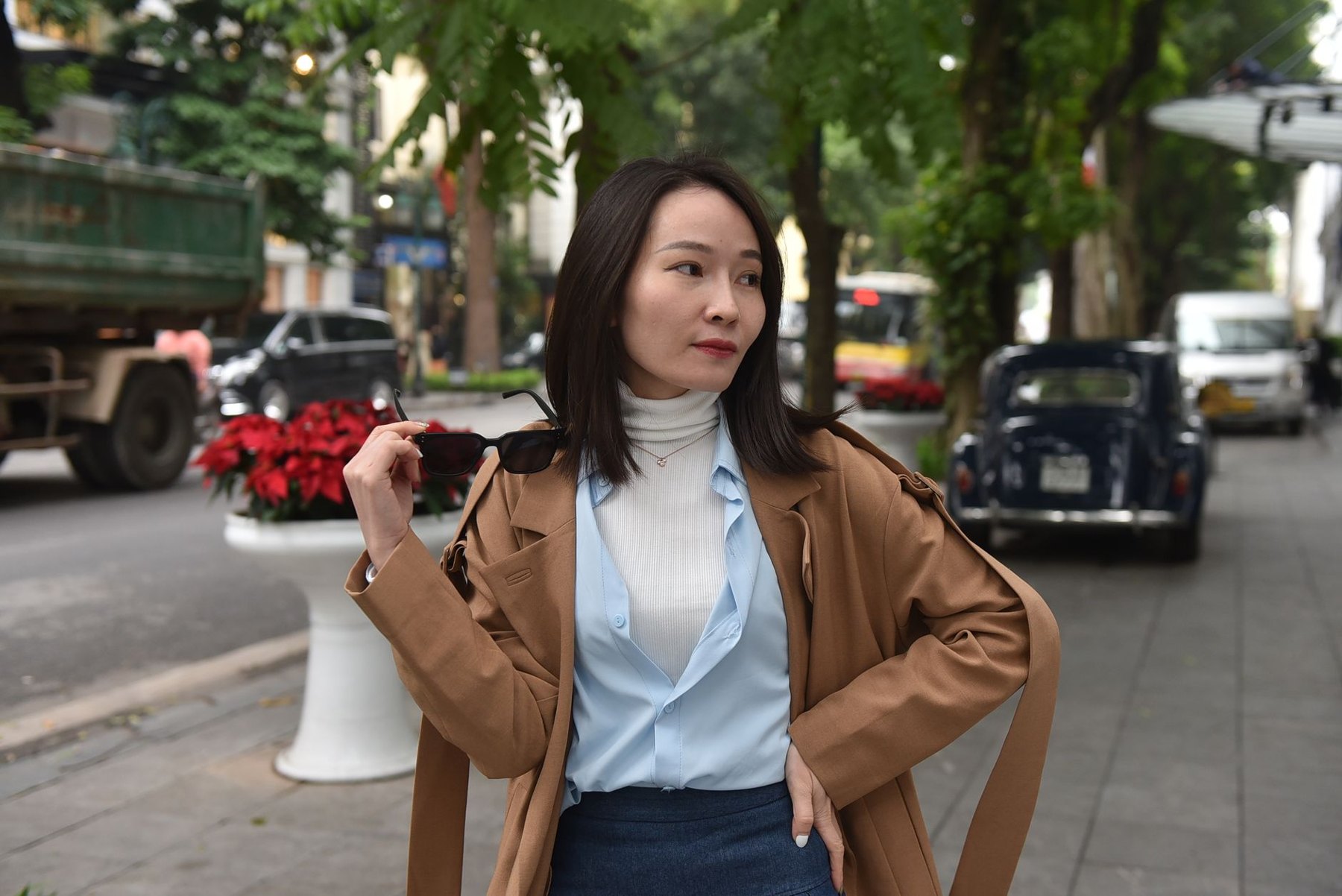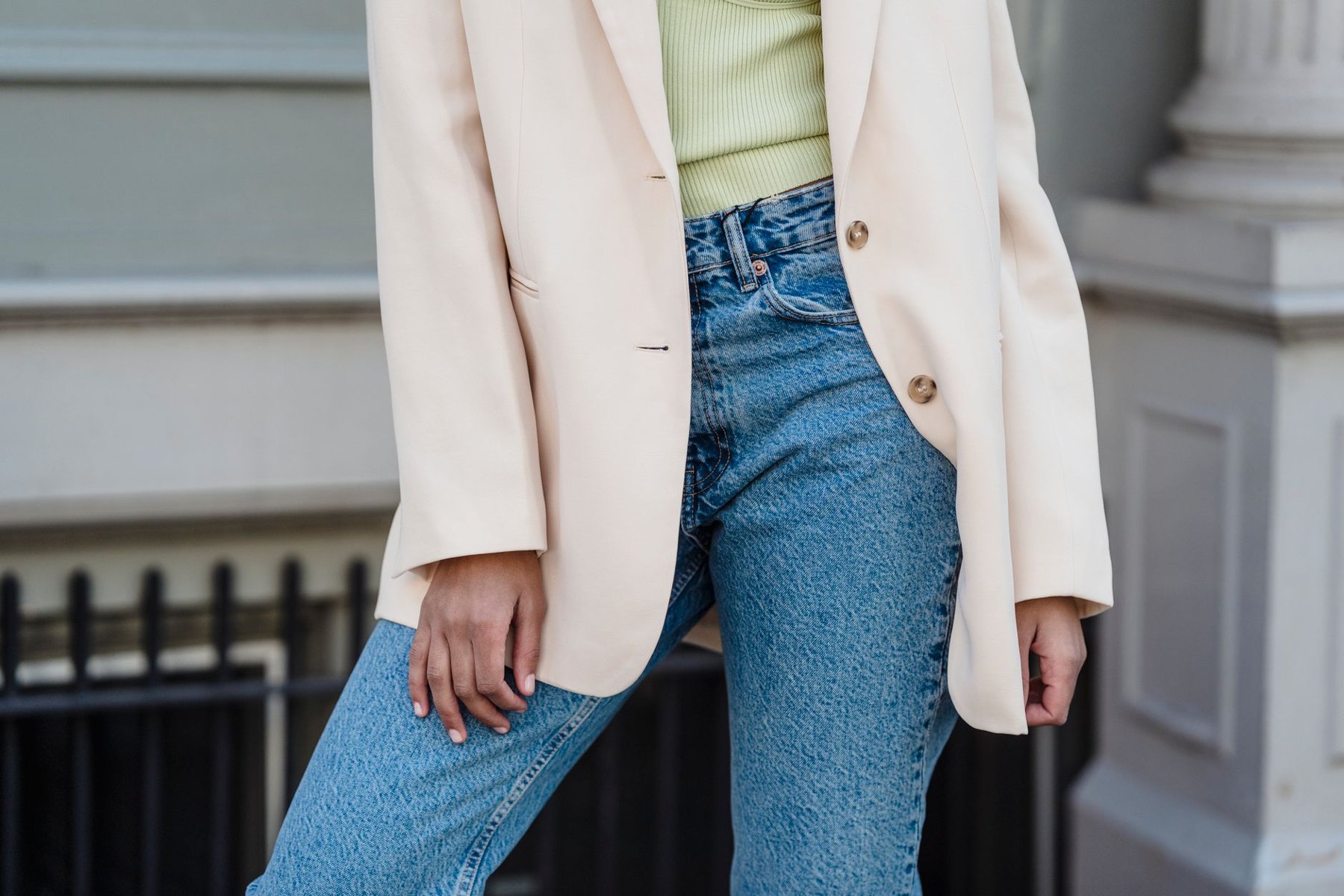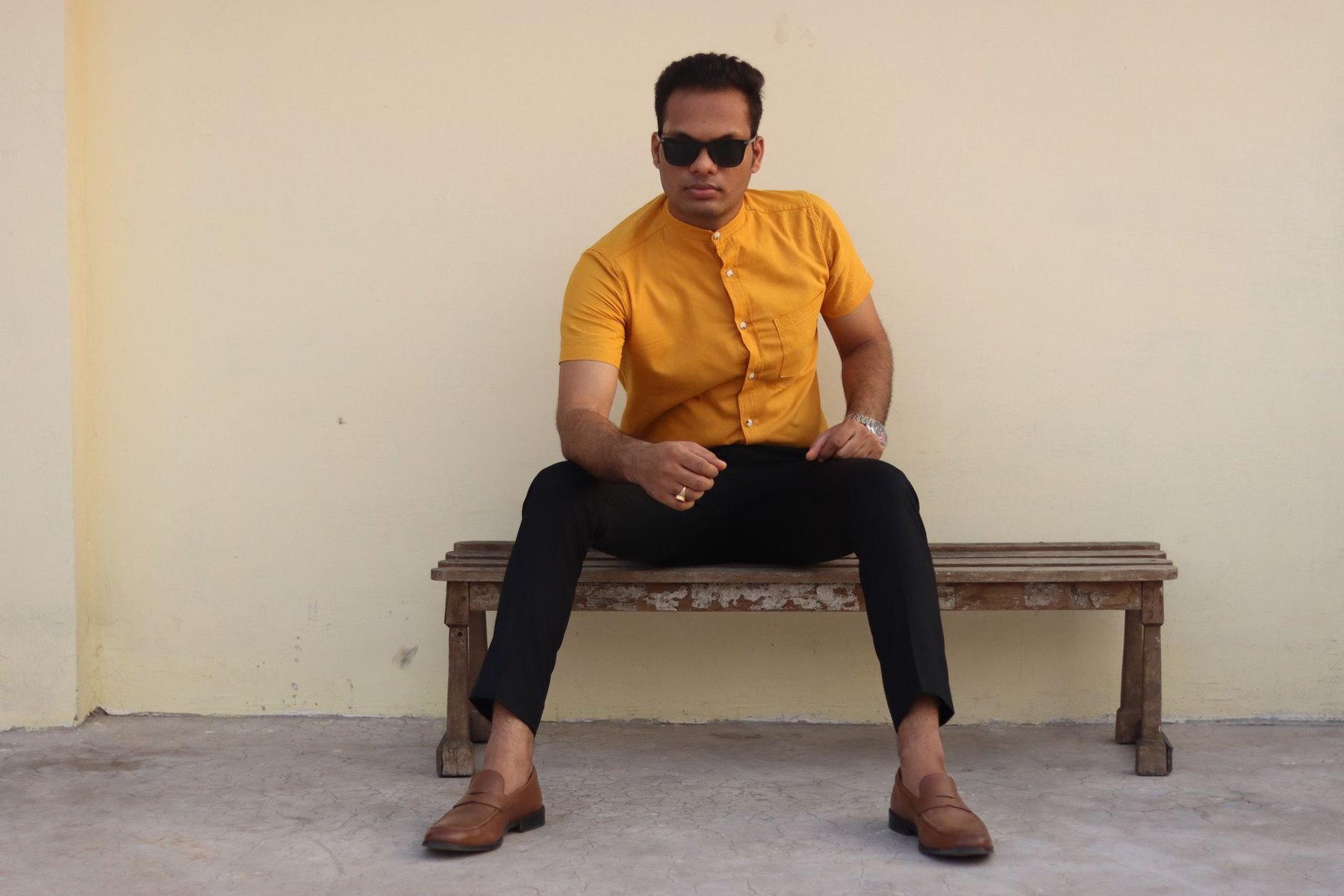
Your shirt and trousers feel comfortable, the colors work together, and yet the outfit seems slightly unresolved. Before adding another layer or changing everything, look at where the sleeves end, how the shirt meets the waistband, and what happens where the trousers reach your shoes. Those small transitions can change how the same clothes sit together.
Start with an outfit you already wear: a cotton shirt, straight-leg trousers, and flat shoes, for example. Change one detail, then step back far enough to see the whole silhouette. Keep the adjustment only if it makes the outfit more comfortable, creates a proportion you enjoy, or connects the pieces more clearly. A finished outfit should still let you sit, walk, and get through your day without repeated fixing.
Roll sleeves to change the balance of a shirt
On an otherwise simple outfit, full-length sleeves can give a shirt a continuous, composed line. Rolling them introduces a break and makes the same shirt feel more relaxed. Neither is automatically better: the useful question is whether the sleeve length suits the rest of the outfit and what you need to do.
Compare a roomy shirt worn over straight trousers with its cuffs buttoned, then with two loose turns at the wrist. The second version exposes more forearm and can make the shirt feel less enclosing. If the trousers are cropped, however, you may prefer full-length sleeves to balance the exposed ankle.
Choose a roll that suits the fabric
- For a crisp cotton shirt: unbutton the cuff, fold it back once, then make another fold of a similar depth. Smooth the fabric without pulling it tight.
- For a soft, draping shirt: try one loose turn first. Several narrow rolls may create a bulky band that fights the fabric’s relaxed shape.
- For a casual overshirt: use a broad fold if the fabric allows it. Stop if the roll becomes stiff or restricts your elbow.
Move your arms after rolling. A cuff that looks good while standing still may feel tight when you reach forward. If it slips repeatedly, leave the sleeve down or use the shirt’s existing cuff buttons for a secure fit. Avoid stretching delicate knit cuffs simply to hold a pushed-up sleeve in place.
For workwear, a low, even roll can sit comfortably with tailored trousers and loafers. With jeans and casual shoes, a looser roll may feel more consistent. There is no need to make each fold identical, but large differences in height can look accidental if the rest of the outfit is precise.
Use a partial tuck to control volume
A partial tuck changes the meeting point between a top and its waistband. It can reveal the trouser rise, give a loose shirt some shape, or keep fabric away from pockets. It is especially useful when you like the ease of an untucked top but want a clearer waist at the front.
Consider the same T-shirt with relaxed trousers. Worn fully out, it creates a long, uninterrupted block of fabric. Tucking a small section at the front reveals more of the trousers while leaving movement around the sides. A full tuck creates a more defined division and may work better under a jacket.
Make a small tuck first
- Let the top hang naturally before adjusting it.
- Tuck a small section into the front waistband, either centrally or slightly to one side.
- Ease a little fabric back out so the top does not pull taut across your stomach.
- Check the side view for bunching, then sit down and stand again.
A thin T-shirt or supple shirt usually needs less space inside the waistband than a thick sweatshirt. If the waistband feels crowded, reduce the amount tucked in. You can also fold the top’s hem inward before trying a shallow tuck, provided the fold stays comfortable and does not create a ridge.
Leave a top untucked when its hem is part of the design, when you prefer a longer silhouette, or when the tuck keeps coming loose. A short, boxy shirt may already meet the trousers at a pleasing point. A long shirt with deep side splits may hang more cleanly without interference.
Try comparing all three versions—untucked, partially tucked, and fully tucked—with the same shoes. This makes the trade-off visible: ease and coverage, a little definition, or a clearer waist. Your preferred result may change with the jacket you add or the amount of sitting your day involves.
Check trouser hems with the shoes you will wear
Trouser length is easiest to judge as part of a complete outfit. A hem that sits neatly over a slim loafer may gather on a chunky trainer. A wide leg that falls well with a heeled boot may touch the floor with a flat shoe. Before changing the trousers, try them with the footwear you actually intend to use.
Look at the front, side, and back. Notice whether the fabric falls freely, catches on the shoe, or collects around the ankle. A little gathering can be an intentional part of a relaxed outfit. If it makes walking awkward or leaves the hem dragging, it needs attention.
Compare three hem effects
- A hem above the shoe: leaves a visible gap and gives socks or ankles a role in the outfit. Check that you like the length when seated, too.
- A hem meeting the shoe: creates a close transition with little fabric gathering. This can be a useful starting point for a straightforward everyday outfit.
- A longer hem with a break: allows fabric to fold where it meets the shoe. Keep the amount of fabric deliberate and clear of the ground.
A temporary turn-up lets you compare lengths before committing to alterations. On jeans or casual chinos, a cuff can also become part of the styling. Start with one fold, then check whether the exposed reverse fabric and extra thickness suit the shoe.
Wide, heavy cuffs add a noticeable horizontal detail. That may be welcome with sturdy boots, while a smaller fold may sit more comfortably beside a light flat. Tailored trousers can look cleaner with a properly finished hem than with a bulky roll. If alteration seems worthwhile, decide which shoes the trousers need to work with before settling on a length.
Add a belt when it has a clear job
A belt can hold trousers in place, mark the waist, or connect details elsewhere in an outfit. It can also introduce an extra line and a prominent buckle where you would prefer simplicity. Try it as a choice, rather than treating empty belt loops as a problem that must be solved.
Take a white shirt tucked into dark trousers. Without a belt, the transition is quiet and the trouser shape stays prominent. A dark belt close to the trouser color adds definition with little contrast. A tan belt creates a stronger interruption and gives that warm color a visible role.
If you want the belt to connect with your shoes, look for a shared quality: similar warmth, a matte finish, or comparable visual weight. Exact color matching is optional. A dark brown belt and brown suede shoes can feel related even when their shades differ.
- Choose a quieter buckle when the shirt, jewelry, or shoes already provide a focal point.
- Try a narrower belt if a wide one crowds the space between the waistband and your top.
- Check comfort while seated, particularly with a rigid waistband or substantial buckle.
- Reconsider the fit if tightening the belt creates large gathers or uncomfortable pressure.
A belt may add little when an untucked shirt covers it completely, unless you need it for support. With a partial tuck, it becomes more visible, so judge the two adjustments together. You may find that revealing the waistband provides enough definition on its own.
Change the shoes before changing the whole outfit
Shoes affect both the mood of an outfit and the way its lower half is balanced. With the same shirt and trousers, a streamlined loafer can feel composed, a trainer more casual, and a substantial boot more grounded. The most useful choice depends on the trouser shape, the setting, and how much walking you expect.
Start by comparing shoe volume. A wide trouser leg may fall easily over a substantial shoe, while a small flat might become almost hidden beneath it. That can be a look you enjoy, but check that the hem stays clear of the ground. With narrow or cropped trousers, more of the shoe is visible, so its shape becomes a stronger part of the outfit.
Use color to adjust the transition
Shoes close in color to the trousers create a quieter transition. A contrasting pair makes the footwear a more obvious feature. Neither approach requires a particular body shape or height; choose according to where you want the eye to pause.
For example, navy trousers with dark loafers keep the lower half relatively continuous. The same trousers with pale trainers introduce a bright endpoint and a more casual feel. If that contrast seems disconnected, a pale shirt or another small light detail may help it feel repeated.
Socks matter whenever they show. Matching them closely to the trousers keeps the gap understated; a contrasting pair makes it intentional. Test the outfit while seated as well as standing. Comfort still leads: a shoe that pinches or changes the way you walk is unlikely to improve the outfit in practice.
Compare adjustments on three familiar outfits
A cotton shirt with straight-leg trousers
Begin with the shirt untucked, sleeves down, and loafers. For a slightly more defined version, tuck the shirt fully and ease out enough fabric to reach comfortably. Keep the sleeves down if you enjoy the clean line. Add a belt only if it supports the fit or contributes a detail you want.
For a relaxed version, try a small front tuck and loose sleeve rolls. Check the combined effect before shortening the trouser hem: showing both forearms and ankles may be more openness than you want. Keeping one area covered can give the outfit a different balance.
A T-shirt with jeans
Compare the T-shirt loose with flat shoes, then partially tucked with the same pair. If the tuck reveals the waistband neatly and feels comfortable, keep it. If it produces a pouch of fabric or pulls at the sides, try a smaller tuck or return to the loose hem.
Next, compare the jeans at full length and with a single cuff. A cuff may reveal a shoe detail you like, but it also adds thickness at the ankle. When the jeans already end where you want them, there is no need to roll them. A shoe change may provide all the variation you need.
A fine-knit sweater with relaxed trousers
Start with the sweater hanging naturally. If its hem covers more of the trousers than you prefer, test a shallow front tuck without stretching the knit. A ribbed hem may also sit comfortably folded slightly inward, though this works only if it stays in place without constant attention.
Compare a light shoe with a more substantial one, watching how the trouser fabric falls over each. If the sweater sleeves stay pushed up comfortably, that can introduce a little openness. If they slide down or feel tight, wear them at their natural length and let the footwear carry the change.
Finish with a movement check
Once you like the outfit in the mirror, take a short walk, reach forward, and sit down. Check whether the tuck pulls, the cuffs tighten, the belt presses, or the hems catch. These small tests help distinguish an adjustment that supports your day from one that only works for a still pose.
Keep the details that do something useful. Perhaps that means one sleeve roll, an untucked hem, and shoes that let the trousers fall cleanly. Perhaps it means a full tuck and a belt, with everything else left alone. Stop when the outfit feels comfortable and the details seem to belong together.