If an outfit feels more broken up than you intended, look at where its colors and edges change: a bright waistband, a trouser hem above a contrasting boot, or a jacket ending at the same point as an untucked shirt. Each transition gives the eye another place to pause. To create a longer visual line, try connecting a few of those areas through color, cut, or the way you wear a layer.
This is an optional effect, not a rule about how bodies should look. You might want a continuous silhouette with wide trousers one day and enjoy the distinct proportions of cropped jeans and colorful socks the next. Neither needs correcting. The useful question is whether the clothes produce the shape and mood you want.
Start with one adjustment at a time. Bring your top and trousers into the same color family, test a slightly longer hem, or leave a jacket open over a simple base. You rarely need all three to make an outfit feel more connected.
1. Connect colors without matching everything
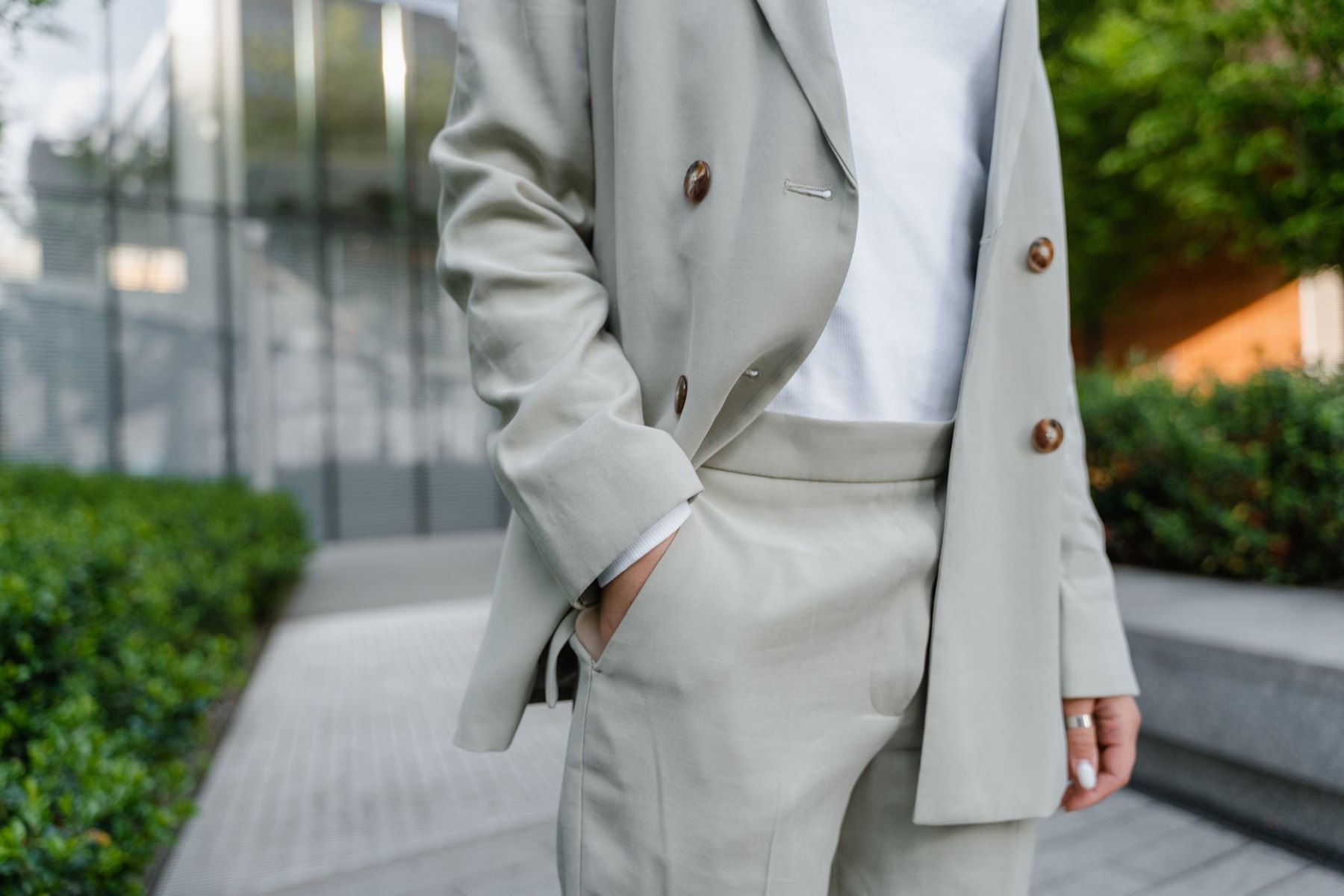
Tonal dressing combines colors that sit close together, such as charcoal and soft gray, chocolate and camel, or navy and muted blue. The pieces can differ in shade and texture while still reading as a connected outfit. Exact matching is an option, but it is not necessary.
For an easy starting point, choose trousers and a top with a similar depth of color. A dark olive knit with dark olive trousers creates less contrast at the waist than the same trousers with a white shirt. If you prefer light colors, try an oatmeal top with cream trousers. An elongated effect does not depend on dressing in black.
Build a tonal outfit in three steps
- Choose a base piece. Start with trousers or a skirt you already like wearing.
- Find a related top. Look for a similar shade or a neighboring tone rather than an exact fabric match.
- Check the connecting details. Decide whether your belt, socks, and shoes should blend in or provide a deliberate break.
Texture keeps close colors interesting. Try a ribbed knit with smooth trousers, a washed denim shirt with darker jeans, or a matte jersey top under a softly textured jacket. The outfit can have plenty of detail without relying on strong color blocks.
There is a tradeoff: very similar colors in slightly different undertones may look less coordinated than you expected. If two browns feel awkward together, separate them with a cream neckline or choose a more obvious difference between light and dark. You do not need to force every near-match to work.
2. Decide where you want contrast
A longer visual line does not require removing every contrasting detail. Instead, choose where you want the eye to pause. A scarf near the face, a necklace, or a contrasting collar can add interest while leaving most of the outfit continuous.
At the waist, a belt close to the trouser color creates a quieter transition. A contrasting belt makes the waist more prominent. Both are useful: one emphasizes continuity, while the other divides the outfit into clearer sections. Choose according to the proportions you want that day.
The same choice applies to a tuck. Tucking a shirt can reveal the trouser rise and give a loose outfit more definition. Leaving it untucked can create a smooth column, provided the fabric falls comfortably. A partial tuck introduces an uneven edge, which you may enjoy even though it interrupts the line. There is no universally best option.
3. Let trouser length work with your shoes
For this styling approach, an uninterrupted trouser length means a leg that falls relatively smoothly toward the shoe. It does not mean fabric trailing on the ground. Excess length can gather around the ankle, creating more folds and interruptions than a clean, slightly shorter hem.
Try trousers with the shoes you intend to wear before judging the length. A pair that hangs neatly over a substantial loafer may bunch over a flatter shoe. A wide hem can also sit differently on a pointed shoe than on a rounded sneaker.
- Wide-leg trousers: Look for a hem that falls cleanly over part of the shoe while clearing the floor as you walk.
- Straight-leg trousers: Try a length that meets the shoe or makes a small, relaxed fold at the front.
- Tapered trousers: Allow room around the ankle rather than expecting the narrower hem to fall over every shoe.
- Cropped trousers: If you want continuity, try socks or boots close to the trouser color.
These are starting points, not tailoring specifications. Fabric weight, hem width, footwear, and your preferred amount of drape all affect the result. Walk, sit, and climb a step when checking a length. A hem that catches under your heel is too long for practical wear with that shoe.
A useful comparison with clothes you own
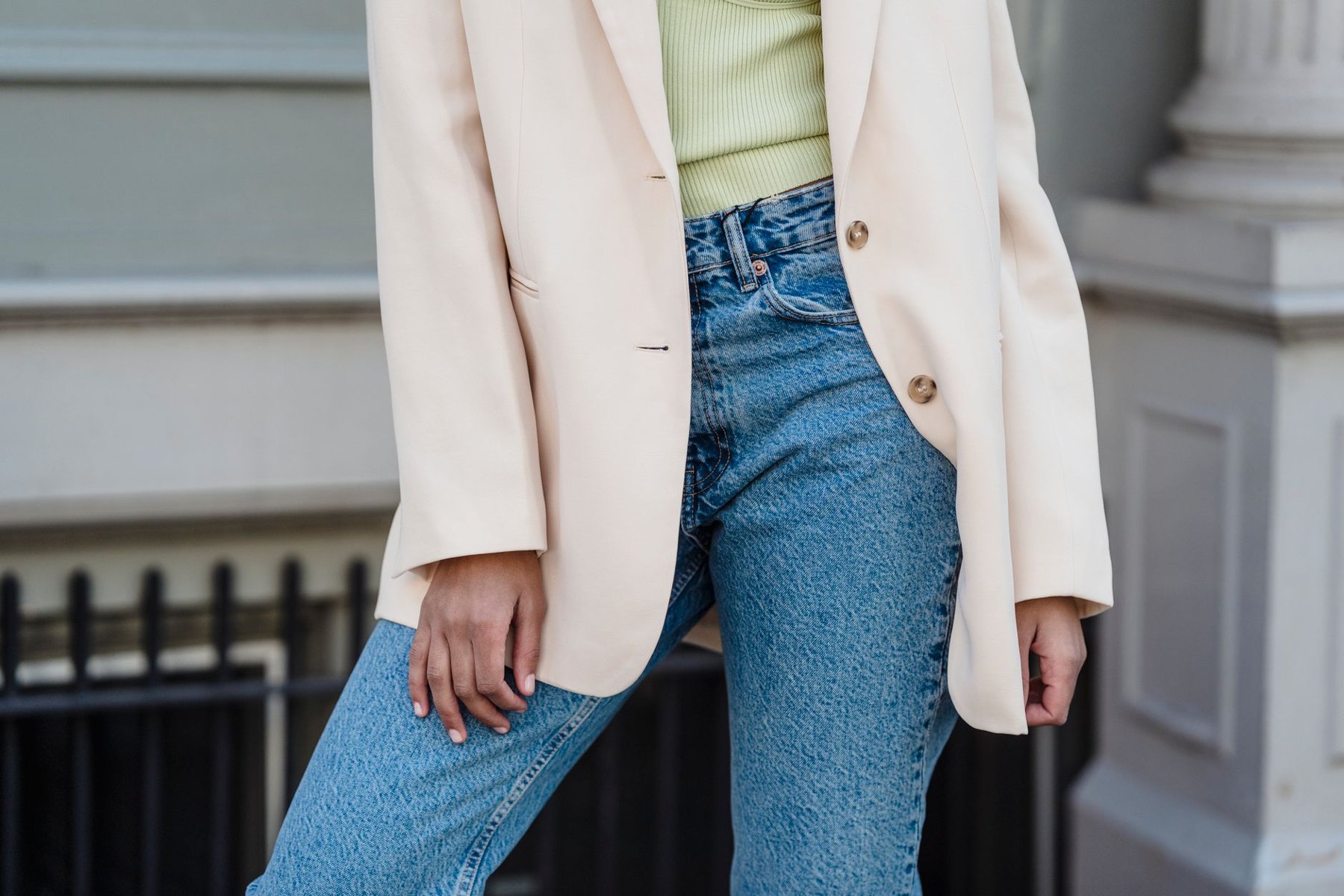
Put on straight-leg jeans with contrasting ankle boots, then try footwear closer to the denim color. Keep the rest of the outfit the same. The second version may feel more continuous through the lower half, even with identical jeans. If you prefer the contrast, keep it; the comparison simply shows which detail is changing the effect.
4. Check the fall of the fabric
Length alone cannot create a smooth line if the trousers pull or catch. Look at whether the fabric hangs comfortably from the waist and hips, whether pockets lie as you want them to, and whether the legs move freely. A roomier cut may produce a cleaner fall than a narrower one.
For fuller hips or thighs, you might prefer trousers with enough room through those areas and a straight or wide leg below. For a straighter silhouette, a fluid wide leg can add movement, while a structured straight leg gives a more defined outline. Neither body shape requires a particular cut; these are different ways to control the garment's shape.
Choose the rise by comfort and proportion rather than assuming higher is always better. A high rise can give more visual space to the trouser section of an outfit, but it can also make a short torso feel crowded. A mid rise with a related-color top may create the continuity you want more comfortably.
5. Use an open layer to frame the outfit
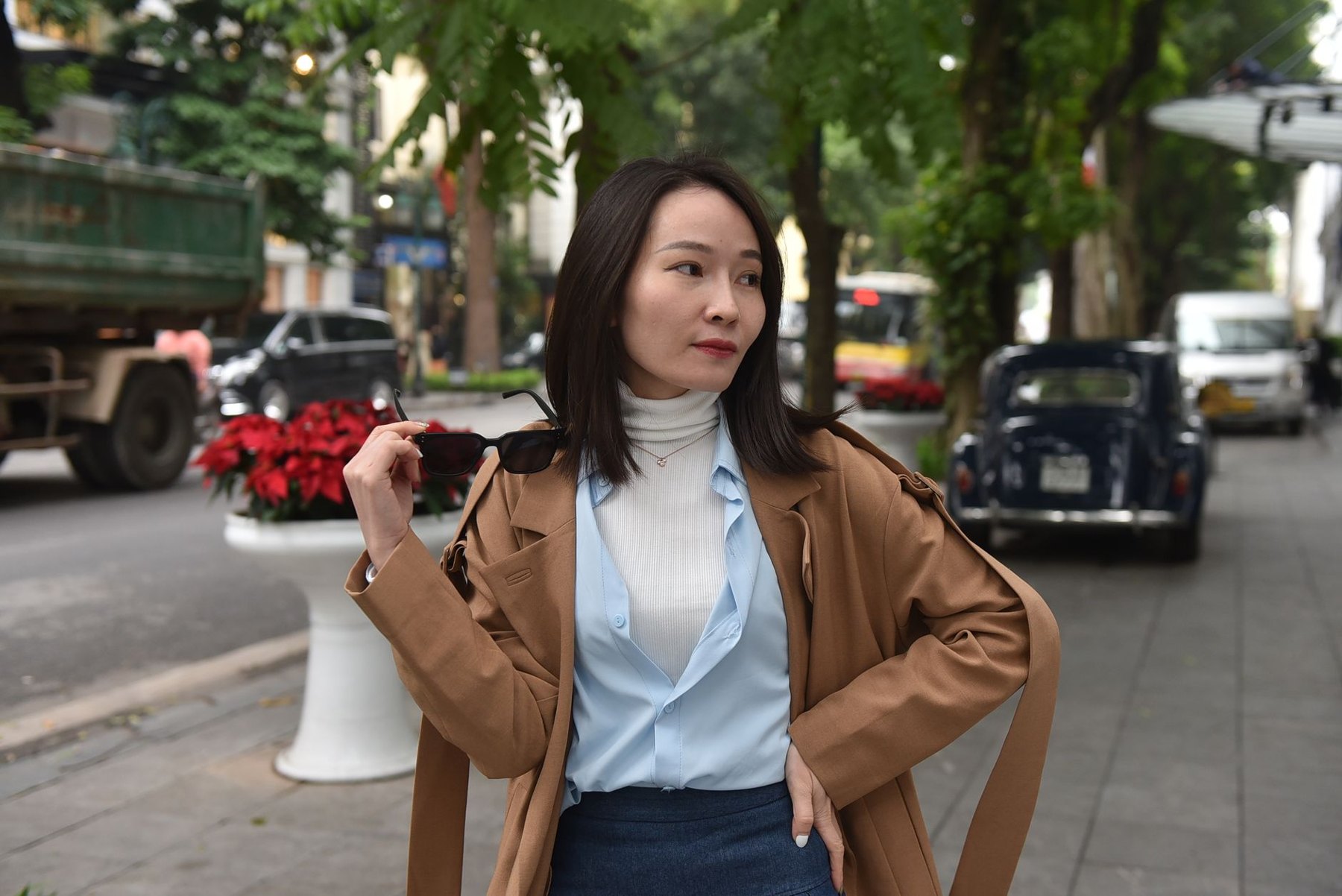
An open shirt, cardigan, blazer, or coat creates two visible edges around the clothes underneath. Over a tonal base, those edges can frame a continuous central section. This is especially useful when you want to wear a contrasting outer layer without dividing the entire outfit into separate color blocks.
Try navy trousers and a navy top under an open camel coat, or cream jeans and an ivory T-shirt under an olive overshirt. The outer layer does not need to be long. A hip-length jacket can frame the base too, although its hem creates a different overall shape from a knee-length coat.
Check how the layer hangs when open. If the fronts continually slide closed, bunch at the sides, or catch on the layer underneath, the effect may be less clear than you intended. A different fabric combination or a little more room can help. You should not need to hold the garment in position.
Weather and comfort take priority. If you need to fasten your coat, fasten it. A closed coat can create its own continuous shape, and the outfit underneath can still use tonal colors or a clean trouser length.
Outfit examples across different proportions
Use these as adaptable combinations. Height, clothing size, torso length, and personal taste overlap in many ways, so take the detail that helps rather than treating any example as a prescription.
For a petite frame: soft navy with a short open jacket
Try a navy fine-knit top, navy straight-leg trousers, and dark loafers, with an open jacket ending around the upper hip. A shorter jacket lets more of the trouser length remain visible. If you prefer a long coat, keep it: check that the sleeves and shoulders sit comfortably and the hem allows easy movement.
For fuller hips and thighs: a fluid tonal base
Pair deep brown trousers that fall comfortably from the hips with a cocoa top and an open shirt. Choose the shirt length by the outline you enjoy, whether that is around the waist or farther down the thigh. If the trouser pockets pull open, try another size or cut before changing the styling.
For a fuller bust or midsection: an easy base with an open layer
Try a soft, straight-cut top with similar-color trousers and an open blazer that has room through the chest and arms. Tuck the top only if you like the result. An untucked top can work equally well when its hem falls freely and the trousers remain comfortable when seated.
For a straight silhouette: texture and chosen definition
Combine charcoal trousers with a gray ribbed top and an open, softly shaped cardigan. Add a charcoal belt if you want subtle waist definition, or a contrasting belt if you prefer a stronger division. A continuous outfit can still include shaping; it does not have to hang loosely from shoulder to hem.
For a tall frame: choose how much continuity you want
Try ecru trousers, a cream shirt, and tan footwear for a light tonal outfit. If the overall line feels longer than you want, introduce a darker belt, roll the sleeves, or choose a cropped trouser length. You can use the same tools to increase or reduce continuity.
Adapt the idea to everyday plans
For work: Pair charcoal trousers with a soft gray knit and an open blazer. Choose the trouser hem around your usual office shoes. If you alternate between flats and heels, a second pair of trousers or a different hem width may be more practical than expecting one length to suit both.
For casual days: Wear dark jeans with a blue sweatshirt and an open denim shirt. Let the denim washes differ enough to feel intentional. Sneakers can blend with the jeans or introduce a clear break, depending on the effect you prefer.
For warmer weather: Try a light cotton shirt and relaxed trousers in related shades, with sandals. Exposed skin at the neckline, forearms, or feet need not undermine the whole outfit. Focus on the larger areas of color rather than trying to make every edge disappear.
For skirts and dresses: Apply the same principle to a top and skirt in related colors, or wear an open layer over a simple dress. If you wear tights, choosing a shade near the skirt or shoes can connect the lower half. A contrasting shoe remains a valid focal point.
A quick check before you leave
- Name the effect you want. Is it a continuous silhouette, a defined waist, or a particular focal point?
- Notice the strongest break. Look at the waist, outer-layer hem, trouser hem, and footwear.
- Change one detail. Swap a belt, adjust a tuck, open a layer, or try another shoe.
- Move around. Check that hems clear the floor and clothes remain comfortable when seated.
- Keep your preferred version. A styling technique earns its place by helping you enjoy the outfit.
If you try only one combination, start with a top and trousers in related colors, then add your usual shoes and outer layer. That gives you a clear base for experimenting without buying anything or rebuilding your wardrobe.