A pendant that looks right with an open shirt can disappear under a crew neck. Earrings that feel understated beside a bare neckline may compete with a raised collar. Before changing the jewelry, look at where it sits: against skin, on fabric, or directly along the edge of the neckline.
The most useful starting point is to choose one main accessory, then give it space. If the necklace supplies the shape, color, or sparkle, keep the earrings quieter. If the earrings are the detail you want people to notice, a necklace can be delicate—or unnecessary. From there, adjust length and scale to suit the opening of your top.
Start with three quick decisions
- Identify the available space. Is the neckline open, close to the neck, or covered by a collar? Notice whether a necklace would rest on skin or fabric.
- Choose the focal point. Pick the necklace or earrings first. The second piece should support that choice rather than automatically match it.
- Check the boundaries. Look for pendants catching on an edge, chains slipping beneath fabric, and earrings brushing the collar when you turn your head.
Use these steps with the garment on. A neckline can sit differently once you button the shirt, add a jacket, or move around. Try your jewelry with the complete outfit before deciding that a combination works.
Match necklace length to where it actually lands
Length labels are a starting point, but the useful measurement is where a necklace falls on you. Neck size, torso proportions, pendant weight, and the shape of the garment all affect its position. An adjustable chain gives you more flexibility when two tops have slightly different openings.
- Close to the neck: Useful when you want a necklace clearly above the garment, provided the neckline leaves enough room.
- Around the collarbone: An option for open collars and shallow openings when the chain stays visible.
- On the upper chest: Helpful for placing a pendant inside a V-neck or over a plain crew-neck top.
- Farther down the chest: Worth trying over covered necklines when you want a longer line and have enough plain fabric to show it.
Avoid treating any of these positions as compulsory. The practical goal is to make the placement look deliberate. If a pendant repeatedly slips halfway beneath the neckline, shorten it enough to stay above the edge or lengthen it enough to sit on the fabric.
Crew necks: choose a clear position above or below the edge
A crew neck creates a curved boundary close to the base of the neck. A chain that follows that boundary too closely can become difficult to distinguish, especially when the fabric has a ribbed trim. Start by moving the necklace away from the edge.
For a simple everyday combination
Try a fine chain with a small pendant that falls visibly below the neckline, over the top. Add compact hoops, small drops, or studs. On a plain T-shirt, the pendant can supply a small point of interest without requiring several other accessories.
For example, pair a white crew-neck tee and dark jeans with a silver pendant and small silver hoops. If you add a jacket, check that its lapels do not hide the pendant or push the chain sideways. Adjust the length with the jacket on.
For a stronger necklace
A rounded necklace can echo the curve of a crew neck. Choose a position where it reads clearly against the fabric, rather than appearing caught on the trim. A broader chain or sculptural piece may suit a plain, smooth top because the background leaves its shape visible.
Keep the earrings simple if the necklace already has substantial volume. Small studs need not match every detail; a shared metal finish or curved shape can provide enough connection.
When earrings are the better choice
If the crew neck has a graphic print, decorative trim, or textured knit, try leaving off the necklace. Medium hoops or distinctive earrings can finish the outfit while keeping the chest area less crowded. This is also a useful option when necklaces feel distracting against the fabric.
V-necks: work within the opening
A V-neck gives you a defined area in which to place a necklace. A pendant or gently dropping chain can follow its direction, but it does not need to reproduce the exact angle. Focus on leaving visible space between the jewelry and the fabric.
Place a pendant inside the V
Start with the pendant resting above the lowest point of the neckline. Check that the chain stays within the opening at the sides. If the pendant sits directly on the tip of the V, the two details may merge; a small length adjustment can separate them.
For an everyday outfit, try a navy V-neck knit with a small gold pendant and gold studs. For more emphasis, choose a larger pendant and keep the earrings compact. The neckline already supplies a strong shape, so you may find that one necklace is enough.
Adjust for shallow and deep openings
A shallow V offers less room. Try a shorter chain, a smaller pendant, or earrings alone rather than squeezing several layers into the opening. A deeper V gives you more placement options, including a short chain with a second, longer pendant.
If you layer necklaces, keep their lowest points distinct. Start with two pieces and check whether they remain separate as you move. Chains that look neatly spaced while standing still can overlap once you sit or lean forward.
Let earrings change the mood
A fine pendant with small hoops can feel easy enough for daytime. With the same top, removing the necklace and adding longer earrings creates a different emphasis. Choose this version when you want the open neckline to remain visually clear, particularly if the garment has ruching, lace, or another detail near the opening.
Open collars: account for the collar itself
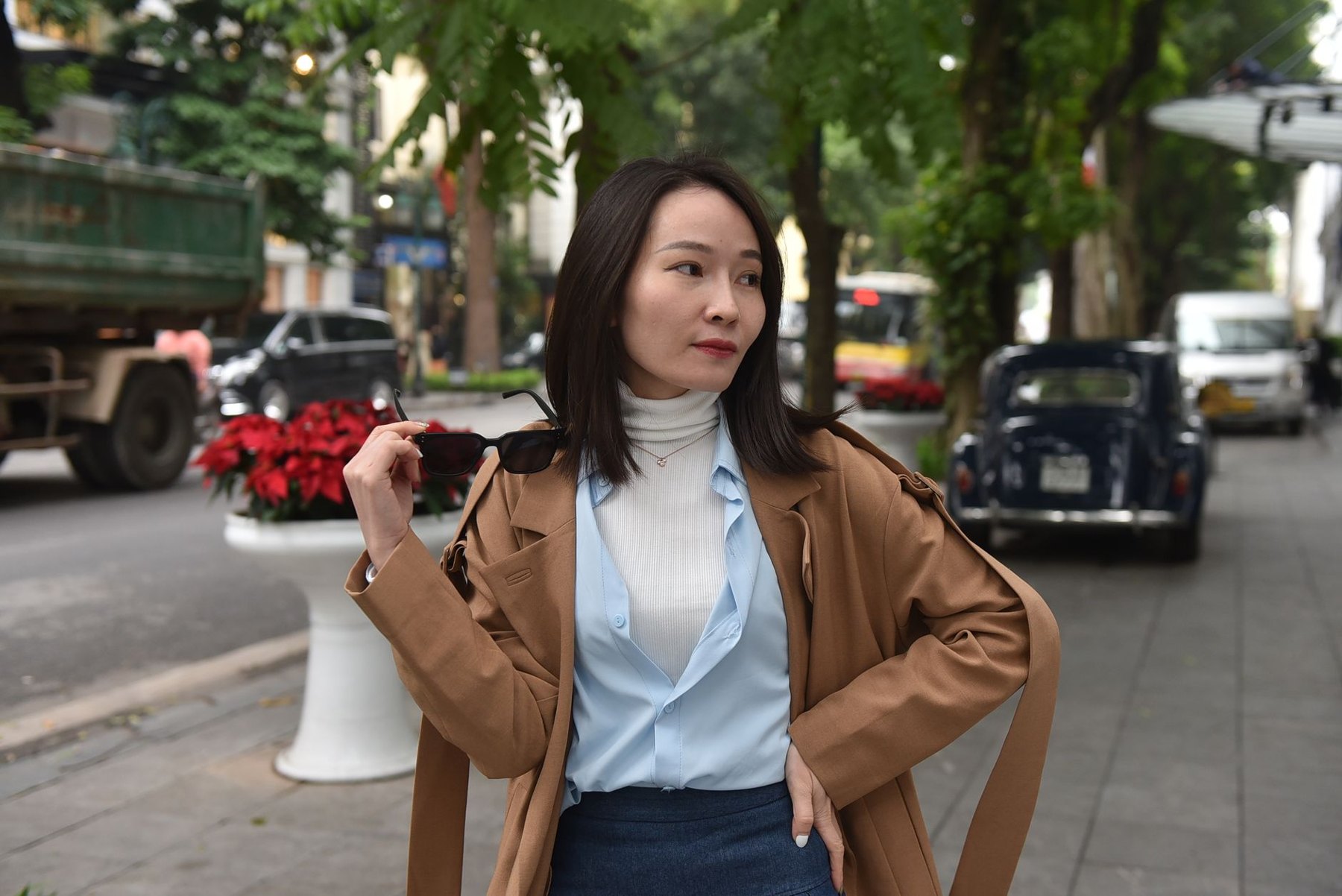
An open shirt has more going on than its central opening suggests. Collar points, buttons, plackets, and sometimes pockets all sit near the jewelry. The best necklace position depends partly on how far you leave the shirt unbuttoned.
Keep a short necklace inside the opening
A short chain or small pendant can sit neatly in the exposed area above the first fastened button. Put the shirt on, arrange the collar as you intend to wear it, and then adjust the chain. Check that the pendant does not disappear behind the placket when you sit.
For a workwear combination, try a pale blue shirt with a fine chain and small hoops. If you wear a blazer over it, keep the jewelry visible within the remaining opening. A necklace that works with the shirt alone may become hidden once the lapels are added.
Use earrings when the opening is narrow
If you prefer the shirt mostly buttoned, earrings may be easier to position than a necklace. Studs, close-fitting hoops, or compact drops leave room around the collar. Larger earrings can work too, but turn your head to check whether they catch or brush against the collar points.
Take care with longer necklaces
A longer necklace over a shirt can create an intentional layered look, though it may cross buttons or settle unevenly along the placket. Try it with a plain shirt and inspect the position while seated. If you keep readjusting it, choose a shorter chain inside the opening or make earrings the main accessory.
High necklines: consider texture and clearance
Mock necks and turtlenecks cover the space where shorter necklaces usually sit. This makes earrings an easy starting point, while necklaces need enough length to rest visibly on the garment.
Make earrings the focal point
Try a fine-gauge black turtleneck with sculptural silver earrings, or a cream mock neck with rounded gold hoops. With no necklace competing for attention, the earrings can provide the main decorative detail.
Check their clearance against the fabric. Long earrings may brush a folded turtleneck, while wide earrings can touch a raised collar as you turn. If that contact bothers you, try a shorter drop or an upward-curving shape.
Wear a necklace over the fabric
A pendant or longer chain can break up a plain high-neck top. Choose enough visual weight for the piece to remain visible: a very fine chain may be hard to see against a thick, textured knit. On smoother fabric, a more delicate necklace may give you the effect you want.
Consider the surface of the jewelry as well. Check clasps, settings, and decorative edges for anything that might catch in the knit. If a necklace drags, snags, or sits awkwardly on a folded neckline, leave it off and use earrings instead.
Balance jewelry scale across the whole outfit
Scale includes more than size. A small, bright, reflective earring can draw attention, while a larger matte piece may look relatively quiet. Judge jewelry by its outline, movement, color, and shine as well as its dimensions.
| Main accessory | Supporting choice | What to check |
|---|---|---|
| Bold chain necklace | Small studs or compact hoops | Whether the earrings add another competing shape |
| Large or colorful earrings | No necklace or a fine chain | Whether the neckline gives the earrings enough space |
| Small pendant | Small hoops or simple drops | Whether both pieces remain visible |
| Layered necklaces | Quiet earrings | Whether chains overlap or meet the neckline awkwardly |
These are starting combinations, not limits. If you enjoy a more decorative look, wear substantial earrings and a substantial necklace together. Connect them through one feature—such as rounded forms or a similar finish—and check the result with the garment's pattern and collar included.
Mix metals with one simple connection
Gold-tone and silver-tone jewelry can share an outfit without every piece containing both. Start with one metal as the main presence, then introduce the other through a smaller supporting piece.
For instance, wear a silver chain with small gold hoops, or a gold pendant with silver studs. Give the pieces something else in common: similar delicacy, clean geometric shapes, or a softly textured finish. This makes the combination easier to assemble without buying a matching set.
A two-tone piece can also provide a connection if you already own one. Wear it alongside a single-metal necklace or pair of earrings, then assess the outfit as a whole. Bag hardware and belt buckles can stay in the picture without requiring every metal surface to match.
If the result feels busier than you intended, simplify one variable. Keep the mixed metals but reduce the number of pieces, or choose quieter shapes. You can explore color contrast without also adding several chain lengths, large drops, and decorative pendants at once.
Make earrings the main accessory
Choose the earrings first, then put on the top before adding anything at the neck. This reverses the habit of treating a necklace as an automatic finishing step.
- With a crew neck: Try bold hoops or sculptural studs against a plain top.
- With a V-neck: Use drops to frame the face while leaving the opening clear.
- With an open collar: Choose a length that clears the collar points comfortably.
- With a high neckline: Try a visible shape that stays free of the raised fabric.
Arrange your hair the way you expect to wear it, too. Earrings partly covered by loose hair create a different effect from the same pair fully visible with hair tucked back. Neither needs correcting; decide which version suits the outfit and feels comfortable.
Do a final movement check
Before heading out, sit down, turn your head, and reach forward. Check whether the pendant stays visible, the chains remain reasonably separate, and the earrings clear your collar. Look at the full outfit from a little distance as well as close up.
If something feels crowded, remove one piece and look again. If a necklace keeps meeting the neckline awkwardly, change its length before replacing it. A small adjustment—or choosing earrings alone—may be all the outfit needs.