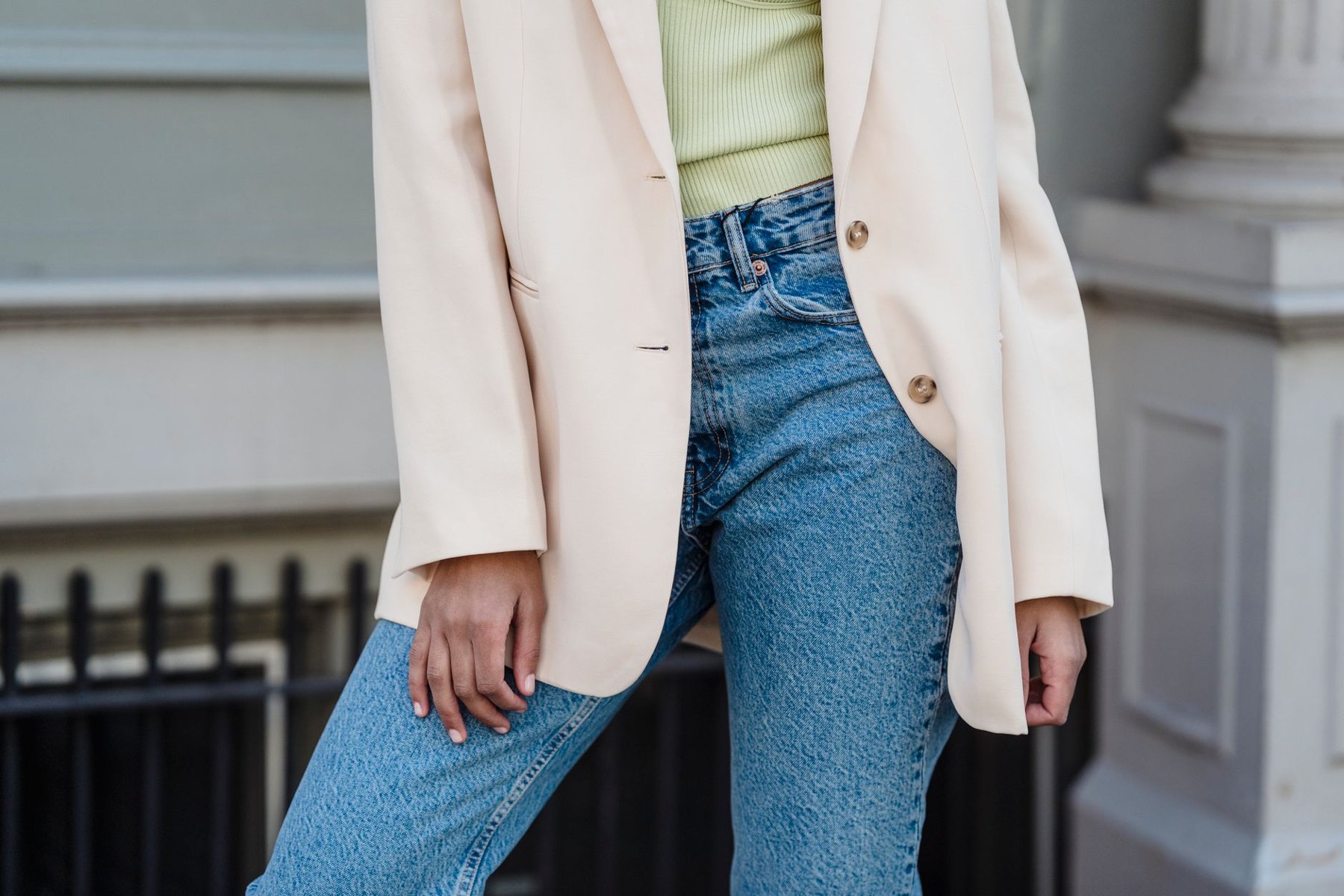
If a long coat and boots make an outfit feel heavy, check the space between the coat hem, the bottom of your jeans or skirt, and the top of your boots. A trouser hem catching on a boot shaft can interrupt an otherwise clean line. A thick sweater can push the coat forward at the waist. A skirt that looks right while standing may bunch around your knees when you walk.
Start with the clothes you plan to wear underneath, add the boots, and put the coat on last. This makes it easier to see which piece needs adjusting. The aim is a combination that lets you move comfortably and gives each layer enough room to fall as intended.
Check three points before changing the outfit
Stand in front of a mirror with your coat open, then fasten it as you would outdoors. Look at the shoulders and upper arms, the waist and hips, and the meeting point between your bottoms and boots. These checks tell you more than judging the coat length on its own.
- At the upper body: reach forward and bend your elbows. Your knitwear should fit inside the coat without pulling the sleeves tight or pushing the collar away from your neck.
- Through the middle: check whether the coat falls freely over your waistband, pockets, and sweater hem. Several thick layers gathered in one place can create an unintended ridge.
- Near the floor: walk a few steps and turn. Watch for trouser hems dragging, denim catching on boot openings, or a skirt repeatedly sticking to the boot shafts.
Change one thing at a time. Try a thinner knit before deciding the coat is too small, or a closer-fitting boot shaft before deciding the jeans need shortening. Small adjustments often preserve more of the outfit you wanted to wear.
Straight jeans: give the hem a clear place to land
Straight jeans work well with long coats because their relatively even leg shape provides a steady line beneath the outer layer. The main decision is whether the denim ends above the boot, rests near its top, or falls over the shaft.
For cropped straight jeans, check the gap while sitting
With ankle-length jeans, choose boots whose shafts reach comfortably beneath the denim if you want continuous coverage. A gap that looks tiny while standing can become much larger when you sit. That may be fine indoors, but it can feel cold outside.
If you prefer a visible gap, make the sock part of the outfit. A charcoal sock between dark jeans and black boots keeps the transition quiet; a burgundy or cream sock creates a more distinct break. Check that the sock stays high enough when the jeans rise.
A slightly narrower boot shaft often sits more easily beneath cropped straight denim. A wide opening can catch the hem, leaving one leg resting higher than the other. There is no need to reject either piece immediately: try a longer pair of jeans or boots with a different shaft shape.
For full-length straight jeans, keep the break manageable
Full-length jeans can fall over boots with a small fold where the denim meets the foot. The right amount depends on the fabric and the look you enjoy. Rigid denim tends to hold its folds, while softer denim may gather more loosely.
Check the back hem as well as the front. If it slips beneath your heel or brushes the ground, the jeans need a shorter length or a different boot height. A long coat already brings plenty of fabric into the outfit; extra denim gathered around the ankle can make the lower half feel busier than intended.
For an everyday combination, try dark straight jeans, close-fitting ankle boots, a fine or medium-weight crewneck, and a calf-length coat. Leave the coat open to show the waistband, or close it and let the clean denim-to-boot transition carry the lower half.
Wide trousers: choose length with the boots on
Wide trousers need room to swing over the boots without catching. Before adjusting the waist or adding a belt, check how the trouser leg behaves from the knee down. A broad boot shaft, substantial hardware, or a bulky folded hem can interfere with the fall.
Let the fabric skim the boot
Put on the boots you expect to wear most often with the trousers. Let the waistband sit in its normal position, then look at the hem from the front, side, and back. The fabric should clear the floor and stay out from under the sole when you walk.
A longer hem can create a flowing line over the boot, but it also leaves less clearance for wet pavements and stairs. A shorter hem is practical and reveals more footwear, though it creates a clearer horizontal break. Choose according to your actual day: a walking commute may call for more clearance than an indoor event.
If you alternate between flat boots and heeled boots, the same trousers may not sit equally well with both. Rather than pulling the waistband higher to compensate, pair each trouser length with a suitable boot. For alterations, use the footwear you plan to wear with that pair.
Balance volume with a deliberate knitwear shape
Wide trousers do not require a fitted sweater, but the sweater needs a clear relationship with the waistband. A fine knit tucked in, a shorter boxy knit, or a longer sweater worn loose can all work. Each gives a different result.
- A fine knit tucked in: exposes the trouser rise and keeps bulk away from the coat fastening.
- A shorter, substantial knit: adds texture while allowing the trouser leg to remain visible from near the waist.
- A longer, relaxed knit: creates a soft, generous outline, especially with a roomy coat, but adds fabric around the hips.
For example, charcoal wide trousers, dark boots, a cream knit ending near the waistband, and a long navy coat create distinct layers without needing a tightly cinched waist. If the sweater bunches under the coat, try wearing it untucked or replacing it with a thinner knit before adding more accessories.
Midi skirts: decide how the skirt and boots overlap
With a midi skirt, the boot shaft becomes part of the visible outfit. Its height affects coverage, while its width affects how freely the skirt moves. Check the combination in motion, especially if the skirt is narrow, pleated, or cut from a fabric that catches easily.
Use an overlap for coverage
A skirt hem that falls over tall boots can create a continuous line and keep the legs covered. The overlap needs to remain comfortable when you sit and climb steps. If the skirt only just meets the boot while standing, it may reveal a gap as soon as you move.
For a narrow midi skirt, a boot shaft that sits relatively close to the calf often leaves more room inside the skirt. A wider shaft can push against the fabric or become visible as a ridge. With an A-line skirt, there is usually more space around the boot, although the lining and fabric weight still affect movement.
Try a knitted midi skirt with smooth tall boots, a lightweight sweater, and a straight long coat. If both the skirt and sweater are thick, check that the coat closes without pulling across the hips.
Make a visible gap intentional
Ankle boots can work with a midi skirt when you want a lighter-looking transition. The exposed section of leg or tights creates a break between the skirt and footwear. Dark tights with dark boots make that break less pronounced; contrasting tights or boots draw more attention to it.
There is no universal amount of space to leave. Look at where the skirt ends, how the boot opening sits, and whether the combination feels comfortable in the weather. If the opening rubs your leg or catches the skirt lining, adjust the footwear or hosiery.
Check the relationship between the skirt and coat hems
A skirt can finish above, near, or below the coat hem. When the lengths are close, check whether the skirt appears only occasionally as you move. You might enjoy that subtle layer, or prefer a more visible difference between the two hems.
A longer skirt showing beneath a shorter coat adds another band of color and texture. Keep it if it contributes something you like: pleats moving beneath a plain coat, for example. If the lower half feels crowded, try a coat that covers more of the skirt or simplify the color changes.
Choose knitwear thickness for the coat you own
A sweater can be warm and comfortable on its own yet feel restrictive inside a coat. Thickness matters at the sleeves, underarms, neckline, and waist. A chunky knit with dropped shoulders may need more room than a fine sweater, even when both carry the same size label.
Test the full combination with your scarf if you normally wear one. A high roll neck, thick scarf, and close-fitting coat collar can crowd the neck. You may prefer a lower neckline beneath a large scarf, or a finer roll neck beneath a coat that fastens high.
Use the movement test
Fasten the coat, reach forward as though holding a steering wheel, and lift your arms to shoulder height. Sit down briefly. If you feel pulling across the back or pressure inside the elbows, try a less bulky layer and repeat the test.
Also check sleeve length. Sweater cuffs that gather inside narrow coat sleeves can become uncomfortable even when the body fits well. Smooth the sleeves into place before judging the combination.
If you want to wear substantial knitwear regularly, a coat with enough space through the upper arms and body makes that easier. When working with a closer-fitting coat, use lighter layers and choose a sweater hem that lies comfortably over or inside your bottoms.
Use color and coat styling to adjust the outline
Similar colors across trousers, socks, and boots reduce the contrast at each meeting point. Strong color changes make those points more noticeable. Neither approach is inherently better; use contrast where you want the eye to pause.
Black trousers with black boots create a quieter transition than pale trousers with black boots. A camel coat over either combination frames the layers differently when worn open. Before replacing a piece, try opening the coat, fastening it, or loosely tying its belt to see how much of the inner outfit you prefer to show.
A belt can hold the coat closer at the waist, but it also gathers fabric. If a thick sweater is already adding fullness there, loosen the belt or leave the coat unbelted. Comfort and a clean fastening are more useful than forcing a particular waist shape.
A quick check before heading out
- Walk and turn: make sure hems settle back into place without repeated adjustment.
- Sit down: check coverage between jeans or skirts and boot tops.
- Look behind you: confirm that trouser hems clear the ground and your heels.
- Fasten the coat: check for pulling over knitwear, pockets, and waistbands.
- Take a few longer steps: make sure a narrow skirt and tall boots allow your normal stride.
If something still feels awkward, start at the point where the fabric catches or gathers. Straight jeans may need a different boot opening; wide trousers may need more floor clearance; a midi skirt may need more room around the shaft. Adjust that one meeting point, then look at the whole outfit again.