The jacket you need at 8 a.m. can become the thing you regret carrying at 2 p.m. Dressing for that change starts with a complete outfit underneath: a top you feel comfortable wearing on its own, bottoms that suit the warmer part of the day, and shoes that work across both temperatures. Then add warmth in pieces you can remove without needing to rebuild the whole look.
A useful starting formula is a short-sleeve top or light shirt, one cotton knit, and a light jacket when the morning calls for it. You may only need two of those layers. The aim is to give each piece a job—and decide where it will go once you take it off.
Build the afternoon outfit first
Begin with what you would want to wear during the warmest part of your day. That might be a cotton T-shirt with straight-leg trousers, a sleeveless blouse with a midi skirt, or a button-down shirt with relaxed jeans. Check the outfit without any jacket or sweater before adding layers.
This small step prevents a familiar problem: keeping a cardigan on because the camisole underneath feels too revealing for the office, or wearing a jacket all afternoon because the shirt beneath it never quite worked with the trousers.
- Check coverage: Can you sit, bend, and move comfortably in the base outfit?
- Check proportions: Does the top work tucked, untucked, or with a small front tuck?
- Check the setting: Would you wear this combination at your desk, on public transport, and wherever you are going afterward?
- Check the shoes: Will they still feel right when your sleeves are rolled up and your outer layer is off?
If you prefer covered arms throughout the day, make a loose long-sleeve shirt your base. You can unbutton the cuffs and roll the sleeves later, without depending on a separate short-sleeve layer.
Choose layers with different jobs
A shirt for adjustable coverage
A cotton shirt can be your main top or a light outer layer over a tank or T-shirt. Worn open, it adds coverage without the structure of a jacket. Buttoned and tucked, it creates a more finished outfit for work. Sleeves can stay down in the morning and roll up after lunch.
Choose enough room through the shoulders and upper arms to move easily over your base layer. If the shirt pulls across your back when you reach forward, wearing it open will not necessarily make it comfortable.
A cotton knit for removable warmth
A lightweight cardigan is easy to adjust because you can open it before removing it completely. A crewneck sweater creates a simpler neckline but requires more thought if you will be taking it off in a crowded train or at your desk. A short-sleeve knit can also serve as the base top when a jacket provides sufficient morning warmth.
Consider thickness as well as fiber content. A chunky cotton sweater can still feel substantial and take up considerable bag space. For changeable days, a fine or medium knit is often easier to carry and fit beneath a jacket. Hold it up to the light to check whether you are comfortable with its coverage.
A light jacket for the journey
A denim jacket, unlined blazer, lightweight trench, or simple utility jacket can provide the final layer. Pick according to what your morning involves. For a short walk to a sheltered commute, a compact jacket may be enough. An exposed walk may call for a more closely woven outer layer.
Do not assume every light jacket handles rain or wind equally well. Check the garment's stated features when those conditions matter. A loose open weave may feel pleasant later in the day while offering little protection during a breezy wait outside.
Keep the bottoms comfortable after lunch
It is easy to focus on removable tops and forget that trousers stay on all day. Choose bottoms you would be happy wearing in the afternoon: relaxed cotton trousers, lighter denim, a cotton skirt, or linen-blend trousers, depending on the setting and your preferences.
Fabric weight, lining, and fit all affect how a garment feels. Wide legs allow more space around the body, but a heavy lined pair can still feel warmer than you want. Equally, thin fabric is not automatically the best choice if it feels flimsy or needs constant adjustment.
Try sitting in the bottoms before committing to the outfit. Check the waistband, whether the fabric pulls across your lap, and whether a skirt gives you enough coverage when seated. If you want to remove a jacket later, avoid relying on it to conceal a fit issue underneath.
Six outfit combinations to adapt
1. Cotton T-shirt, straight-leg jeans, and a cardigan
Start with a white or cream T-shirt, mid-blue jeans, and a fine-knit cardigan in navy, gray, or a color you enjoy. Add loafers or comfortable sneakers. In the morning, button the cardigan fully or leave the lower buttons open if that feels less restrictive at the hips.
By afternoon, the T-shirt and jeans form a complete outfit. Fold the cardigan into a tote or drape it over your shoulders for a short stretch. If you expect to carry it for hours, choose a smaller knit that fits inside your bag.
2. Sleeveless top, relaxed trousers, and an unlined blazer
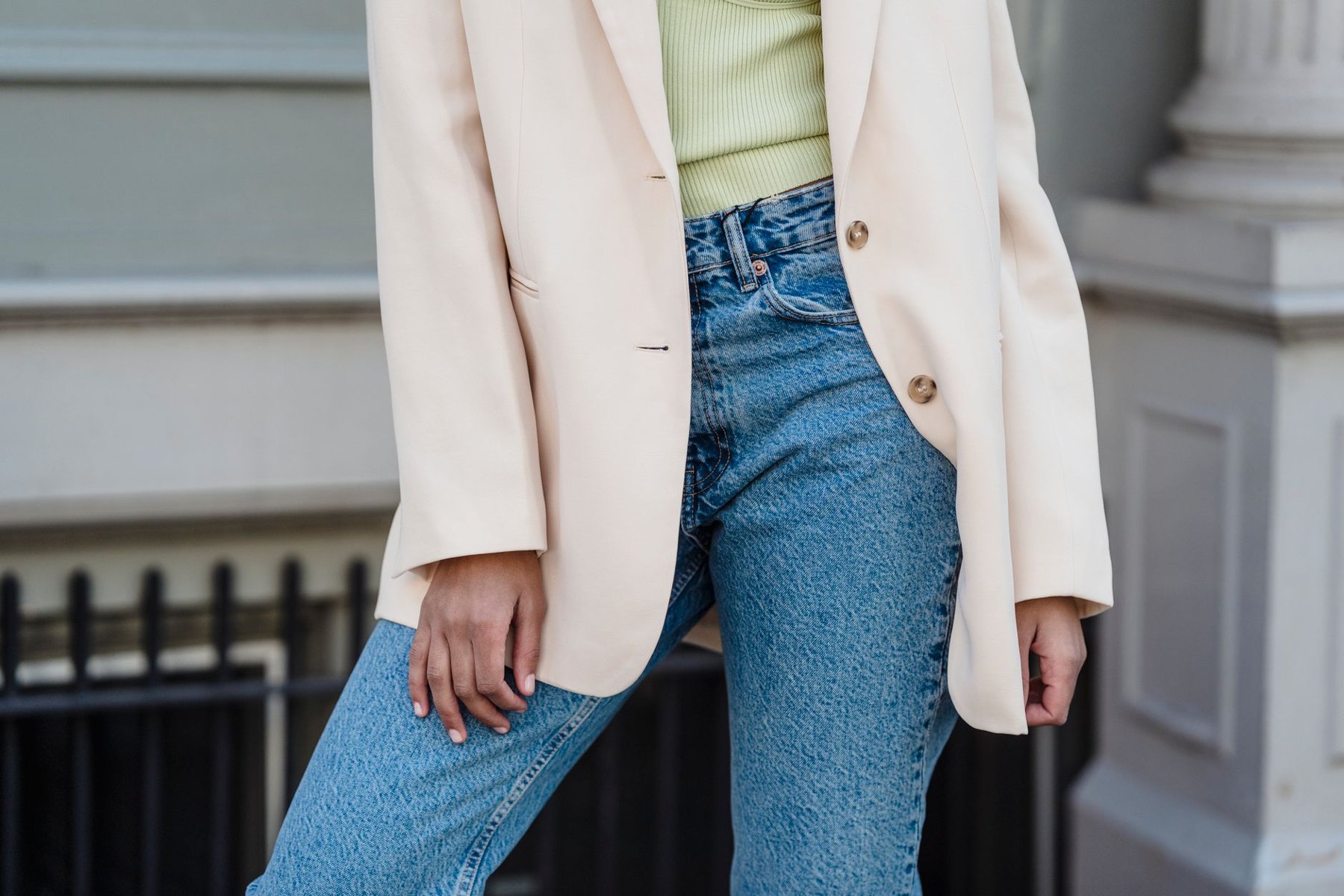
For an office outfit, pair a sleeveless shell or neat T-shirt with relaxed trousers and an unlined blazer. Keep the base top appropriate for your workplace so you can remove the blazer comfortably. A belt or a simple necklace can give the base outfit a finished detail.
The tradeoff is carrying space: a blazer is less convenient to pack than a cardigan. Use this formula when you can leave it at your desk or hang it during the day. If your schedule involves walking between appointments, a soft cardigan may be easier.
3. Tank top, cotton shirt, and a midi skirt
Wear a tank with a cotton midi skirt and an open button-down shirt. The shirt supplies morning coverage and can be buttoned if you want a more contained silhouette. Try a shorter shirt with a fuller skirt, or tuck the front of a longer shirt to make the waistband visible.
Later, remove the shirt or roll its sleeves and leave it open. Sneakers make this combination practical for walking; flats can work when you prefer a less casual finish. Choose based on your route and comfort.
4. Short-sleeve knit, light trousers, and a denim jacket
A short-sleeve cotton knit gives this outfit a little texture without requiring a separate sweater. Wear it with relaxed trousers and a denim jacket that leaves room around the sleeves. Cream, olive, navy, and faded blue are easy starting points, but use colors already present in your wardrobe.
Denim can be bulky once removed, so plan to carry the jacket over your arm or use a roomy tote. If bag space is limited, substitute a lighter cotton overshirt. You keep a similar casual shape with less fabric to manage.
5. Simple dress, cardigan, and closed-toe shoes
A sleeveless or short-sleeve dress can work across a changing day when the dress itself suits the afternoon. Add a cardigan that ends near the waist or falls cleanly past the hips. Check both lengths in the mirror rather than assuming one is always more flattering.
Closed-toe flats, loafers, or sneakers keep the outfit practical for a cool start. If your legs will feel too cold during the morning journey, consider trousers that day; adding tights creates another layer you may need to remove and store later.
6. Long-sleeve shirt, jeans, and a lightweight trench
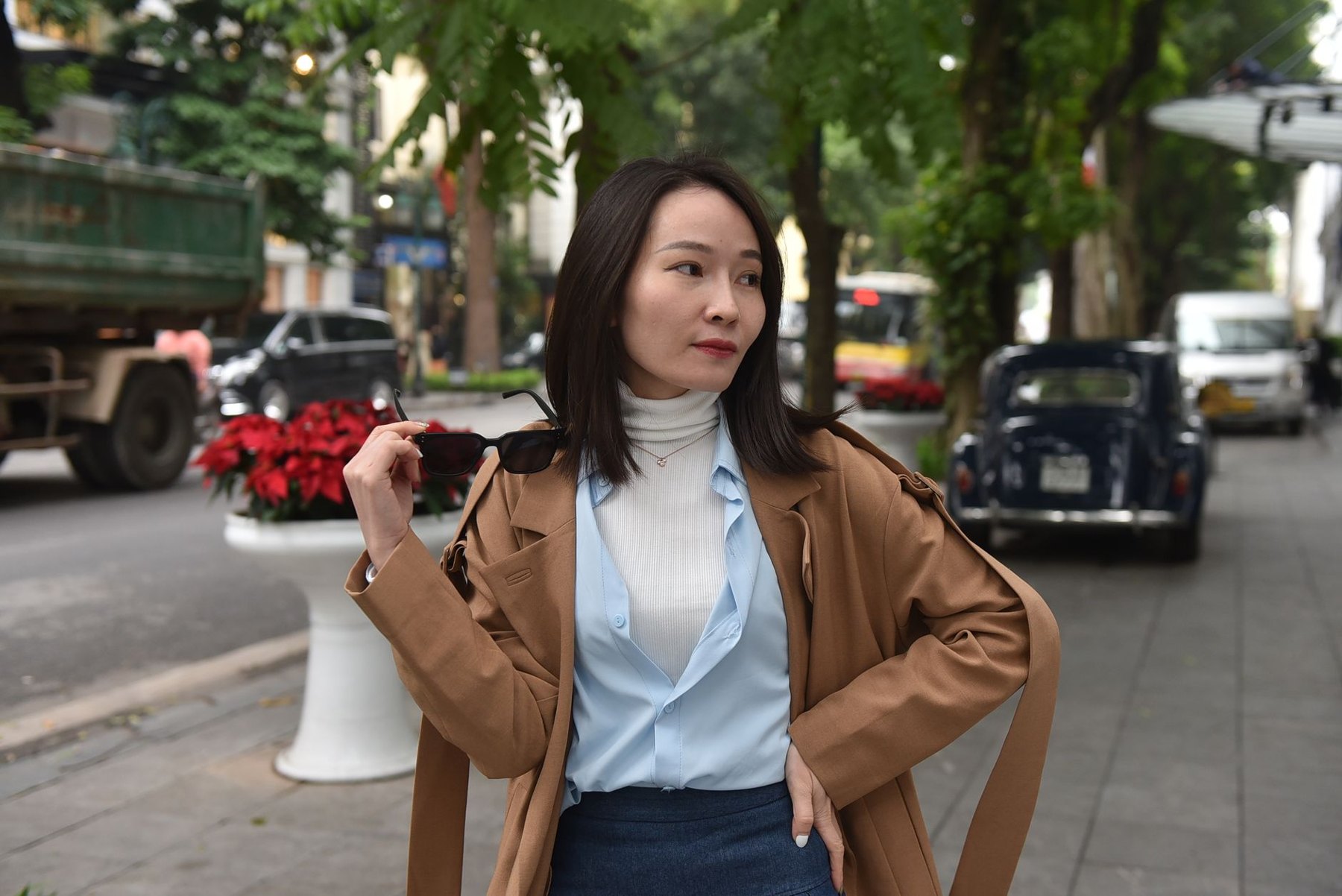
For a cooler start, wear a long-sleeve cotton shirt with jeans and a lightweight trench. The shirt becomes your afternoon top, with its cuffs rolled or left open. A striped shirt adds pattern while keeping the rest of the outfit straightforward.
A trench offers more coverage but requires a carrying plan. This combination is easiest when you have somewhere to hang the coat. For an afternoon spent entirely on foot, a shorter jacket may be more convenient.
Check how the layers sit together
Put on the entire outfit and move your arms, sit down, and reach for your bag. Tight sleeves over a knit can make even light layers feel cumbersome. A shirt collar crowded beneath a crewneck and a jacket may need adjusting—or one layer may be unnecessary.
Leave some room between layers, especially around the shoulders and underarms. If you want a substantial cardigan, pair it with a jacket that accommodates it. If your jacket is close-fitting, choose a thinner knit or a simple long-sleeve base.
It also helps to check the outfit at each stage: everything on, jacket off, then knit off. You do not need identical proportions in all three versions. You only need each version to feel comfortable and intentional enough to wear.
Decide where the removed layer will go
Fold a fine knit into your bag
Lay the knit flat, fold the sleeves inward, and fold the body into a compact rectangle. Keep it away from keys, open cosmetics, and anything that might catch the yarn. A small fabric pouch can be useful if your tote contains lots of loose items.
Tie a shirt at the waist
For a casual outfit, button one or two middle buttons, place the shirt body behind you, and tie the sleeves loosely in front. Keep the hem above the ground and check that it does not interfere with walking or sitting. Untie it before putting on a shoulder bag if the strap catches the knot.
This works best with a shirt that has enough sleeve length to tie comfortably. Avoid forcing a tight knot or using a delicate garment this way. Expect some creasing when you put the shirt back on.
Drape a sweater over your shoulders
Rest the body across your upper back and bring the sleeves forward. You can leave them loose or make a gentle single tie if the knit allows it. This is convenient for a short walk, though it may slip while cycling, carrying bags, or moving quickly.
Carry a structured jacket with support
Fold a jacket lengthwise and drape it over your forearm, keeping the hem clear of the ground. At work, use a suitable hanger when available. Avoid stuffing a structured blazer into a crowded bag if you want it to look tidy when you put it back on.
Make one small adjustment before leaving
Check the forecast for the times you will actually be outside, then account for your route. A brief walk from a car and a long wait at an open bus stop call for different amounts of warmth. Indoor air conditioning may also give your cardigan a purpose after the afternoon warms up.
Finally, test your carrying plan: place the folded layer in your bag and make sure there is still room for your essentials. If it does not fit, swap one piece before leaving. A spring outfit becomes much easier to live in when taking something off is as straightforward as putting it on.