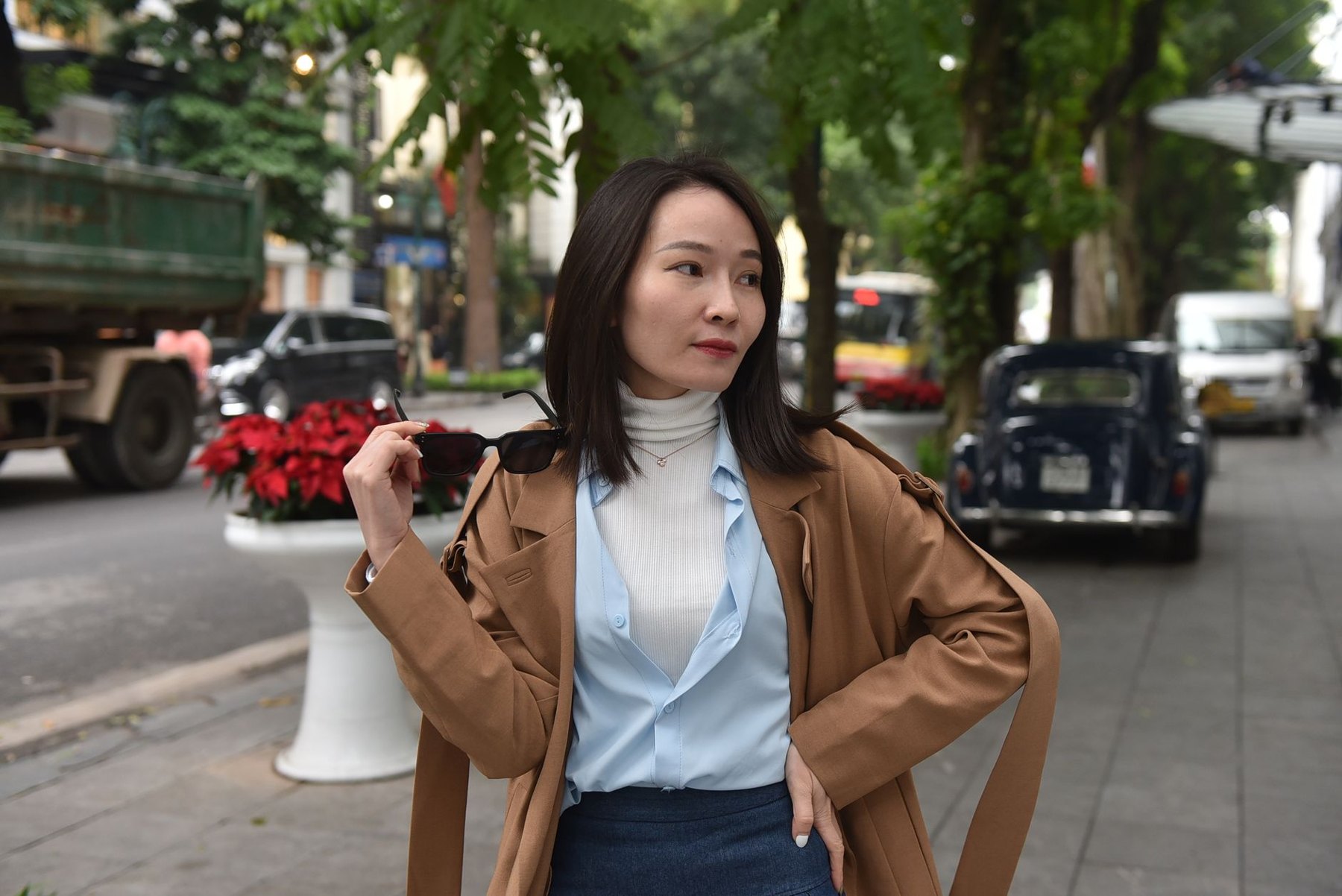
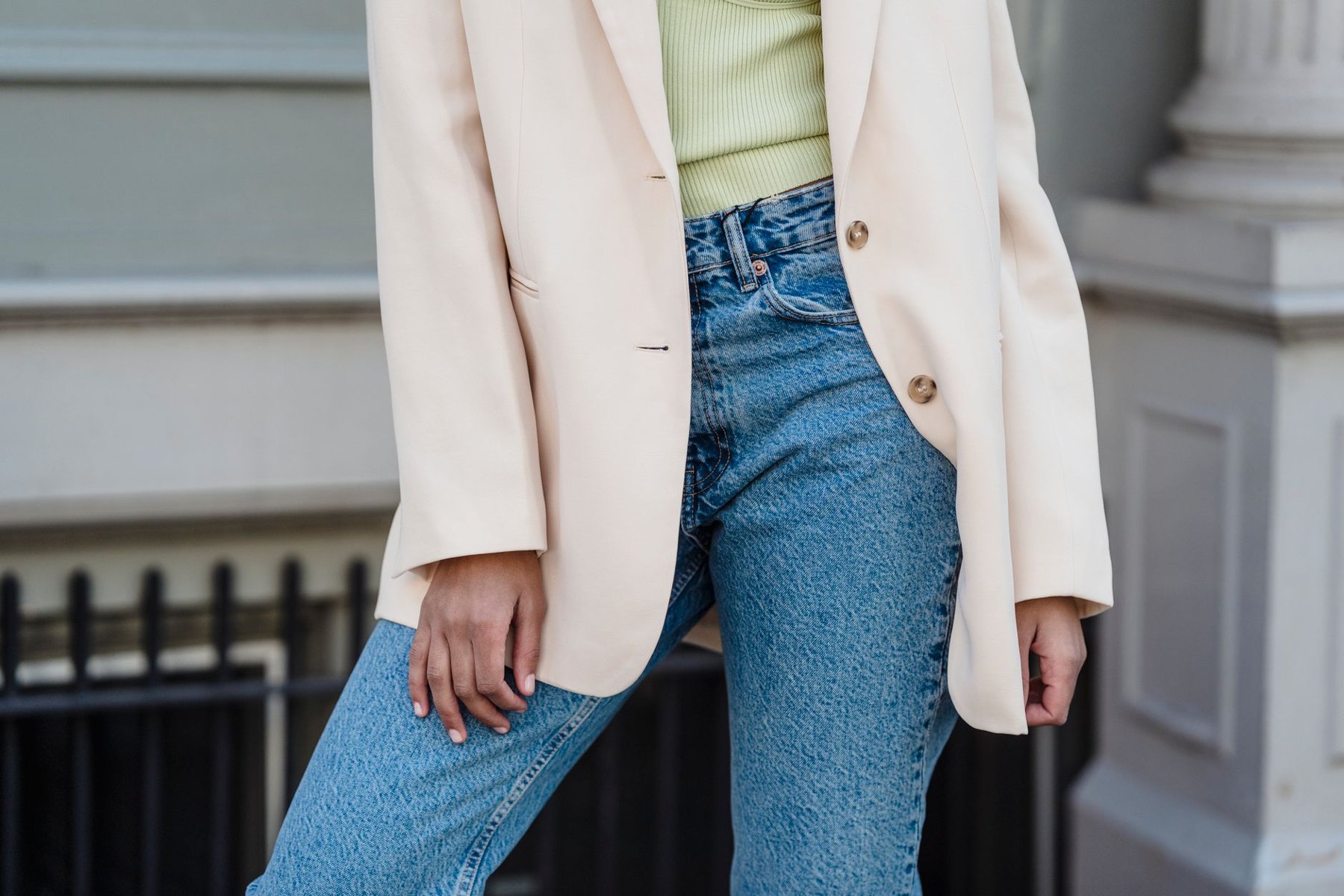
If every colorful top ends up paired with black trousers, try changing just one part of the formula. Wear a navy knit with brown shoes, add a cream shirt to olive trousers, or carry a burgundy bag with a pale pink sweater. You do not need a completely different wardrobe to make color feel more natural. You need a pairing you like and a manageable place to begin.
The four combinations below work as starting points, with room to adjust the shades, proportions, and textures to suit your clothes. Begin with a small accent. If you enjoy the result, give that color more space in the next outfit. A shoe can become a trouser color; a scarf can become a shirt.
A simple way to build a color combination
Before choosing individual pieces, decide which color will occupy most of the outfit. This is your base. The second color can appear in something small, such as a belt, or something more visible, such as a jacket. Neither color needs equal space, and you do not have to repeat an accent several times to make it look intentional.
- Choose a familiar base. Start with trousers, jeans, a dress, or a matching set you already wear comfortably.
- Add one contrasting color. Use an accessory first if a full garment feels like too much.
- Check the difference in lightness. A pale shirt against dark trousers creates clearer separation than two similarly dark pieces.
- Keep the remaining choices simple. Choose shoes and outerwear that support the pairing rather than adding several new colors.
- Assess the whole outfit. Look at it with the bag, coat, and shoes you will actually wear.
Texture gives you another way to adjust the result. A smooth shirt and textured trousers can distinguish similar shades, while several matte fabrics can make a contrasting palette feel quieter. There is no need to solve every variable at once: change one piece, then decide whether the outfit needs anything else.
Navy and brown: an easy step away from black
Navy and brown are useful when you want a restrained palette with a little warmth. The combination can accommodate tailored clothes, denim, knitwear, and leather accessories. Start by looking at the brown pieces you own: tan, caramel, chocolate, and reddish brown will each produce a different effect against navy.
Start with a brown accessory
Wear navy trousers and a navy or light blue top, then add brown loafers, boots, or a bag. Tan gives a more visible contrast; dark chocolate makes a subtler change. If your outfit is already quite dark, try a lighter brown accessory so the pairing remains easy to see.
You can also use a brown belt with navy trousers when the waistband is visible. There is no need to match the belt and shoes exactly. Keeping them within a similar family of browns is a straightforward option, but avoid buying a matching set just to complete one outfit.
Move into larger blocks
Once the accessory version feels familiar, pair a navy sweater with brown trousers. For workwear, try a navy blazer over a cream shirt with chocolate trousers. For a casual outfit, combine a brown cardigan, navy T-shirt, and dark blue jeans. The jeans do not have to match the T-shirt; a visible difference between them can give the outfit more definition.
- Quiet version: navy knit, chocolate trousers, dark brown shoes.
- More contrast: navy dress, tan boots, cream cardigan.
- Relaxed version: brown overshirt, navy T-shirt, blue jeans.
The main tradeoff is subtlety versus separation. Very dark navy and brown may look nearly identical in low light. That can be appealing if you want a tonal effect. If you want the two colors to read clearly, lighten the brown or place a cream shirt between them.
Olive and cream: a soft contrast with plenty of range
Olive and cream offer a softer contrast than black and white. An olive utility jacket and cream T-shirt are an easy starting point, but the pairing also works with tailored trousers, knitwear, and skirts. Choose the mood through the garments: cargo pockets and canvas feel casual, while a fluid blouse and straight trousers suggest a more dressed-up direction.
Begin with a small patch of cream or olive
If you already own olive trousers, add a cream scarf or canvas bag to your usual outfit. Alternatively, introduce an olive cap or crossbody bag to a cream knit and blue jeans. A cream collar showing above an olive sweater is another small way to test the combination without giving either color much space.
Use the cream shade you actually like. An ivory T-shirt, oatmeal knit, and yellowish cream blouse are different colors, even if they are often grouped together. Hold them beside your olive garment and compare. The aim is a combination that looks deliberate to you, not a perfect match to a color name.
Build a two-color outfit
Try olive trousers with a cream shirt, leaving the shirt untucked or partly tucked according to its cut. Brown shoes can provide a quiet finish. For the reverse arrangement, wear cream trousers with an olive sweater or overshirt. This gives the light color more space and makes the outfit feel noticeably different without changing the palette.
A cream dress under an olive jacket is another useful option. Keep the jacket open to show a longer section of cream, or close it to make olive the dominant color. The same pieces can create two different proportions.
- Small accent: olive trousers, gray knit, cream scarf.
- Everyday pairing: cream T-shirt, olive trousers, brown sandals or loafers.
- Larger light block: cream skirt, olive cardigan, cream or brown shoes.
Consider upkeep before making cream your trouser or outerwear color. A light scarf or washable top may fit your routine more easily. If pale trousers would make you worry throughout the day, keep olive on the bottom and use cream nearer the face.
Burgundy and pink: adjust the contrast to your comfort
Burgundy and pink bring together a deep red shade and a lighter or brighter relative. The pairing can be gentle with dusty pink, or more pronounced with a clear, vivid pink. You can keep it understated through simple shapes or give it more presence with a large pink shirt, coat, or skirt.
Use burgundy as the first accent
A burgundy bag with a pale pink shirt and familiar jeans is a manageable introduction. Burgundy loafers beneath pink trousers offer another route, while a pink scarf can soften an outfit built around a burgundy sweater. Choose whichever arrangement makes use of what you already own.
For the first attempt, let one color stay clearly dominant. A pink knit with a small burgundy bag is easier to assess than several pink and burgundy accessories distributed across the outfit. If it already feels complete, stop there.
Give both colors more room
Pair a pale pink shirt with burgundy trousers for a workwear option, adding brown shoes if you want a third color. For a relaxed version, wear a burgundy cardigan over a pink T-shirt with jeans. A pink sweater over a burgundy skirt creates a larger, more visible pairing without requiring accessories in either shade.
The particular shades matter more than their labels. A purple-leaning burgundy and a peachy pink may create more contrast than you expect. That does not make the combination wrong. Compare it with a cooler pink or a browner burgundy and decide which relationship you prefer.
- Subtle version: pale pink shirt, jeans, burgundy bag.
- Balanced version: dusty pink sweater, burgundy skirt, brown boots.
- Expressive version: bright pink blouse, burgundy trousers, simple shoes.
If the pairing feels too sweet for your taste, change the cut or fabric before abandoning the colors. A crisp pink shirt and straight burgundy trousers give a different impression from a ruffled blouse and flowing skirt. You may like the palette more in shapes you already wear.
Blue and rust: use denim as your starting point
Blue and rust are easy to explore through denim. Rust introduces a warm, earthy orange against a blue base, with variations ranging from reddish terracotta to a more orange copper shade. The contrast can be noticeable, so begin with the amount of rust that feels comfortable.
Add rust to an existing blue outfit
Wear your usual jeans and blue shirt with a rust scarf, bag, or pair of socks visible above your shoes. A patterned scarf containing both blue and rust can help you picture the combination before trying solid garments. If you already own one, use it to compare possible shades in your wardrobe.
Denim provides several starting points. A faded blue can make the pairing feel lighter, while dark indigo gives rust a deeper backdrop. Lay the same rust accessory beside different jeans and notice which version you would actually want to wear.
Try rust as a full garment
A rust sweater with blue jeans is the simplest next step. You can then try rust trousers with a pale blue shirt, or a rust skirt with a denim shirt. For an outfit with more structure, combine navy trousers, a rust knit, and a blue shirt with the collar or cuffs showing.
- Small accent: blue shirt, jeans, rust scarf.
- Everyday pairing: rust sweater, straight blue jeans, brown shoes.
- Larger color blocks: pale blue blouse, rust trousers, cream shoes or bag.
If a strong orange rust feels distracting, try a browner or more muted version. If the outfit seems dull, a clearer blue may provide the separation you want. Changing one shade can be enough; adding more accessories may only make it harder to see what needs adjusting.
Choose the proportions before adding more colors
You can use the same pairing in several ways without following a numerical formula. An outfit that is mostly navy with a brown bag has a different emphasis from brown trousers under a navy sweater. Neither is more complete. The better choice depends on which garment you want to notice first.
| Approach | How to try it | Example |
|---|---|---|
| Small accent | Introduce the second color in one accessory | Pink shirt with a burgundy bag |
| Visible layer | Use an open shirt, cardigan, or jacket | Olive overshirt over a cream top |
| Two large blocks | Give the top and bottom different colors | Blue shirt with rust trousers |
| Mostly one color | Keep the base similar and add a contrasting layer | Navy top and trousers with a brown jacket |
An open layer is especially useful when you are unsure about a color near your face. A blue shirt under a rust cardigan lets you control how much rust is visible. Likewise, a cream neckline can separate your face from an olive jacket if you prefer that arrangement.
Make the next outfit from what you own
Pick one pairing and gather two or three possible pieces for each color. Include accessories, then assemble a complete outfit for an ordinary day. Check it in daylight if possible, since indoor lighting can make differences between dark shades harder to judge. Move around in it, and check the combination with your practical coat and bag.
Before buying anything, identify the specific gap. You might need a cream top that sits comfortably under your olive jacket, rather than another olive item. Or you may discover that your brown shoes already make a navy outfit feel different enough.
For your next outfit, choose just one experiment: replace black shoes with brown, put cream beside olive, carry burgundy against pink, or add rust to denim. Wear that version through a normal day. Your next step can be as small as repeating it—or giving the accent a little more space.