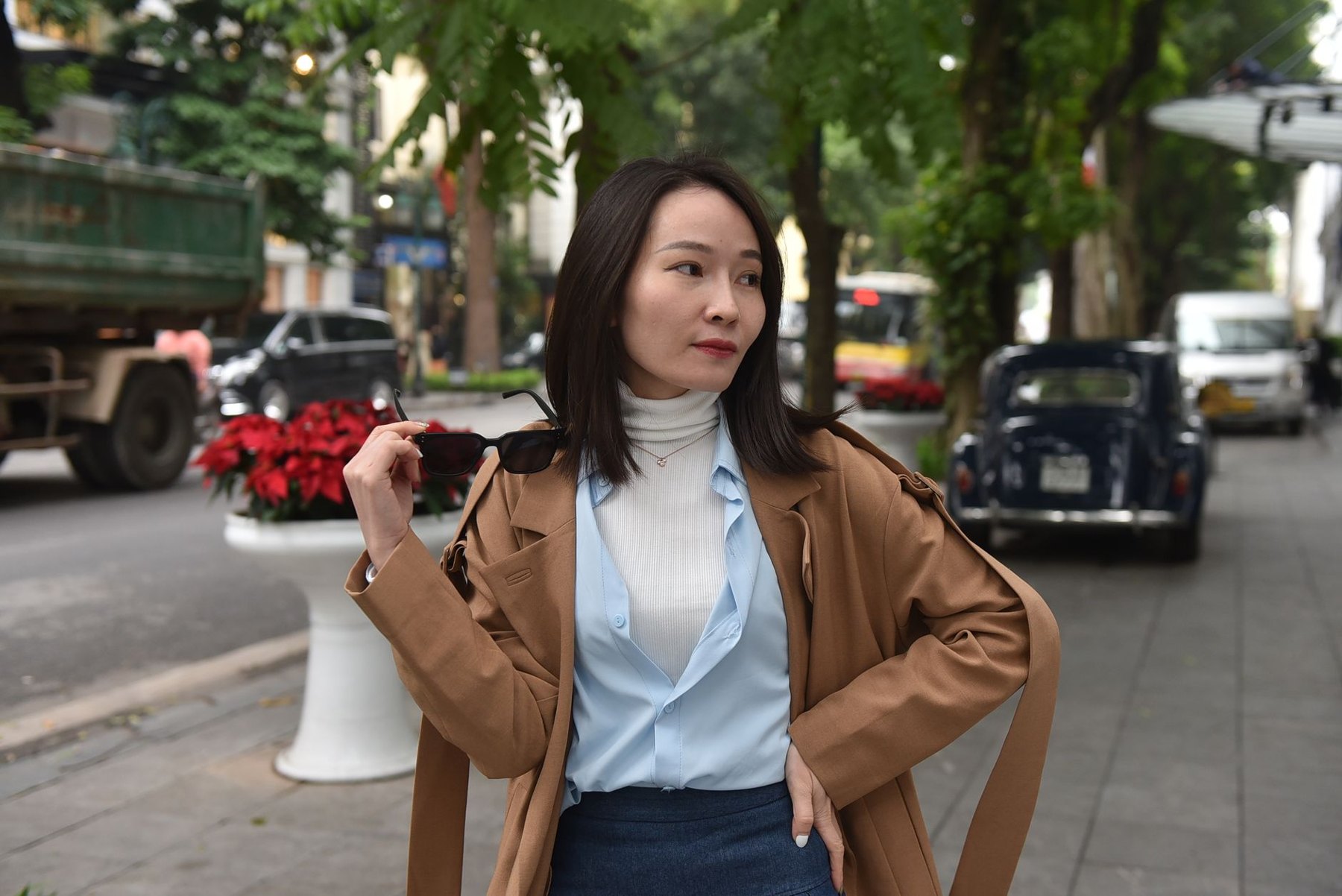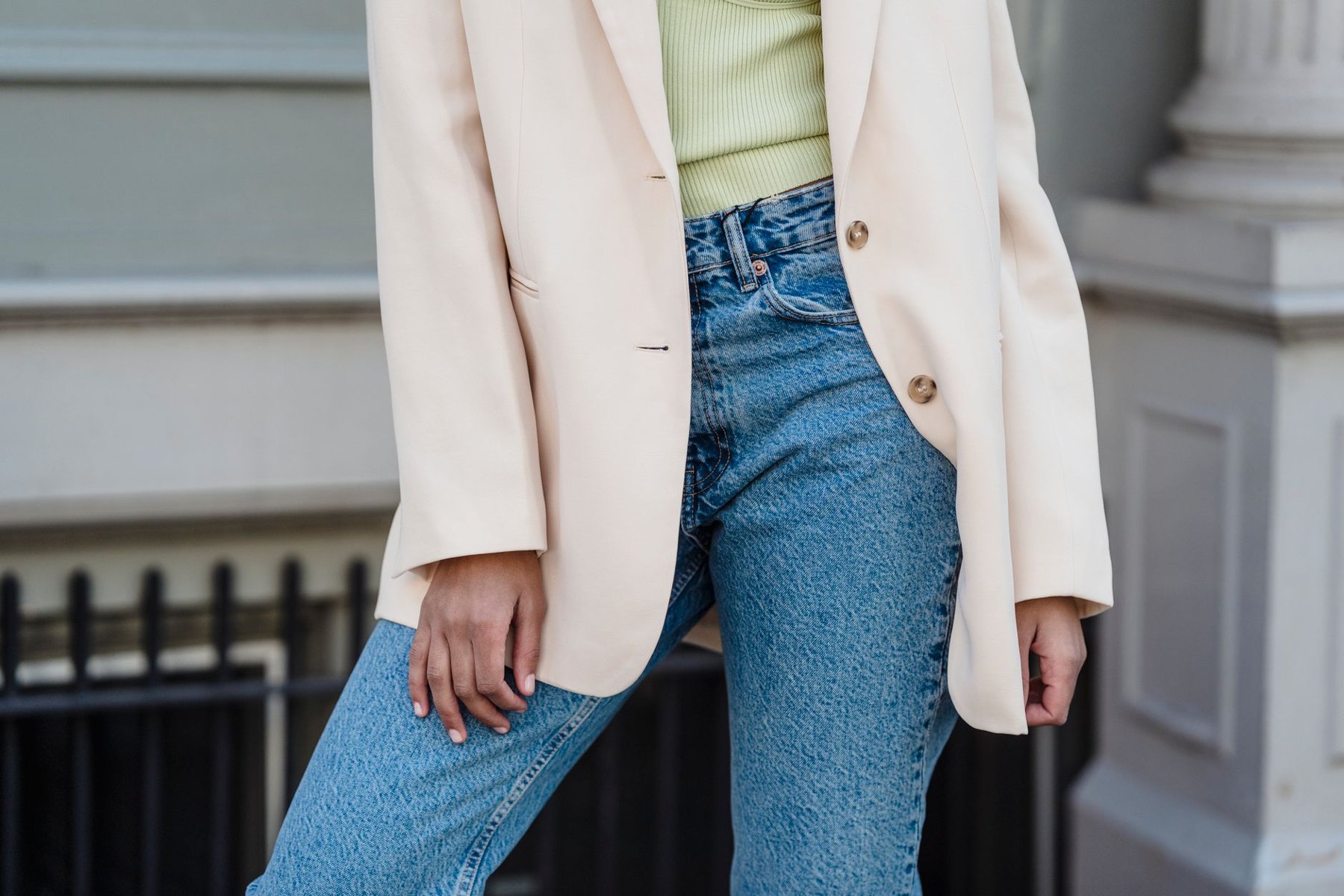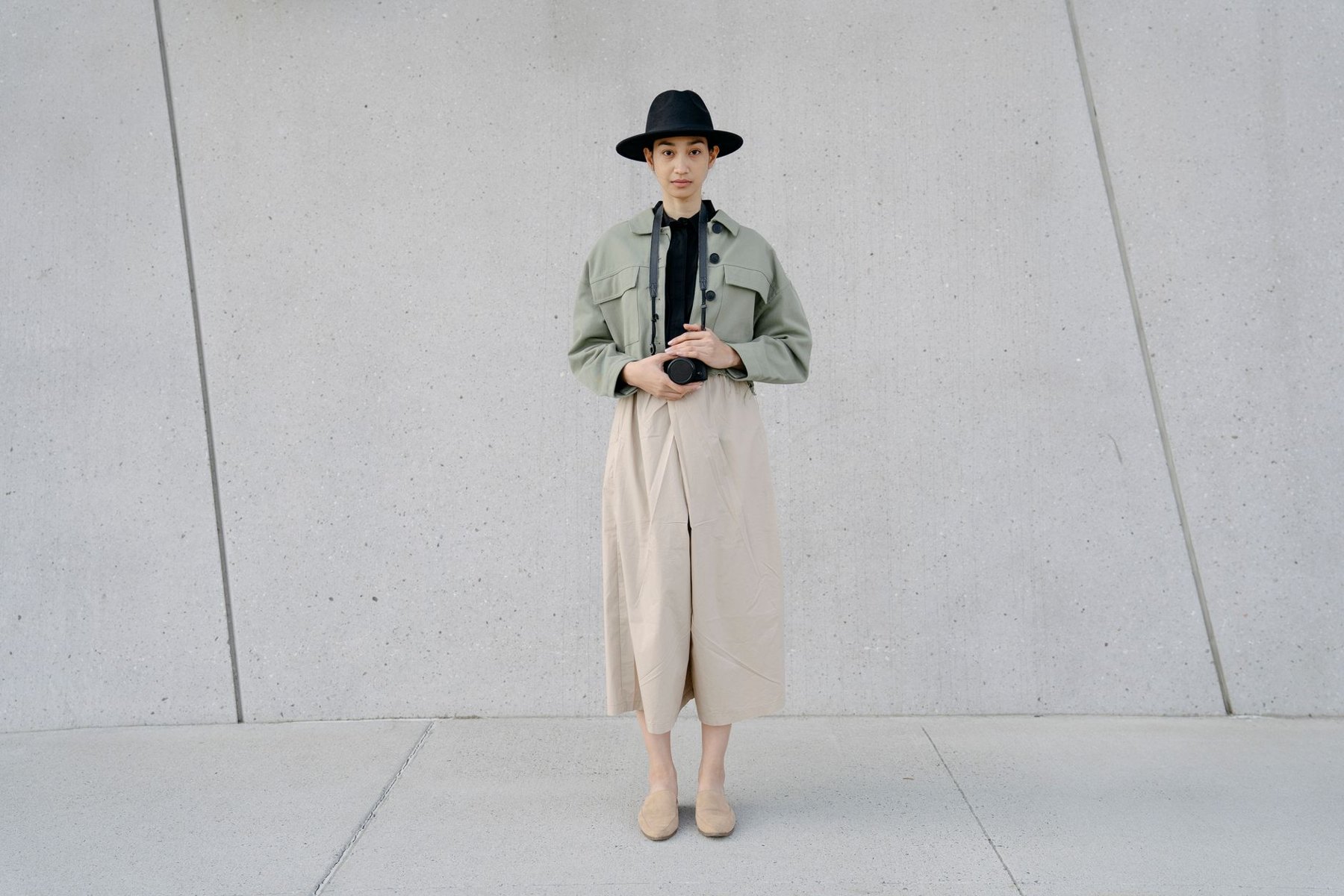
A pair of trousers can fit comfortably at the waist and still feel awkward with every shoe you own. A short jacket might look balanced over a dress but seem oddly abrupt with low-rise jeans. For petite dressing, these are useful clues: the issue may be where garments meet, rather than whether an item is supposedly suitable for your height.
Start with one outfit you want to improve. Put on the shoes you intend to wear, settle the waistband where it feels comfortable, and look at the relationship between the trouser hem, the top, and the outer layer. Change one length at a time. You are looking for proportions you enjoy wearing, whether that means a neat ankle crop, loose trousers that nearly reach the floor, or a long coat with plenty of movement.
Measure the clothes that already work
Height alone does not describe your proportions. Two people of the same height may need different trouser rises, sleeve lengths, and jacket lengths. Before shopping or booking alterations, measure a few garments that fit in ways you like.
Lay each piece flat without stretching it, and record how you measured. Measurements are most useful when you can repeat the same method on another garment.
- Trouser inseam: Measure along the inside leg from the crotch seam to the hem.
- Front rise: Measure from the crotch seam up to the top of the front waistband. Read this alongside how the waistband actually sits on you.
- Leg opening: Measure straight across the hem while it lies flat. Note whether this is a flat width or a circumference when comparing listings.
- Jacket and coat length: Measure from a consistent point, such as the high shoulder beside the neck, down to the hem.
- Sleeve length: Follow the retailer's stated method when comparing measurements; shoulder-to-cuff and neck-to-cuff figures are different.
Add a short note about the outfit: “Works with flat loafers,” “Waistband sits below my natural waist,” or “Enough room over a sweater.” A number without context can be misleading. The same inseam can hang differently when the rise, fabric, or leg shape changes.
Choose a trouser hem around the shoes
Rather than finding one supposedly perfect trouser length, build around the shoes you actually wear. A hem that clears a slim trainer may catch on a chunky sole, while trousers shortened for flats may feel too short with heels.
Try both shoes on before checking the hem, and walk across the room. Look from the side and back as well as the front. The practical questions are straightforward: Does the fabric drag? Does it catch under your heel? Does the hem hang as you want after you sit down and stand again?
Cropped trousers: decide where the gap belongs
A cropped hem creates a visible meeting point between trouser, skin or sock, and shoe. That break can be a deliberate part of the outfit. There is no requirement to show your ankles, and a crop does not need to end at one exact point on every petite person.
With tapered trousers, begin by turning the hem up until it clears the top of your shoe. Then test a slightly higher and lower position. With wider cropped trousers, check whether the opening hangs freely or rests against the shoe; either may work, but they create different shapes.
For example, cropped navy trousers with loafers and visible socks can feel crisp and practical. The same trousers with ankle boots may work best when the hem overlaps the boot shaft or leaves a gap you have chosen intentionally. A narrow strip of sock appearing only when you move may bother you more than a larger, clearly visible gap.
The tradeoff: A crop can keep fabric away from wet pavements and show footwear, but it also makes socks and boot height more noticeable. Check those combinations before committing to a permanent hem.
Full-length trousers: allow room without dragging
For full-length trousers, first decide how much fabric you want to gather over the shoe. A straight leg can look tidy with little folding at the front. A loose, drapey leg may suit a softer fold. Stiffer fabric can build up into a more pronounced stack.
Pin or temporarily baste the hem while wearing your intended shoes, using care with pins. Walk, turn, and climb a step if possible. If the back hem slips beneath your heel, it needs attention even if the front view looks right.
Wide-leg trousers deserve a separate check because the front and back may appear to sit at different heights over a shoe. Ask a tailor to assess the whole hem rather than assuming that the same amount should be removed everywhere.
The tradeoff: A floor-skimming length gives you more fabric and movement, but it ties the trousers more closely to a particular shoe height. If you alternate between very flat shoes and higher heels, choose a practical compromise or reserve the trousers for one group of shoes.
Check rise and leg shape before shortening
If trousers look wrong throughout the leg, hemming may solve only a small part of the problem. Check the waistband, crotch, seat, and knee area before deciding that excess length is the main issue.
A high waistband can suit a tucked shirt or a short jacket, but it is optional. A lower or mid-rise trouser may feel better when sitting, accommodate your preferred tops, or create the relaxed shape you want. The useful test is whether the waistband stays comfortably in place without forcing you to keep adjusting it.
Likewise, a knee shaping detail that sits too low will remain low after the hem is shortened. Flared trousers may lose some of their intended flare if a substantial amount is removed from the bottom. On tapered trousers, shortening changes which part of the leg becomes the new opening.
Compare petite and regular versions when available, but read the measurements. Ask which dimensions change between them. A shorter inseam alone is a different adjustment from a pattern with changes to the rise or knee position.
Use short jackets to set a clear meeting point
A short jacket can make it easier to see where one part of an outfit ends and another begins. The useful length depends on what is underneath: the waistband of trousers, the waist seam of a dress, or the hem of an untucked shirt.
Try the jacket open and closed. A piece that hangs well open may pull across the chest or ride up when fastened. Check shoulder movement, sleeve comfort, and whether the hem catches on your hips.
With trousers
Start with the jacket hem near the trouser waistband, then compare it with a jacket that ends a little lower. Neither position is automatically better. A close meeting point can give a compact outline; a lower hem can feel more relaxed and provide extra coverage.
For a simple comparison, wear straight-leg trousers, a plain top, and your usual shoes. Try the top tucked, untucked, and partly tucked beneath the same jacket. Notice whether you enjoy the visible band of top below the jacket. If it feels distracting, change the top length before deciding the jacket is wrong.
With dresses and skirts
Check how the jacket relates to any waist seam, pleats, or gathered fabric. A firm jacket hem sitting directly over bulky gathers may stand away from the body. Moving the hem above or below that area can change how the outfit hangs.
A short boxy jacket over a straight dress offers a distinct change in shape. Over a fuller skirt, it leaves more of the skirt visible. You can choose either effect without needing to make the waist look smaller or the legs look longer.
Choose long coats by fit and movement
A long coat can work on a petite frame. Its usefulness depends on the fit through the upper body, the amount of fabric you enjoy, and whether the length suits your day.
Begin with the shoulders and chest while wearing a realistic layer underneath. Then check the sleeves, armholes, pocket position, and belt placement. A coat may be the length you want while still putting its pockets too low to use comfortably.
Walk with the coat open and fastened. Sit down, reach forward, and use the pockets. If you carry a shoulder bag or backpack, try that too. These checks reveal more than a still front view.
- Around the knee: Try this if you want a longer layer with less fabric around the lower legs.
- Mid-calf: Check where the hem falls relative to boots, dresses, and your usual stride.
- Near the ankle: Pay particular attention to stairs, ground clearance, and how much fabric moves around your legs.
These are comparison points, not height-based limits. If you like a generous coat, you do not have to pair it with fitted clothing. Wide trousers and a long coat can create the roomy silhouette you want; check that the hems move freely together.
Make layered hems feel deliberate
Layering becomes easier to assess when you look at the exposed edges. A shirt below a sweater, a sweater below a jacket, and trousers above boots can produce several horizontal breaks. Keep the ones you like and adjust those that feel accidental.
Start with the base outfit, then add one layer at a time. If the combination stops working when you add a cardigan, inspect its hem, fastening, and bulk. Try opening it, changing the top underneath, or folding the top's hem inward temporarily to compare lengths.
For example, straight jeans, a hip-length shirt, and a short cardigan may leave a broad strip of shirt visible. That can be the point of the outfit. If you prefer a quieter transition, try a shorter shirt or tuck it in. You can also choose similar colors so the exposed section draws less attention.
Color is an option rather than a requirement. Closely related shades can make garment boundaries less prominent; contrasting colors can emphasize a jacket hem or waistband you particularly like.
Decide which alterations are worth exploring
Make temporary changes before cutting fabric. Turn up trouser hems, fold sleeves, or use a loose basting stitch if you are comfortable doing so. Wear the outfit around the house long enough to notice movement and comfort.
Then discuss the construction with a tailor. The amount of work depends on the garment, so ask about the result as well as the cost.
- Trouser hems: Ask how shortening will affect the opening, cuffs, flare, or original hem finish.
- Jacket sleeves: Point out cuff buttons, zips, vents, and lining before agreeing on a new length.
- Coat hems: Ask how pockets, vents, lining, and fastenings will relate to the proposed hem.
- Waist or seat adjustments: Explain where the garment feels uncomfortable and have the fit assessed before setting the final trouser length.
If a piece needs changes in several structural areas, compare the complete alteration plan with finding another cut. Shortening a coat does not move its pockets, belt loops, or waist shaping. It is reasonable to keep searching when the underlying fit asks for too many compromises.
Keep a small record of successful proportions
Once you find combinations you like, save the measurements alongside a quick outfit photo or written note. Record the shoe, the waistband position, and the finished hem length. For layers, note where the jacket ends relative to the top underneath.
This gives you something concrete to use next time: trousers that work with your everyday flats, a jacket that sits comfortably over a particular dress, or a coat with sleeves and pockets in easy reach. Your preferred proportions may change with the outfit. The measurements help you repeat a choice you enjoyed, while leaving room to try a different one.