A relaxed shirt and straight trousers can look considered in the morning, then feel strangely unfinished once you add shoes and a bag. The problem usually needs a small adjustment: tuck the shirt just enough to reveal the waistband, check where the trouser hem meets the shoe, or remove an accessory that competes with everything else.
That is a useful starting point for French-inspired dressing beyond the striped shirt. Work with familiar pieces, pay attention to their proportions, and leave enough ease to move comfortably. Here, “French-inspired” describes a styling reference, not a national uniform. There is no single way French people dress, and you do not need to imitate an imagined Parisian wardrobe to make these combinations your own.
Start with a silhouette you enjoy wearing
Before choosing colors or accessories, decide how you want your clothes to sit. A straight trouser leg gives a relaxed shirt a clear outline. A simple knit can soften tailored trousers. Understated shoes help connect those pieces without becoming the main event.
Try a combination you already own and look at it from three angles: front, side, and seated. Does the shirt pull across the chest? Does the waistband feel comfortable when you sit? Do the trousers fall cleanly over your shoes? These questions are more useful than whether the outfit matches a particular photograph.
- For an easy, loose silhouette: wear straight trousers with a relaxed shirt, leaving the neckline open to your preference.
- For more definition: tuck a lightweight knit into trousers with a waistband that sits comfortably on your body.
- For a longer, fluid outline: leave a shirt untucked over straight trousers, choosing a hem length that feels intentional to you.
None of these approaches depends on your size. Choose where you want volume and where you prefer a closer fit, then adjust the individual garments accordingly.
Give straight trousers a central role
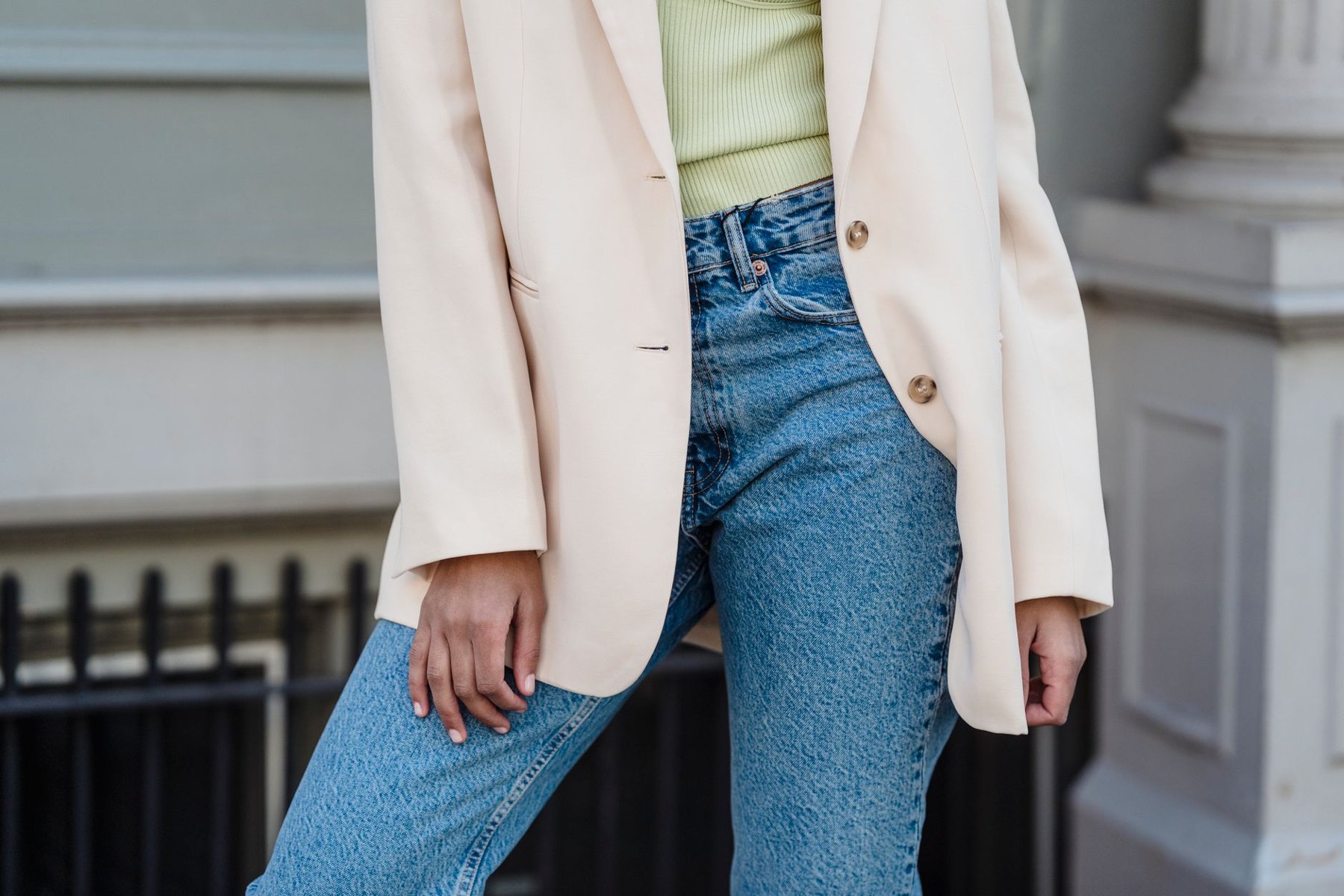
Straight trousers are a useful foundation because they work with several kinds of tops and shoes. Start with a pair that fits your actual routine: washable cotton for frequent casual wear, a soft tailored fabric for office outfits, or a lighter weave for warm weather.
Check the seat, thighs, and rise before worrying about the hem. If a pair feels restrictive through the hips or slips at the waist, styling will not make it comfortable. A different cut may suit you better than sizing up or down in the same design.
Choose the hem with your shoes on
An ankle-length pair can make loafers or sandals clearly visible. A longer pair can create a continuous line over a low boot or closed shoe. Neither length is inherently more polished; the important detail is how the fabric behaves when you walk.
If the hem catches under your heel, it needs attention. If it stops just above a boot shaft and leaves a gap you dislike, try a longer trouser or a taller sock in a related color. Small changes here can make an outfit feel much more settled.
Use color to expand your options
Black, navy, charcoal, brown, stone, and cream are possible starting points, but choose according to what you own. Brown trousers might connect easily with an olive shirt and a pale knit. Navy could work with white, burgundy, or a washed blue. A practical neutral is simply a color that cooperates with the rest of your wardrobe.
Make a relaxed shirt feel deliberate
A relaxed shirt should give you room through the shoulders and body without requiring constant adjustment. Look for enough movement to reach forward comfortably. If the sleeves are long, fold them into a broad cuff or roll them loosely above the wrist, provided they stay comfortable.
The tuck changes the mood. A full tuck gives trousers a clearer shape and works well under a cardigan or jacket. An untucked shirt feels easier, especially in warm weather. A partial tuck can show the waistband while keeping some movement, though bulky fabric may bunch rather than drape.
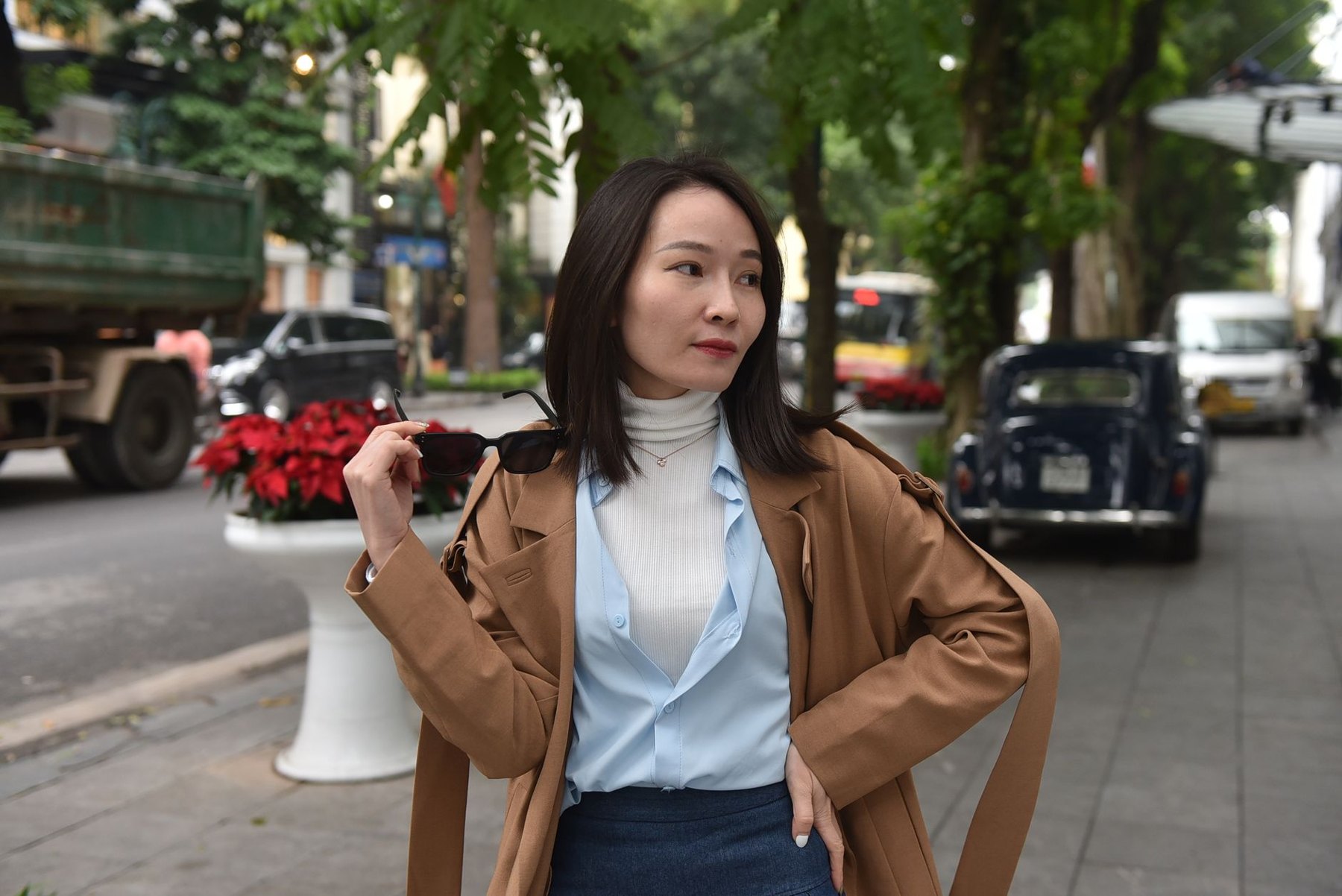
For a straightforward outfit, pair a pale blue shirt with dark straight trousers and brown loafers. If it feels too formal, open another button within your comfort level, loosen the cuffs, or switch to simple canvas shoes. If it feels too casual for your workplace, tuck the shirt fully and add a structured jacket.
Fabric also changes the effect. A crisp shirt holds its outline; a softer one follows the body more closely. Choose the behavior you enjoy rather than expecting every shirt to produce the same result.
Use simple knitwear to change the balance
A crewneck, V-neck, or cardigan can do much of the work often assigned to a statement piece. The neckline, weight, and length matter more than decorative detail.
- A fine crewneck gives tailored trousers a quieter, more casual feeling.
- A V-neck leaves space around the neckline for a shirt collar, a small pendant, or no accessory at all.
- A cardigan offers adjustable coverage and can serve as a top when its fastening and neckline provide the coverage you want.
- A textured knit adds interest to a simple combination, especially when the other fabrics are smooth.
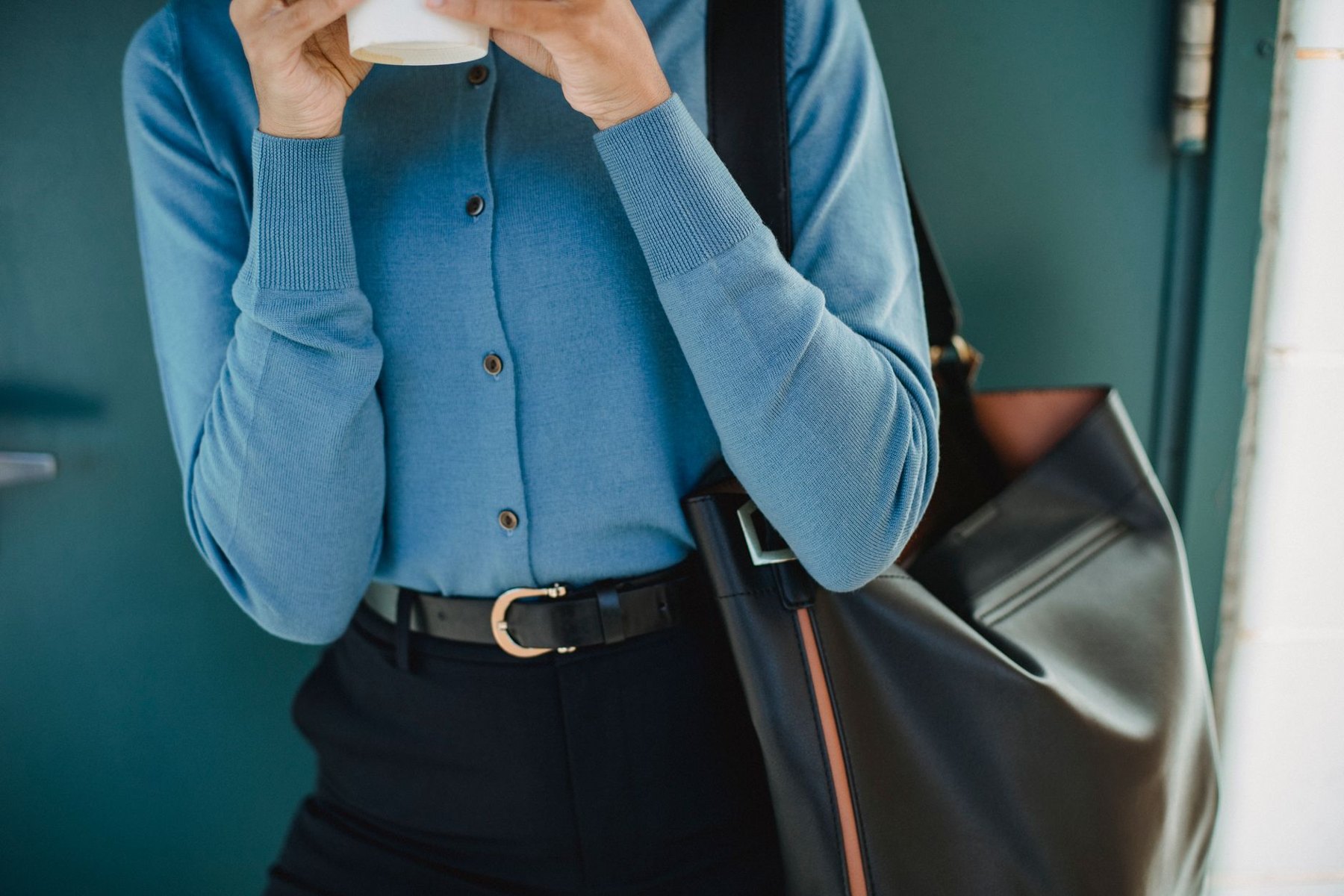
Check what happens at the waist. A thick knit tucked into close-fitting trousers may feel crowded. Leave it out, try a shorter knit, or choose trousers with more room. When layering over a shirt, make sure the sleeves and armholes can accommodate the extra fabric.
Warm-weather outfits with room to breathe
In warmer weather, let fabric weight and coverage guide the outfit. Loose sleeves and straight legs can provide an airy feeling, while an open shirt over a tank offers flexibility between sunny streets and cooler interiors.
Light trousers, a relaxed shirt, and flat sandals
Try stone or cream trousers with a blue, olive, or softly patterned shirt. Wear it loose, or tuck it if you prefer definition at the waist. Add sandals that feel secure on your feet and a bag large enough for what you actually carry.
Light trousers can require more thought about opacity and care. Check them in daylight, including when seated, and decide whether the maintenance suits your week. A darker pair works just as well if pale fabric feels impractical.
A sleeveless knit with dark trousers
A lightweight sleeveless knit paired with navy or black straight trousers offers a simple option for lunch, an informal office, or an evening out. Choose low-profile sandals or loafers according to the setting. A light shirt worn open can provide extra coverage without changing the whole outfit.
An open shirt over a tank
Combine a tank and trousers in related shades, then add a contrasting shirt. For example, a cream tank and beige trousers can sit beneath a dark blue shirt. Keep the shirt sleeves loose or folded, and try plain sneakers if the day involves substantial walking.
You can also introduce color through the main garments. A faded red shirt or green knit can be the focus, with quieter trousers and shoes around it. French-inspired styling does not require a wardrobe restricted to beige, black, and white.
Cool-weather outfits that accommodate layers
Cooler weather calls for enough room between garments. A shirt that works alone may feel tight beneath a fitted sweater, and a jacket that closes over a T-shirt may not accommodate a substantial knit.
A shirt, fine knit, and straight trousers
Layer a fine knit over a shirt, letting the collar show only if you like the result. With charcoal trousers, try a pale shirt and a navy or burgundy sweater. Finish with loafers and socks, or low boots when you want more coverage.
If the shirt bunches underneath, smooth it before putting on the knit and check whether the sleeves have enough space. You can also skip the shirt and wear a comfortable base layer beneath the sweater.
A cardigan under a roomy coat
Wear a cardigan with straight trousers and add a coat that fits comfortably across both layers. A shorter cardigan can leave the trouser shape visible, while a longer one creates a softer outline. Choose based on how the layers move together.
For a tonal combination, try brown trousers, a cream cardigan, and a camel or dark brown coat. For more contrast, pair dark trousers with a pale knit and a deep green coat. There is no need for every piece to match exactly.
A textured sweater with simple boots
A ribbed or softly textured sweater can carry an outfit without much jewelry. Add straight trousers and boots with enough space under the hem. If the sweater is substantial, check that your outerwear does not compress the shoulders or restrict your arms.
Dress for the conditions you expect. Rain, cold, and slippery surfaces may call for weather-resistant footwear and a warmer coat. The outfit should support the day you are having.
Choose understated shoes that suit the route
Loafers, ballet flats, simple sneakers, sandals, and low boots can all work with these combinations. The useful question is which pair supports your feet and makes sense for your plans.
A loafer adds definition to a soft shirt and loose trousers. A low-profile sneaker makes tailoring feel more casual. A flat with a rounded or almond-shaped toe can create a softer finish, while a simple boot provides more coverage in cool weather.
Try shoes with the exact trousers you intend to wear. A fuller leg may hang differently over a bulky sole than over a slim one. If an outfit feels awkward, changing the shoe may solve the problem faster than replacing the trousers.
Let accessories answer a practical need
Begin with the bag, belt, or jewelry you use naturally. A belt can hold a waistband in place or mark the waist. A bag should carry your essentials without making the day inconvenient. Jewelry can add a small point of interest near the face or hands.
You might wear a watch and earrings with a shirt, then omit a necklace because the collar already provides detail. With a plain crewneck, a pendant may be the detail you prefer. These are options, not rules about how many accessories an outfit can contain.
Scarves are useful when you want warmth, coverage, or color. If tying one feels fussy, leave it out. Likewise, you do not need a beret, a particular handbag, or vintage sunglasses to establish the reference.
Build three combinations before buying anything
Use a short wardrobe session to turn the ideas into clothes you can reach for on an ordinary morning.
- Choose one pair of trousers. Pick a comfortable pair that works for the season.
- Add three tops. Try a relaxed shirt, a simple knit, and a top suitable for layering.
- Test two pairs of shoes. Walk around and check how each pair meets the hem.
- Add an appropriate outer layer. Make sure you can sit, reach, and fasten it comfortably.
- Record the combinations you like. A quick photo or a written note can save repeated decisions.
Notice what is actually missing. Perhaps your shirts work well but your shoes make the trouser hems drag. Perhaps a lighter knit would fit beneath your coat more comfortably. A specific gap gives you a clearer reason to shop than a general wish to look more French.
For your next outfit, start with straight trousers and whichever shirt or knit feels best today. Put on the shoes you need, check the proportions, and make one useful adjustment. The result can carry the reference while still looking and feeling like your own clothes.