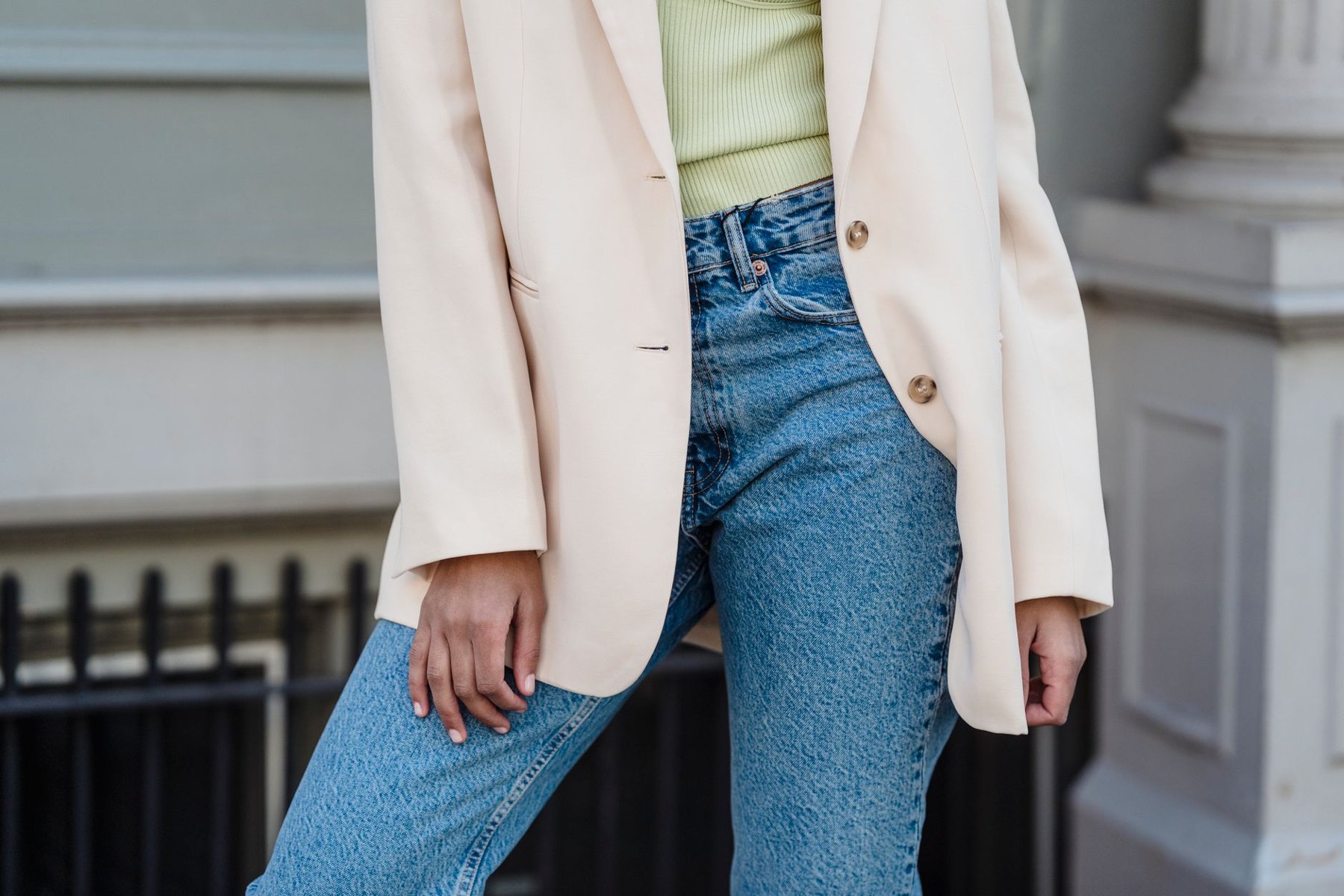
If you have enough clothes but still struggle to get dressed, start by planning one ordinary week. Think about the trousers you can sit in all day, the shoes that suit your commute, and the layer you reach for when the temperature drops. A useful capsule wardrobe makes those decisions easier.
For this exercise, choose 15 pieces across tops, bottoms, layers, and shoes. Underwear, socks, sleepwear, workout clothes, and accessories sit outside the count. Keep specialized clothing, such as a uniform or heavy rain gear, available separately. The number gives the edit a manageable boundary; it does not need to become a rule for everything you own.
The aim is a small working wardrobe with enough variety for your routine. A few repeated colors will connect the pieces, while different shapes and textures keep the outfits interesting. You do not need every top to work with every bottom.
Start with the week you actually live
Write down your usual commitments before opening your wardrobe. Include work, errands, time at home, social plans, and any walking or travel between them. Be specific about what the clothes need to do. “Three office days with a casual dress code” is more useful than “workwear.”
Then identify the situation you dress for most often. Give that situation the largest share of the capsule. If your week is mostly casual, one polished trouser and a jacket may cover occasional meetings. If you work in a formal setting, tailored separates may deserve more space than denim.
- Activity: Will you be sitting, walking, cycling, standing, or moving between several settings?
- Dress expectations: Which days require a more polished outfit?
- Weather: What conditions do you need to handle during the next few weeks?
- Laundry: How frequently can you wash and dry the pieces you wear most?
- Comfort: Which fits, fabrics, and shoe shapes do you willingly wear for a full day?
Build for the season you are in. Trying to cover summer heat and winter cold with the same 15 pieces can leave you short of useful choices for both.
Use this 15-piece starting list
This example suits a week with relaxed workdays, errands, and informal plans. Treat each item as a role you can fill with something you already own. The suggested colors create connections without making the entire wardrobe one shade.
| Group | Piece | Suggested color | Main role |
|---|---|---|---|
| Top 1 | Everyday T-shirt | Cream | Simple base for casual outfits |
| Top 2 | Second T-shirt or long-sleeve tee | Charcoal | Another washable everyday base |
| Top 3 | Button-front shirt | Pale blue | Polished alone or worn open |
| Top 4 | Fine-knit top | Navy | A comfortable option for work |
| Top 5 | Soft blouse or relaxed woven top | Muted rust | A change of color and texture |
| Bottom 1 | Straight-leg jeans | Dark indigo | Everyday casual dressing |
| Bottom 2 | Tailored trousers | Charcoal | Work and smarter plans |
| Bottom 3 | Relaxed trousers | Olive | Comfortable days with some structure |
| Bottom 4 | Midi skirt | Navy | An alternative silhouette |
| Layer 1 | Cardigan | Oatmeal | Adjustable indoor warmth |
| Layer 2 | Unstructured blazer | Charcoal | A more finished outer layer |
| Layer 3 | Lightweight jacket | Navy | Outdoor coverage in mild weather |
| Shoe 1 | Comfortable sneakers | Off-white | Walking and casual days |
| Shoe 2 | Loafers or flat shoes | Dark brown | A polished everyday option |
| Shoe 3 | Ankle boots | Dark brown | Cooler days and a different finish |
That gives you five tops, four bottoms, three layers, and three pairs of shoes. If skirts rarely leave your wardrobe, replace the skirt with another trouser shape. If you wear dresses several days a week, exchange one top and one bottom for two dresses. Keep the total if the constraint helps, but let your habits determine the contents.
Choose a palette with a few clear connections
Begin with two anchor colors that already appear in your favorite clothes. Here, navy and charcoal connect the trousers, skirt, knit, and outer layers. Cream and oatmeal add lighter options. Pale blue, olive, and muted rust provide variation.
You can simplify this further if you prefer: navy, cream, denim, and one accent may be plenty. Equally, a colorful wardrobe can work as a capsule. The useful question is whether you can see repeatable combinations, rather than whether the colors qualify as neutrals.
Give each accent a few partners
The rust blouse could work with charcoal trousers, dark denim, and the navy skirt. It does not have to work with the olive trousers. Those trousers already have the cream tee, pale blue shirt, and navy knit as possible partners.
This is how a palette creates flexibility without demanding universal compatibility. Try each top with at least two bottoms. Try each bottom with two or three tops. These are useful editing targets, not reasons to discard a favorite piece that serves a particular occasion well.
If you enjoy prints, use one in place of a solid top. A stripe or floral containing an anchor color gives you an easy starting point for combinations. Check the whole outfit in a mirror: a shared color alone does not tell you whether you like the result.
Check shape, fit, and layering together
Clothes can share a palette and still feel awkward together. Before settling on the 15, try complete outfits with shoes. Notice where hems fall, whether waistbands feel comfortable when seated, and whether sleeves fit beneath the layers you intend to wear.
Start with a couple of familiar proportions. A softly tucked shirt with straight-leg jeans might be one. A shorter knit with a midi skirt might be another. You can also enjoy loose shapes together; use the try-on to decide whether the overall line feels intentional to you.
- Check necklines: Does the tee sit comfortably beneath the cardigan or blazer?
- Check sleeve space: Can you bend your arms easily with the shirt under the jacket?
- Check lengths: Do you like where the top and outer layer finish against each bottom?
- Check shoes: Do the trouser hems work with the shoes you expect to wear?
- Check movement: Walk, sit, reach, and carry your usual bag during the try-on.
A capsule does not require a particular body shape or a prescribed “flattering” silhouette. Keep the clothes that fit your body comfortably now and give you the proportions you enjoy. Pieces that need constant adjustment are unlikely to make mornings easier.
Build seven outfits before calling it finished
Use the first try-on to plan a realistic week. The combinations below repeat items deliberately. Their usefulness depends on your dress code, weather, and preferences, so adjust the details as you go.
- Monday, relaxed office: Pale blue shirt, charcoal tailored trousers, dark brown loafers, and the blazer.
- Tuesday, errands: Cream T-shirt, straight-leg jeans, off-white sneakers, and the navy jacket.
- Wednesday, work or lunch: Navy fine-knit top, olive trousers, loafers, and the oatmeal cardigan if needed.
- Thursday, another office day: Rust blouse, charcoal trousers, loafers, and the blazer.
- Friday, casual plans: Charcoal tee, jeans, ankle boots, and the navy jacket.
- Saturday, an afternoon out: Cream tee, navy midi skirt, sneakers, and the cardigan.
- Sunday, a slower day: Pale blue shirt worn open over the charcoal tee, olive trousers, and sneakers.
Photograph combinations you like, or write them in a short note. Include the shoes and any useful styling detail, such as rolling a sleeve or leaving the shirt untucked. This gives you ready-made options when you are tired or short of time.
If one outfit fails, look for the specific problem. Perhaps the blouse feels too full under the blazer, or the skirt only works with shoes you dislike walking in. Change the troublesome piece or pairing before reconsidering the entire capsule.
Make room for laundry and weather
Five tops may suit your laundry routine, but the right number depends on how you use them. If you prefer a freshly washed top every day and only do laundry weekly, this allocation may feel tight. Trade a less-used layer or pair of shoes for another washable top, or allow yourself a larger capsule.
Check care labels while selecting pieces. Several garments that need special cleaning may create more upkeep than you want. Keep enough easy-care clothing to cover busy periods, and plan for drying time rather than assuming everything will be ready the next morning.
The example also assumes mild conditions. In colder weather, a suitable coat may need to take the lightweight jacket’s place. For warm weather, you might exchange the knit for a breathable woven top and boots for sandals. Choose footwear and outerwear that suit the conditions you will encounter.
Use accessories to vary the outfits
Keep your existing bags, belts, scarves, and jewelry available outside the 15-piece count. There is no need to buy a separate accessory collection for the capsule. Start with what you regularly use and can comfortably carry or wear.
A belt can add definition to the shirt-and-trouser combination. A scarf can bring color near the face. A small pair of earrings and a more structured bag might be enough to make your usual jeans outfit feel ready for dinner.
Try changing one detail at a time. That makes it easier to see what you enjoy. If an outfit already feels complete, leave it alone; repeating a good combination is part of the convenience.
Shop from your wardrobe first
Pull out the pieces you wore willingly during the past few weeks. Use those as the foundation, even if they differ from the sample list. Your reliable navy trousers may matter more than a theoretically versatile pair of jeans you rarely choose.
Next, fill the remaining roles from what you own. Check for small maintenance jobs: a loose button, an overlooked stain, or a hem that needs attention. Put aside anything that cannot currently be worn comfortably, so it does not count as an available outfit option.
Only consider shopping after trying the combinations. Describe any gap in practical terms. “A washable top that works with both work trousers” is a clearer brief than “something versatile.” You may discover that moving an existing shirt into regular rotation solves the problem.
Adjust after two ordinary weeks
Wear the capsule long enough to see where it helps and where it creates friction. Keep a brief note of pieces you reach for, combinations you repeat, and occasions when you need something else. You can continue wearing other clothes during the experiment.
Review the least-used pieces without assuming they have failed. A jacket may have been unnecessary during a warm spell. A blouse may be useful for an occasional meeting. But if two pieces do the same job and you consistently prefer one, that space could serve another need.
Make one or two changes at a time. Add a top if laundry is the recurring problem. Swap uncomfortable shoes if they limit your outfits. Keep the combination you happily wore twice last week ready for tomorrow morning—that is the kind of everyday usefulness this wardrobe is meant to provide.